Snowdrop

Snowdrop
Galanthus
Plant family
Amaryllis family (Amaryllidaceae)
Season Overview
Sowing
Harvest
Harvest
J
F
M
A
M
J
J
A
S
O
N
D
1ST YEAR
FOLLOWING YEARS
Details


Light requirement
Semi-shaded

Water requirement
Moist

Soil
Medium (loamy)

Nutrient requirement
Medium

Dark germinator

Germination temperature
10 - 15 °C (Degrees Celsius)

Plant distance
10 cm

Row spacing
10 cm

Seeding depth
7 cm
Instructions
Description
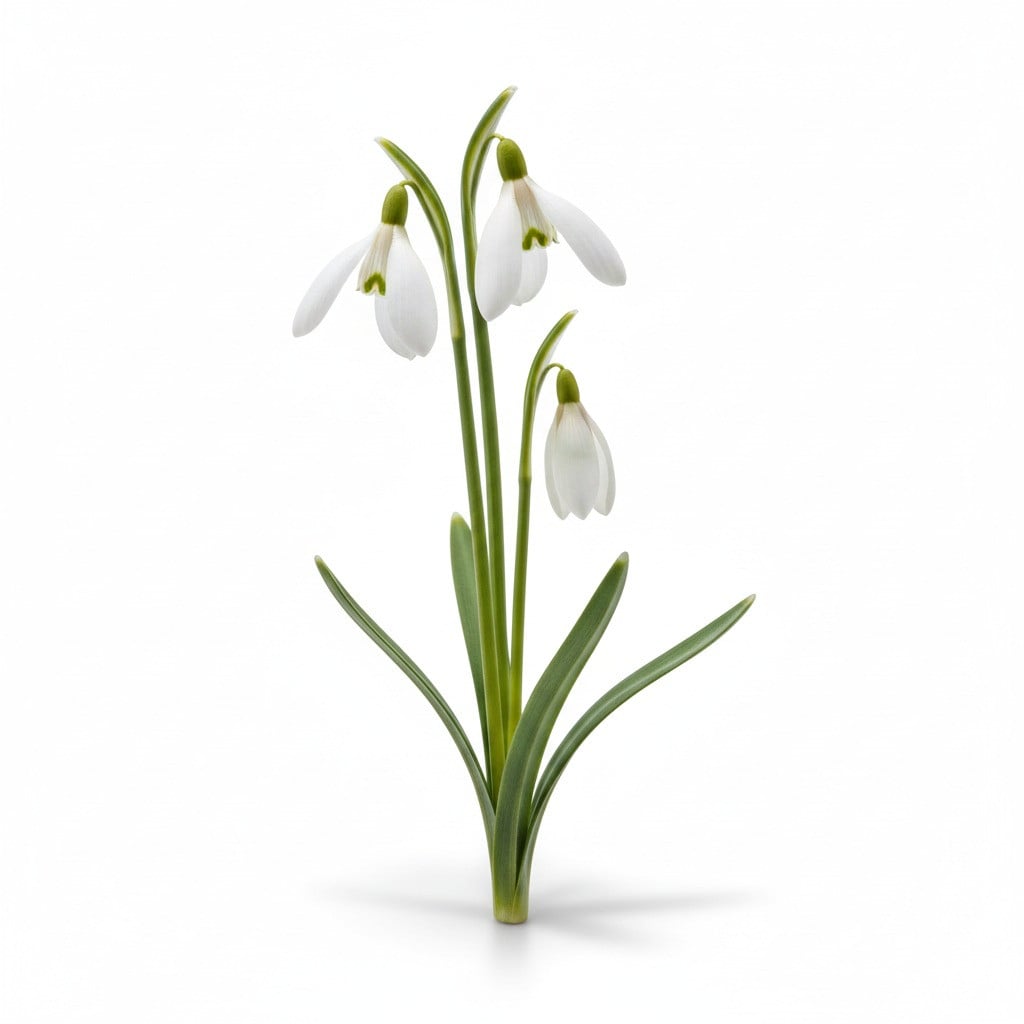
Snowdrops were already described in ancient times and belong to the amaryllis family (Amaryllidaceae). Their botanical name comes from the Greek: "gala" means milk and "anthos" means flower. This name refers to the color of the flowers, which are milky white in all species and can already be seen in late winter in the form of lush carpets of flowers or scattered flowers above the thawing snow cover. A flower stalk and usually three basal, linear, gray-green leaves grow from the brown bulb, which is about one centimeter in size. At the end of the flower stalk is a single flower, which is wrapped in a bract in the bud stage and stands upright. When it blossoms - usually in January or February - it detaches and hangs downwards in a bell shape. Incidentally, snowdrops are poisonous - in all parts of the plant. The snowdrop is one of the first early bloomers and is therefore a valuable honey plant for bees to collect the first pollen of the new year While the common snowdrop (Galanthus nivalis) is the most common plant in the wild, nurseries and specialist suppliers offer around 18 species and 500 varieties. Although they look very similar from a distance, it is often only on closer inspection that you realize how different the varieties are: There are simple flowers and heavily double, fragrant, pure white and those with delicate markings. The snowdrop is now only rarely found in the wild, which is why it is a protected species. Larger populations are usually found near former monasteries. They were probably cultivated there for religious reasons: There are many biblical stories surrounding the snowdrop. The tips of the shoots generate heat as they grow and can even melt snow. This is why snowdrops are called "perce-neige" in France - "snow piercers"
Origin:
Europe, Middle East
Growing tips
Location and soil Snowdrops prefer to grow under deciduous trees and between shrubs where there is plenty of light on the ground. In humus-rich, loose soil that does not dry out even in summer, the bulbous flowers form large populations over time. Full sun locations are preferred by the winter or early flowering species, while the late spring bloomers, especially the native Galanthus nivalis, thrive best in semi-sunny spots. Planting snowdrops You can plant the snowdrop bulbs in early fall at a planting depth of five to eight centimetres and ten to 15 centimetres apart. Fertilizing is not necessary, as a substrate that is too rich in nutrients will mainly produce green leaves, but the snowdrops will hardly flower, if at all. Sometimes the bulbs are already too dry when you buy them and will not sprout. Therefore, it is advisable to buy enthusiast varieties as sprouted young plants in pots and plant them out later. When choosing a location, it is important to know that the bulbs withdraw after flowering and react sensitively to soil cultivation. You should therefore only mow and hoe in May, when the snowdrops have finished flowering. Reproduction Natural propagation takes place through ants: After flowering, the flower stalk lowers, the ovary bursts open and the ants feast on the seeds, as these have an appendage that they like. This form of seed distribution is called myrmecochory. If you want to propagate snowdrops yourself, there are two options: Firstly, you can sow seeds in open boxes. However, it can take three to four years before the seedlings are ready to flower. Secondly, snowdrops can be propagated by division as soon as the leaves wither and the flowering is over. To do this, divide the large clumps into fist-sized pieces using a spade, as you would with perennials. Be careful not to damage too many leaves.

Companion Plants


Diseases
Root Rot
Grey mold
Pests
Land snails