Bergenias

Bergenias
Bergenia
Plant family
Saxifrage family (Saxifragaceae)
Season Overview
Propagating
Planting
Harvest
J
F
M
A
M
J
J
A
S
O
N
D
1ST YEAR
FOLLOWING YEARS
Details


Light requirement
Sunny

Water requirement
Dry

Soil
Medium (loamy)

Nutrient requirement
Medium

Light germinator

Germination temperature
15 – 20 °C (Degrees Celsius)

Plant distance
40 cm

Row spacing
40 cm

Seeding depth
0.5 cm
Instructions
Description
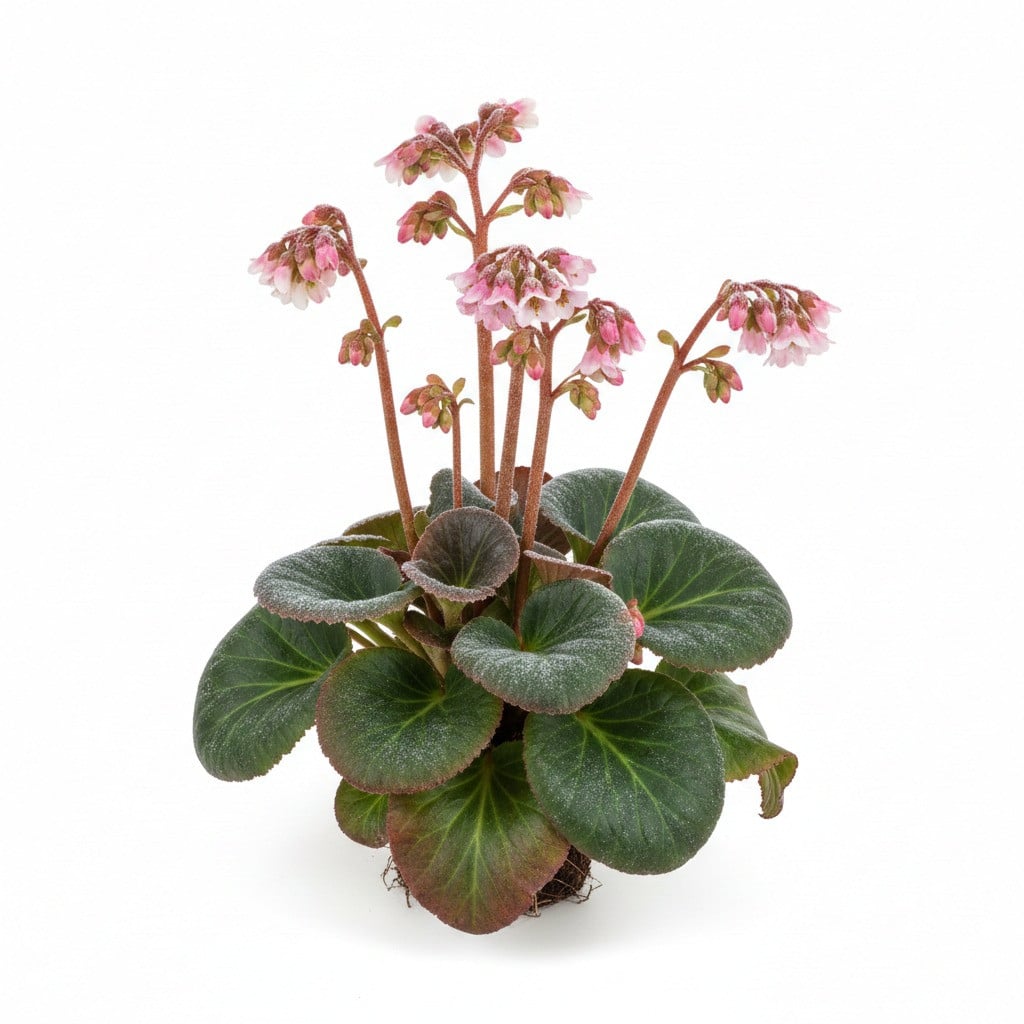
Bergenias (bot. Bergenia), commonly known as "wrapping roots" in some regions, belong to the Saxifragaceae family. The seven to eight species of bergenias are native to the mountainous and hilly regions of Central and East Asia. They are low-maintenance and hardy. They bloom year-round or, quite literally, shine—at least when not in bloom—with their evergreen foliage. This makes them ideal for year-round planting. They serve as attractive, hardy groundcovers, rock garden plants, or ornamental perennials in public parks and private gardens. Depending on the variety, bergenias bloom in vibrant colors ranging from white through pink to a rich violet and red. Severe frost does not harm the evergreen foliage. On the contrary, when dusted with snow, interesting color contrasts emerge on the green or reddish-glossy leaves, which shine from afar. Leaves: The leaves of the various species range in color from a deep evergreen to various reddish tones. They can reach a diameter of up to 35 centimeters. The rounded leaves grow in loose rosettes on relatively short stems. The foliage of varieties that do not bloom profusely typically appears glossy green. Some plants display bright red, bronze, and violet-brown leaves from winter into spring. Flowering In spring and, depending on the variety, in autumn, robust flower stalks push upward through the foliage of the evergreen saxifrage. The flowers (corymbs or panicles) range from two to 40 centimeters in size, are slightly bud-like and rolled, and are round or bell-shaped. The edges of the flowers are smooth. The colors vary by variety and include white, pink, violet, or red. Due to the sturdy flower stems, which can grow up to 50 centimeters long, the plants make beautiful cut flowers for vases. Growth: Bergenia plants initially grow as creeping plants, reaching heights of around 20 centimeters. Over the years, they develop an upright height of up to 50 centimeters. This saxifrage does not spread aggressively and, thanks to its rhizomes, forms beautiful dense clumps or stately shrubs. Distribution Bergenia is native to many parts of Central and East Asia. There, seven to eight species can be found, primarily in mountainous regions and open slopes, from Afghanistan to China. In European countries, cultivated hybrids are more common and well-known. Uses Bergenias are extremely hardy and robust, making them suitable for a wide range of garden and park designs. Thanks to their attractive foliage and the unique hues of their flowers, their uses are virtually limitless. They can serve as groundcover or understory plants, as edging along pathways, as solitary plants in flower beds, near ponds or streams, in rock or gravel gardens, in pots and containers, under hedges and trees, and as cut flowers prized for their form and color.
Origin:
Central and East Asia
Growing tips
Care/pruning Bergenias require a minimum of care, no special nutrients and no special pruning. The only thing to do in spring is to remove the brown leaves from the previous year so that the newly sprouting flower stems have space and light. Additional watering is recommended in dry and hot phases of the summer. Loosened soil prevents waterlogging. An occasional dose of compost is sufficient to loosen the soil and also act as a fertilizer. Diseases/pests Bergenias are not afraid of snails. Unfortunately, they are on the menu of the dreaded weevil. The damage is clearly visible along the leaves. The edges are pitted and small pits are visible. Worse affected are the roots of the plant. The larvae of the weevil are responsible for this. Treated with nematodes in spring and fall, the infestation can be controlled well. Leaf spot diseases also affect the bergenia.

Companion Plants

Antagonistic Plants

Diseases
Powdery mildews
Root Rot
Septoria
Angular leaf spot of cucumber
Pests
Land snails