Orange Russian 117 / Dawson`s Russian Oxheart

Variety
Orange Russian 117 / Dawson`s Russian Oxheart
Approved Data
created by Christina S.1 at 30.01.2021
Features
Taste
low-core
tangy
fruity
fleshy
creamy
slightly sour
raw edible
Edible
juicy
tender
mildly toxic
edible skin
Geschmacksrichtung: Süße: stark
Essbarkeit: Frucht
Essbarkeit: Samen
Essbarkeit: nur reif
Color
red
orange
green
striped
multicolor
glossy
Flower yellow
Frucht: pink
Blätter: dunkelgrün
Frucht: gelb
Stamm, Stiel: grün
Wurzel: cremeweiß
Samen: gelb
Wurzel: beige
Behaarung: silbergrau
Behaarung: weiß
Oberfläche: glatt
Samen: beige
Location
planting: greenhouse
Heat requirement: high
sheltered from the wind
planting: rain-protected
Soil: permeable soil
soil moisture: no waterlogging
fertilization: high
Fertilization: single dose of compost
Fertilization: nutrient-rich
fertilization: humus-enriched
Soil: Well fertilized
soil moisture: moist
light: Full sun
soil moisture: well-drained
Water: regularly
Soil: deep
wind: airy
Soil: light to medium-heavy
Soil: sandy to loamy
planting: covered balcony or terrace
fertilization: lime-free
Soil: loosened
Water: Adequate
Light: Sun
Planting: frost-free
pH value: neutral (7)
Water: generously
Fertilization: nitrogen-rich
Fertilization: organic
Düngemittel: Pflanzenjauche
Düngung: Langzeitdünger
Düngemittel: Hornspäne
Good companions: moisture-loving
Nachbarn schlecht: trockenheitsliebend
Nachbarn schlechte: Schattenpflanzen
Nachbarn schlechte: kalkliebend
Good companions: sun-loving
Nachbarn schlechte: stark wuchernd
Nachbarn schlechte: hoher nährstoffbedarf
Nachbarn gute: mit niedrigen Nährstoffbedarf
Nachbarn schlechte: hochwachsend
Nachbarn gute: niedrigwachsend
Pflanztechnik: Mulchen
Pflanzung: Gewächshaus
Herkunft: Züchtung
Düngemittel: Mist, Dung
Pflanzung: überdacht
Düngung: NPK 5/3/10
Düngung: NPK 7/4/14
Düngung: NPK 8/5/16
Growth habit
lifespan: annual
harvest: profitable
flower: flowering
root type: taproot
self-fruiting
strong leaves
fast growth
growth habit: multi-stem cultivatable
strong lateral shoot development
warm germination
leaves: densely leafed
indeterminate growing
growth habit: needs climbing support
growth habit: upright-bushy
serrated leaves
propagation by cuttings
height: 180 - 200 cm
leaves: leafy
wide: 60 - 70 cm
wide: 50 - 60 cm
hermaphroditic
feathered leaves
height: 200 - 250 cm
simple flower
star-shaped flowers
Pruning necessary
strong growth
propagation by seeds
perennial
Summer variety
Blütenstand: traubenförmig
Geschlechtertyp: einhäusig
Ernte: mittelreifend
Keimung: Lichtkeimer
Blätter: einfach
Blätter: duftend
Leaves: slightly hairy
Vermehrung: samenfest
insect pollination
hand pollination
Resistances
robust
Fruit shape
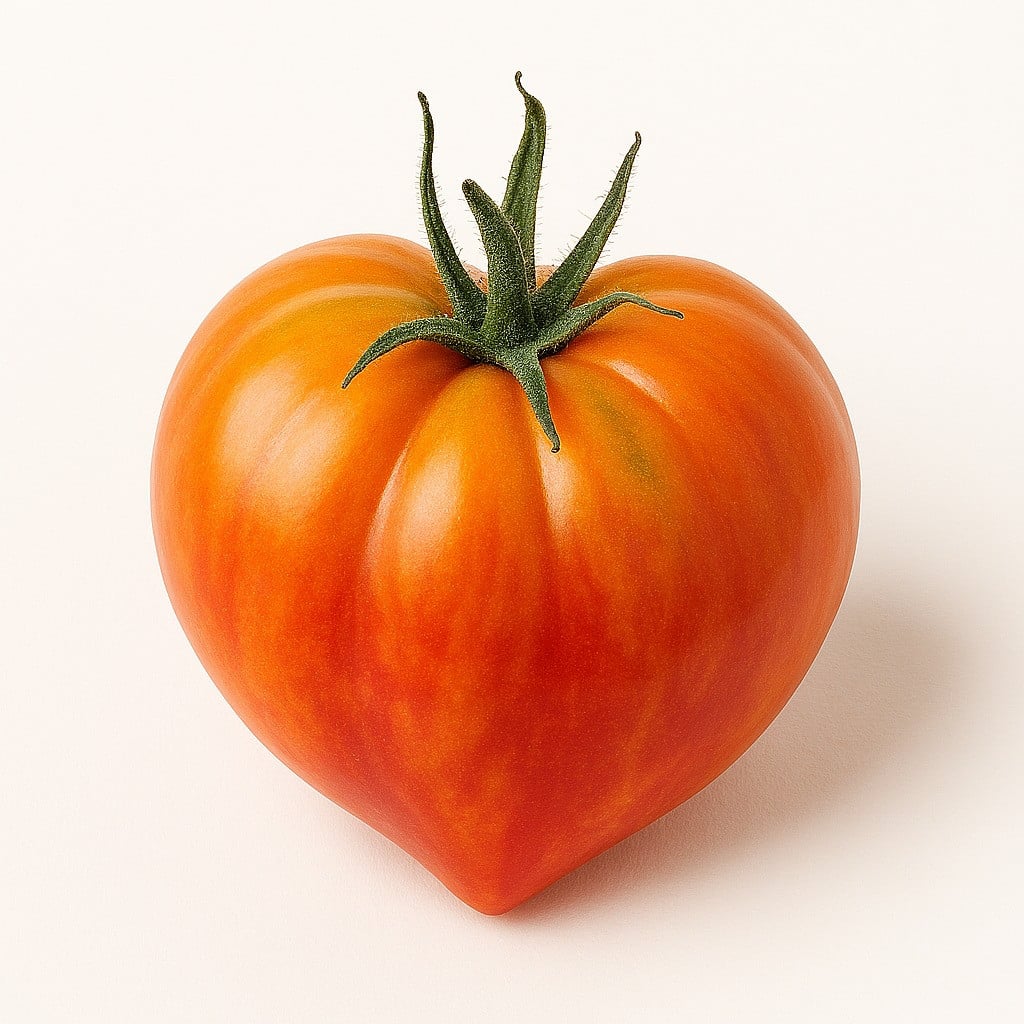
heart-shaped
medium-sized
Typ: Schließfrucht - Beere
Cultivation Break
4 Years
Season Overview
Propagating
Planting
Harvest
J
F
M
A
M
J
J
A
S
O
N
D
Description
The 'Orange Russian' grows to about 2 m tall and produces heart-shaped fruits up to 10 cm in size. These grow up to 300 g in weight and turn an attractive orange-red striped color with yellow and pink inclusions when ripe. It ripens medium-late and can be harvested for the first time from mid-August. The taste of 'Orange Russian' is fruity and sweet, while the flesh is soft melting with very few seeds. The tomato variety 'Orange Russian' is seed resistant. (Source: Plantura.garden)
Non hybrid
Not frost resistant
Growing tips
The 'Orange Russian' should definitely get a protected, warm location and be tied tightly. Without rain protection it is quite susceptible to fungal diseases and tends to poor growth and poor yield in the unprotected open field. In a greenhouse, on the other hand, it can produce a lot of fruit and, with good care, will remain healthy. Excessive humidity should be avoided because of velvet spot disease (Cladosporium fulvum). (Source: Plantura.garden)
Details


Light requirement
Sunny

Water requirement
Moist

Soil
Medium (loamy)

Nutrient requirement
High

Light germinator

Germination temperature
18 - 26 °C (Degrees Celsius)

Plant distance
70 cm

Row spacing
90 cm

Seeding depth
0.5 cm

Companion Plants
Asparagus
Basil
Bean (Dwarf bean)
Bean (Runner bean)
Broccoli
Brussels sprouts
Carrots
Cauliflower
Celery (Celeriac / Celery root)
Celery (Celery)
Celery (Leaf celery / Chinese celery)
Chili
Chives
Chives
Collard greens (Kale)
Collard greens (Tuscan kale / Dinosaur kale / Palm tree kale)
Common marigold
Cress
Garlic
Garlic chives
Kohlrabi / German turnip / Turnip cabbage
Leeks
Lettuce (Common chicory)
Lettuce (Endive / Escarole / Erisée)
Lettuce (Lamb's lettuce)
Lettuce (Lettuce)
Lettuce (Radicchio / Italian chicory)
Lettuce (Sugar loaf)
Mint
Nasturtium
Onion
Onion (Spring onion)
Oregano
Parsley
Pepper / Paprika
Spinach (Summer)
Tagetes / Marigolds

Antagonistic Plants
Abyssinian cabbage / Ethiopian mustard
Arugula / Rocket
Aubergine / Eggplant
Beetroot
Black salsify
Broccoli raab / Stem cabbage / Cima di rapa
Cabbage (Cabbage)
Cabbage (red cabbage)
Cabbage (Savoy cabbage)
Corn / Maize
Courgette / Zucchini
Cucumber (African horned cucumber / Kiwano)
Cucumber (Caigua)
Cucumber (Melothria)
Cucumber / Gherkin
Fennel
Florence fennel / Finocchio
Horseradish
Jerusalem artichoke / Topinambur
Lovage
Melon (Sugar melon)
Melon (Watermelon)
Mustard
Napa cabbage / Chinese cabbage
Oil radish / Fodder radish
Okra
Ornamental pumpkin
Potato
Pumpkin / Squash
Radish
Radishes
Rapini / Broccoli rabe
Sponge gourd / Egyptian cucumber / Vietnamese luffa
Sunflower
Turnip
Turnip greens - Tatsoi
Turnips - Oilseed turnips
Turnips - Wild turnips

Diseases
Root Rot
Dry rot of crucifers
Powdery mildews
Brown rot
Blossomrot
Grey mold
Early blight of potato
Pests
Land snails
Thrips
Aphids
Spider mites
White fly