Australisches Zitronenblatt

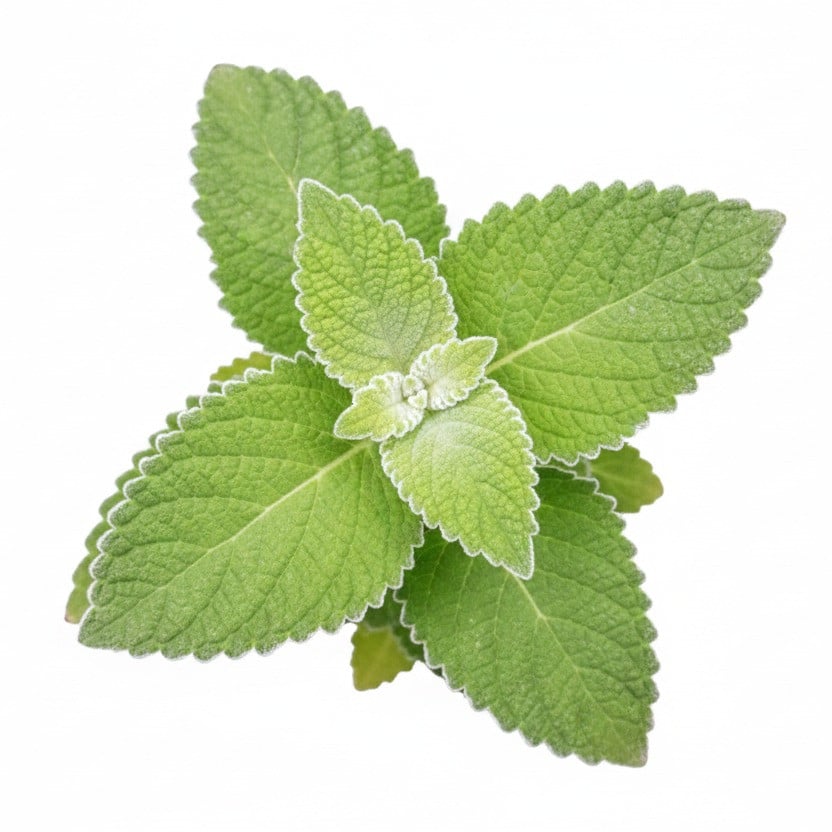
Variety
Australisches Zitronenblatt
Approved Data
created by Alex&Sempi at 28.12.2025
Features
Growth habit
lifespan: perennial
Game Variety
harvest: profitable
harvest: continuously pickable
leaves: loosely leafed
root type: shallow-rooted
strong leaves
fast growth
strong lateral shoot development
warm germination
subshrub
ornamental plant
harvest: year-round
growth habit: upright-bushy
panicle-shaped flower
leaves: evermoist
serrated leaves
height: 160 - 180 cm
flower: reblooming
propagation by cuttings
height: 180 - 200 cm
leaves: leafy
round leaves
wide: 100 - 150 cm
growth habit: well-branched
hermaphroditic
height: 200 - 250 cm
sukkulent
lobed leaves
small flowers
spicate flowers
Hairy leaves
large leaves
Scentless flowers
strong growth
non-woody
propagation by seeds
propagation by division
perennial
insect pollination
Blätter: herzförmig
Geschlechtertyp: einhäusig
Keimung: Lichtkeimer
Blätter: weich/zart
Blätter: einfach
Blätter: duftend
Schnitt: Verjüngung
Schnitt: Form
Schnitt: zeitiges Frühjahr
Blätter: oval
Blütenform: lippenförmig
Schnitt: bei Ernte
Vermehrung: samenfest
Stamm, Stiel: behaart
Blätter: samtig/pelzig
Taste
aromatic
fruity
lemon aroma
fleshy
intensive
refreshing
raw edible
Edible
juicy
tender
Essbarkeit: Blätter
Toxizität: ungiftig
Konsistenz: weich
Resistances
robust
drought tolerant
Pest-resistant
Location
planting: outdoor
Heat requirement: high
sheltered from the wind
planting: house wall / wall
light: sunny to semi-shady
Soil: permeable soil
soil moisture: no waterlogging
Planting: windowsill / indoor space
fertilization: high
Fertilization: single dose of compost
Fertilization: nutrient-rich
fertilization: humus-enriched
Soil: Well fertilized
soil moisture: fresh to moist
soil moisture: well-drained
biotope: forest
Soil: good garden soil
Water: regularly
soil moisture: not too dry
Soil: light to medium-heavy
planting: open balcony or terrace
Soil: sandy to loamy
planting: covered balcony or terrace
Soil: loosened
Water: Adequate
Planting: pots, tubs, or boxes
Light: Sun
Planting: frost-free
pH value: neutral (7)
Water: moderately
Fertilization: organic
biotope: rainforest
Düngung: kalktolerant
Düngung: flüssig
Düngung: Langzeitdünger
Düngemittel: Hornspäne
Nachbarn schlechte: Schattenpflanzen
Good companions: sun-loving
Nachbarn schlechte: stark wuchernd
Nachbarn schlechte: hoher nährstoffbedarf
Nachbarn gute: mit niedrigen Nährstoffbedarf
Nachbarn schlechte: hochwachsend
Nachbarn gute: niedrigwachsend
Herkunft: Neophyt
Boden: flachgründig (0-30)
Color
light brown
light blue
medium green
Black seeded
Flower: white
Flower: light-violet
Blätter: dunkelgrün
Frucht: beige
Frucht: grün
Stamm, Stiel: grün
Wurzel: weiß
Wurzel: cremeweiß
Behaarung: weiß
Herbstfärbung: keine
Oberfläche: samtig
Fruit shape
capsule
small
Season Overview
Sowing
Harvest
Harvest
J
F
M
A
M
J
J
A
S
O
N
D
1ST YEAR
FOLLOWING YEARS
Description
While many herbs take a break in winter, one very special fragrant herb shows amazing vitality: the Australian lemon leaf. Even in December, it remains green, soft and intensely aromatic. Its fresh lemon scent, fluffy leaves and versatile use as a tea or kitchen ingredient make it a real insider tip for the cold season. The Australian lemon leaf (Plectranthus species / Coleus bellus) is a spice plant that has not been known for very long. This species has not yet been botanically named. It is possibly a subspecies of Plectranthus bellus. This plant was only discovered a few years ago in the Australian tropics around Queensland. There it grows to over two meters in height and width. Australian lemon leaf grows incredibly quickly, becomes quite large if it is not cut back and, depending on the state of cultivation, can have leaves up to the size of a hand, which are covered in soft, fluffy hairs. In late summer to fall, small, mostly blue-violet or white flowers appear in a candle-shaped inflorescence when it has reached a height of 2m. The leaves have an incredibly intense lemon scent. However, the scent is by no means intrusive or disturbing. Interestingly, the leaves actually smell differently. Very young, tiny leaves smell very fruity, like a whole fruit salad, the middle leaves have more of a lemon scent, and the older leaves have a composition of citronella oil with a hint of mint. The fragrance is pleasant and intense at every leaf stage. The essential oils citral, citronellal and geraniol are responsible for the intense aroma. Just a light touch of the leaf is enough to bring the great scent to your skin. The plant not only creates a great indoor climate, the leaves can even be used for tea. They can be used fresh or dried. However, the leaves turn gray when dried and shrivel up a lot. Drying can take a relatively long time as the plant stores a lot of water. Australian lemon leaf is not poisonous. The soft, tender, fluffy and fleshy leaves can be used for culinary purposes. However, as the stem is hard, it should not be used. This makes the plant, which can grow very tall, resistant to wind and gives it stability. Small quantities are sufficient for a tea, as the flavor is very intense. However, it can also be used to flavor water, refine desserts and salads or season savory dishes. Anything that harmonizes with lemon can also be combined with the Australian lemon leaf. Due to its intense aroma, Australian lemon leaf is also ideal for herbal baths. You can either make a strong herbal tea and add this to the bath water or add a few fresh or dried leaves to the bath water. The plant is good for repelling mosquitoes and protects the skin from bites when the leaves are rubbed into the skin.
Non hybrid
Growing tips
The Australian lemon leaf is kept in a pot or tub, so you can let it enjoy the unfiltered sun when the outside temperatures are right and then bring it back inside when the temperatures get too low (below 15°C). It is very resistant to pests. Neither aphids nor fungus gnats settle around the plant. This makes the lemon leaf the ideal houseplant, which also survives the winter well at the window indoors. The recommended planting substrate is a mixture of herbal soil and so-called additives, e.g. a mixture of zeolite, pumice, expanded clay and crushed lava. As the plant has succulent properties, it is recommended to keep it rather dry and well drained, as it reacts very sensitively to waterlogging. Propagation is really quite simple. As long as the plant develops small new leaves, it can be pruned all year round. Cut off a young side shoot about 10 cm long, put it in a small flower pot with soil and keep it moist, but not too moist, for three or four weeks. Roots will then have formed and the new plant will have grown. ☀️ Location - Bright to semi-shady - the brighter, the more compact and aromatic. - Also tolerates shadier areas, but grows less luxuriantly there. - Like to be kept outside in summer, but frost-free. 🪴 Soil & pot - Herb soil mixed with zeolite, pumice, expanded clay and lava - The plant grows extremely quickly → repot frequently. - Pot should be heavy enough to prevent the large plant from tipping over. 💧 Watering - Leaves are succulent → can manage with little water. - For vigorous growth: water regularly, but avoid waterlogging. - Water less in winter. 🌱 Fertilize - If you harvest regularly: fertilize regularly. - Result: ◦ Faster growth ◦ More tender, juicier leaves ✂️ Pruning & shape - For bushy growth: cut the shoot tips regularly. - Without pruning, the plant becomes very tall (up to over 2 m) and rather "leggy". - Older plants become bare at the bottom → simply take cuttings. 🌡️ Overwintering - Not frost-hardy. - Keep indoors in a bright spot, dry room air is not a problem. - In winter it grows more slowly or pauses. 🌿 Propagation - Extremely easy: ◦ Cuttings in a glass of water → almost always take root. ◦ Or stick directly into soil. 🍋 Harvesting & storage - Harvest individual leaves or whole shoots. - Do not store in the fridge - remain soft and aromatic for weeks in room air. - For drying: ◦ Cut the leaves into small pieces, otherwise they will remain soft for up to 8 weeks. 🌸 Flower - Only flowers if it is not cut for a long time and grows very tall (over 2 m). - Small, pale purple or white flowers. ✅ Good neighbors 🌱 1st herbs - Lemon balm, Thai basil, coriander, parsley, - rosemary, oregano, curry herb, lavender 🌼 2. fragrant and aromatic plants - Lemon verbena, scented geraniums, pineapple sage, Moroccan sage 🐞 3. plants that benefit from insect repellency According to experience reports, lemon leaf repels aphids in the greenhouse. Good neighbors for it: - Peppers, chili, tomatoes, cucumbers ❌ Bad neighbors 💧 1. plants that need a lot of water - Celery, zucchini, pumpkin, water mint 🌳 2. strong-growing root competitors - Mint (if in a bed, not in a pot), comfrey, woodruff 🌫️ 3. Plants that are sensitive to strong fragrances Some plants do not like intense essential oils in close proximity: - Basil varieties with a mild aroma, Some lettuces (e.g. lettuce), spinach
Details


Light requirement
Sunny

Water requirement
Moist

Soil
Light (sandy)

Nutrient requirement
High

Light germinator

Germination temperature
20 - 25 °C (Degrees Celsius)

Plant distance
80 cm

Row spacing
80 cm

Seeding depth
0.2 cm

Companion Plants

Antagonistic Plants

Diseases
Root Rot

Pests
No pests