Indianerbanane 'Prima 1216'

Variety
Indianerbanane 'Prima 1216'
created by Alex&Sempi at 15.02.2025
Features
Resistances
cold tolerant
resistant
disease resistant
Little susceptible
robust
Pest-resistant
Standorttolerant
Winterhärte bis -25°C
Taste
exotic
Pineapple aroma
Banana aroma
mango aroma
Melon aroma
creamy
mild
fruity
sweet
buttery
refreshing
raw edible
Edible
delicious, pleasant taste
pleasant
thin skin
soft skin
Geschmacksrichtung: Süße: stark
Essbarkeit: Frucht
Toxizität: ungiftig
Aroma: Vanille
Konsistenz: sahnig
Konsistenz: weich
Growth habit
growth habit: pyramidal
tree
growth habit: upright
lifespan: perennial
self-fruiting
Cold germination
leaves: Deciduous
root type: deep-rooted
Autumn variety
growth habit: compact
flower: flowering
root type: taproot
strong leaves
cross-pollination
leaves: densely leafed
bush tree
propagation by cuttings
leaves: leafy
growth habit: becoming woody
hermaphroditic
fruit on two-year-old wood
height: 300 - 400 cm
wide: 200 - 300 cm
entire leaves
simple flower
Bell-shaped flowers
large leaves
weak to medium growth
slow growth
propagation by seeds
propagation by runners
propagation by grafting
insect pollination
hand pollination
harvest: late-ripening
Blüte: mittelgroß
Blätter: zugespitzt
Geschlechtertyp: einhäusig
Keimung: Dunkelkeimer
Blüte: hängend
Blüte: duftend schwach
Wuchs: nicht invasiv
Blätter: einfach
Schnitt: Form
Schnitt: Erhaltung
Schnitt: nicht erforderlich
Schnitt: möglich
Blätter: oval
Blätter: länglich
Ernteertrag: mittel
Seitentriebbildung: mäßig
Blütenstand: einzeln, kleine Gruppen
Blätter: Herbstfärbung
Wuchsform: mehrstämmig
Location
planting: outdoor
light: sunny to semi-shady
Heat requirement: high
Soil: permeable soil
soil moisture: no waterlogging
Fertilization: single dose of compost
Fertilization: nutrient-rich
fertilization: humus-enriched
Soil: Well fertilized
soil moisture: moist
Fertilization: moderately nutrient-rich
Soil: medium-heavy
Water: regularly
soil moisture: not too dry
Soil: sandy to loamy
biotope: forest
planting: heat protected
Soil: deep
Fertilization: phosphate-rich
planting: open balcony or terrace
Wind: windverträglich
fertilization: low-nitrogen
pH value: acidic to neutral (5,5-7)
fertilization: lime-free
fertilization: potassium-rich
Water: sparingly
Planting: pots, tubs, or boxes
Fertilization: moderate
fertilization: sufficient
Water: deeply
Fertilization: organic
biotope: stream / pond / shoreline
Heat requirement: moderate
Licht: vor Mittagssonne geschützt
Pflanzung: Bauerngarten
Düngung: Langzeitdünger
Düngemittel: Hornspäne
Good companions: moisture-loving
Nachbarn schlecht: trockenheitsliebend
Nachbarn schlechte: Schattenpflanzen
Nachbarn schlechte: kalkliebend
Good companions: sun-loving
Nachbarn schlechte: stark wuchernd
Nachbarn schlechte: hoher nährstoffbedarf
Nachbarn gute: mit niedrigen Nährstoffbedarf
Nachbarn gute: hochwachsend
Nachbarn gute: niedrigwachsend
Pflanztechnik: Mulchen
Düngung: NPK 5/10/10
Herkunft: Neophyt
Düngung: NPK 3/5/7
Düngung: NPK 10/5/8
Düngemittel: Mist, Dung
Nachbarn: Solitär
Pflanzung: Waldbeet
Düngung: NPK 8/8/8
Fruit shape
very large
smooth, sleek
egg-shaped
large
Form: langoval, zylindrisch
aggregate fruit
Typ: Schließfrucht - Beere
Color
green
brown
glossy
Black seeded
Flower: crimson
Fruit: yellow-green
leaves: budding coloration
Frucht: gelb
Frucht: goldgelb
Frucht: grün
Oberfläche: schimmernd
Herbstfärbung: gelb
Herbstfärbung: goldgelb
Wurzel: cremeweiß
Wurzel: gelb
Wurzel: braun
Samen: braun
Blüte: braunviolett/violettbraun
Fruchtfleisch: gelb
Wurzel: beige
Stamm, Stiel: graubraun/braungrau
Blätter: Austrieb rot
Blätter: Austrieb hellgrün
Oberfläche: glatt
Season Overview
Propagating
Planting
Harvest
Harvest
J
F
M
A
M
J
J
A
S
O
N
D
1ST YEAR
FOLLOWING YEARS
Description
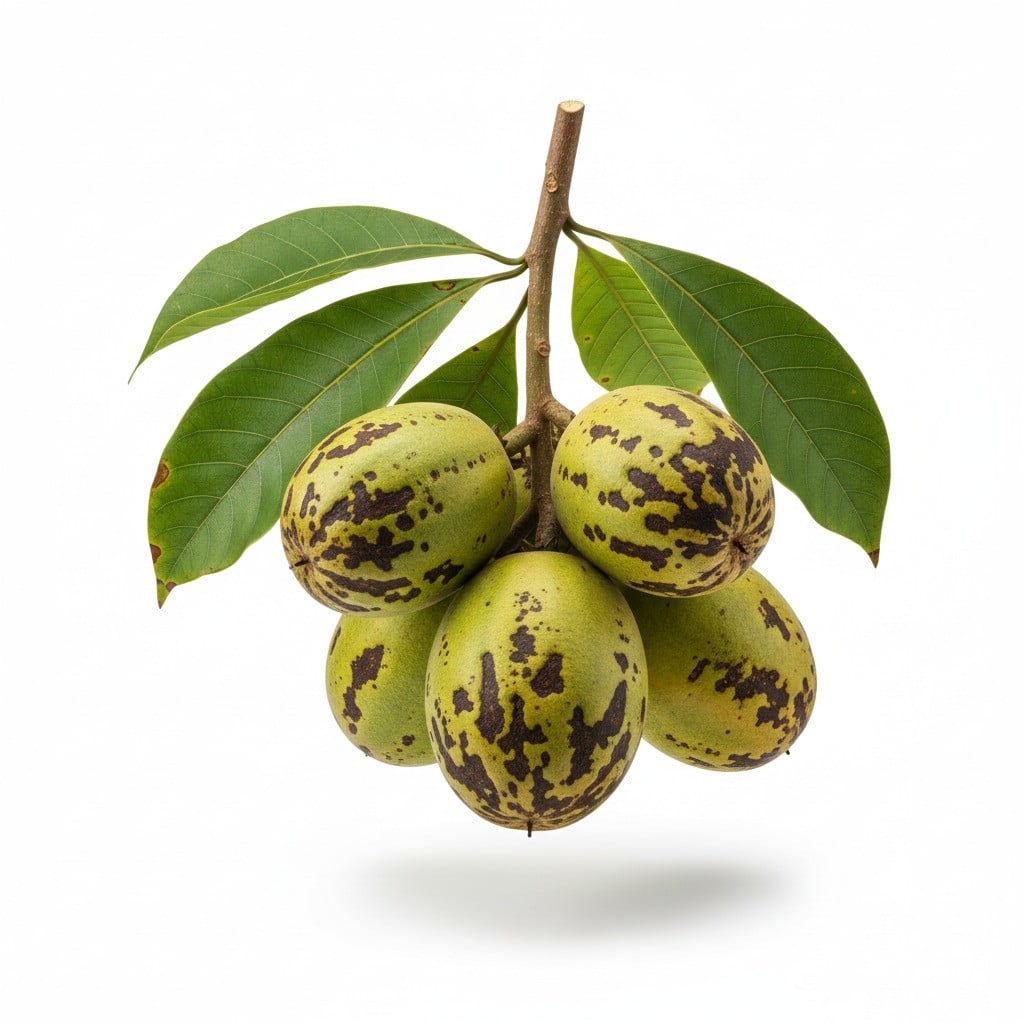
The Indian banana / Papau is a real exotic among woody plants! However, (bot.) Asimina triloba is not for impatient gardeners, as the first flowers can only be expected on the plant after around three years. The exotic fruits only develop from them if there is a suitable pollinator nearby. As the plants of this species are dependent on cross-pollination, it is advisable to combine two different varieties. During the flowering period in May, attractive purple bell-shaped flowers appear on this shrub. They are a real eye-catcher with rarity value! The Indian banana / Papau is a must for all garden owners who are looking for something out of the ordinary. The shrub is also known as Pawpaw or three-lobed Papau. It reaches a height of up to 400 cm. The crown of Asimina triloba is narrow and can be kept to a width of around 250 cm with regular pruning. The plant branches out well and produces new shoots of around 30 cm each year. The flowers appear on them before the leaves emerge. When, after a few years in a sheltered and sunny spot in the garden, the time has come for the fruits to form, the joy is great! The fall fruits of the Indian banana / Papau develop from the ovaries, of which each flower contains several. The fruits of Asimina triloba are reminiscent of avocados and have a greenish to yellow-green skin color, they reach a weight of 300 g and a length of 10 cm.
Non hybrid
Frostproof
Growing tips
The three-lobed papaw requires a humus-rich soil that should always be sufficiently moist. This plant is also suitable for growing in containers, which makes it easier to overwinter in the first few years. This is because the Indian banana / papau only reaches its excellent winter hardiness of up to around -25 °C when the trunk is sufficiently developed. Young plants of this species are considered frost-sensitive and the gardener must protect them from frost. To its delight, the Pawpaw is generally particularly easy to care for and diseases and pests are hardly known to affect it. A good choice for all lovers of rare woody plants.
Details


Light requirement
Sunny

Water requirement
Moist

Soil
Medium (loamy)

Nutrient requirement
Medium

Dark germinator

Germination temperature
20 - 25 °C (Degrees Celsius)

Plant distance
250 cm

Row spacing
250 cm

Seeding depth
2.5 cm

Companion Plants
Apple
Asian Pear / Nashi Pear
Bergenias
Blueberry
Buttonholes
Currant
Funk
Gooseberry
Hellebores
Japanese paperbush
Lettuce (Common chicory)
Lettuce (Endive / Escarole / Erisée)
Lettuce (Lamb's lettuce)
Lettuce (Lettuce)
Lettuce (Puntarelle / Cicoria di catalogna / Cicoria asparago)
Lettuce (Radicchio / Italian chicory)
Lettuce (Sugar loaf)
Lingonberry / Partridgeberry / Mountain cranberry
Lung herbs
Make
Maples
Melissa
Peach
Pear
Plum
Plum (tree)
Purple bellflower, silver bellflower
Radishes
Rock pear (Amelanchier)
Sour cherry / Tart cherry
Spinach (Summer)
Spinach (Winter)
Strawberry
Sweet woodruff / Sweetscented bedstraw
Wild Cherry / Bird Cherry / Sweet Cherry

Antagonistic Plants
Abyssinian cabbage / Ethiopian mustard
Aubergine / Eggplant
Blackberry / Brambles
Broccoli
Broccoli raab / Stem cabbage / Cima di rapa
Brussels sprouts
Brussels sprouts
Cabbage (Cabbage)
Cabbage (Pointed cabbage)
Cabbage (red cabbage)
Cabbage (Savoy cabbage)
Cauliflower
Chili
Chinese kale - Kai-lan / Chinese broccoli
Chives
Chives
Collard greens
Collard greens (Kale)
Collard greens (Tuscan kale / Dinosaur kale / Palm tree kale)
Corn / Maize
Courgette / Zucchini
Cucumber (Caigua)
Cucumber / Gherkin
Garlic
Garlic chives
Grasses - Bamboos
Grasses - reeds, cattails, bulrushes
Japanese wine berry
Kohlrabi / German turnip / Turnip cabbage
Leeks
Melon (Sugar melon)
Melon (Watermelon)
Mizuna / Japanese mustard greens
Napa cabbage / Chinese cabbage
Okra
Onion
Onion (Spring onion)
Ornamental pumpkin
Pak Choi
Pepper / Paprika
Pumpkin / Squash
Rapeseed
Rapeseed - Sheer cabbage / Siberian cabbage
Rapini / Broccoli rabe
Raspberry
Rutabaga / Swedish turnip
Sunflower
Taybeere, Tayberry
Tomato (Bush tomato)
Tomato (Cocktail bush tomato)
Tomato (Cocktail Stake Tomato)
Tomato (Stake tomato)
Turnip
Turnip greens - Choy Sum / Chinese flowering cabbage
Turnip greens - Mizuna
Turnip greens - Tatsoi
Turnips - Oilseed turnips
Turnips - Wild turnips
Vegetable cabbage - Forage cabbage
Vegetable cabbage - Ribbed cabbage / Portuguese cabbage
Vegetable cabbage - wild cabbage / ancient cabbage
Walnut family
Wild garlic

Diseases
Angular leaf spot of cucumber
Pests
Land snails
Caterpillars
Spider mites
Aphids