Taybeere, Tayberry

Taybeere, Tayberry
Rubus fruticosus x idaeus
Plant family
Rose family (Rosaceae)
Season Overview
Planting
Harvest
Harvest
J
F
M
A
M
J
J
A
S
O
N
D
1ST YEAR
FOLLOWING YEARS
Details


Light requirement
Sunny

Water requirement
Moist

Soil
Medium (loamy)

Nutrient requirement
High

Plant distance
200 cm

Row spacing
100 cm

Seeding depth
Not specified
Instructions
Description
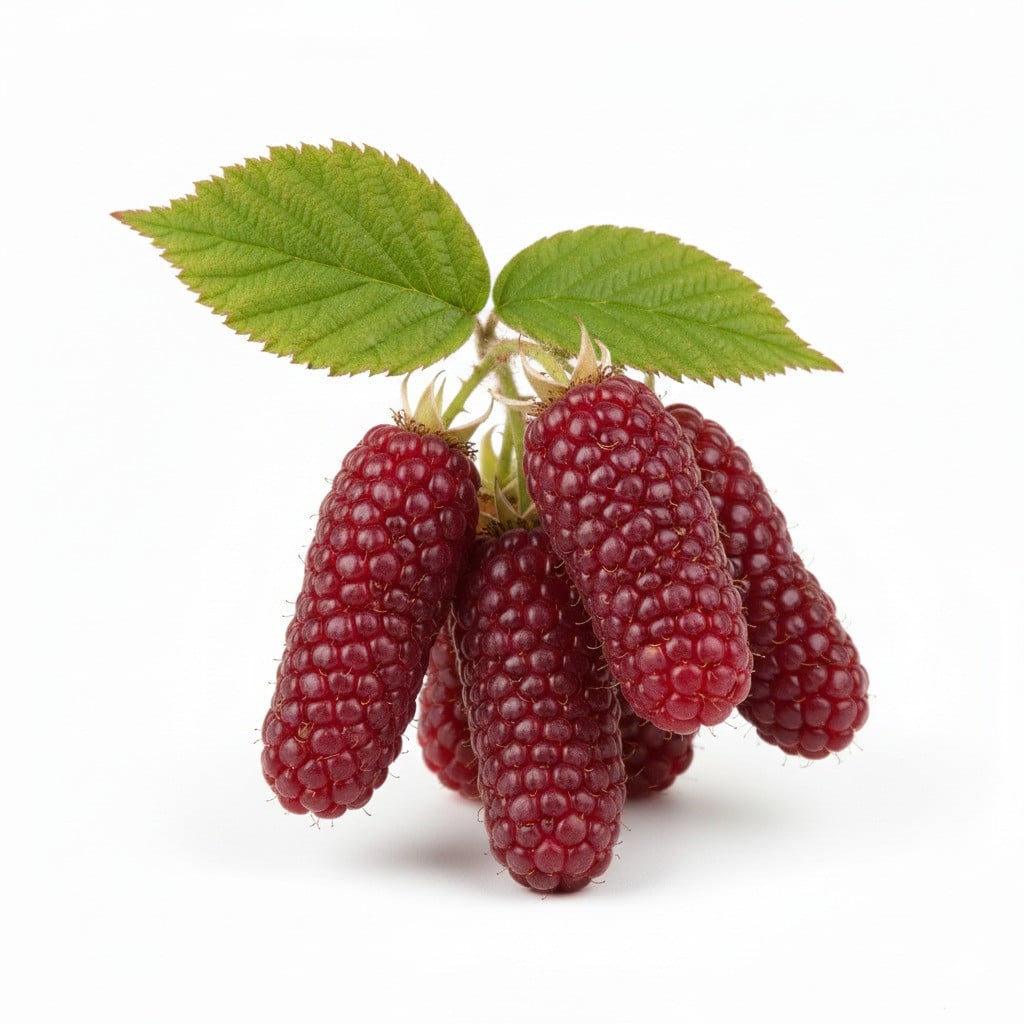
The tayberry (Rubus fruticosus x idaeus) is a relatively young fruit variety that was first bred in Scotland in the early 1960s from a cross between a raspberry and a blackberry variety. It was named after its place of origin on the Scottish River Tay. The plants are fairly frost-hardy and extremely robust against diseases and pests. In May, the shrubs — which belong to the rose family — display white flowers, and in June and July the dark red, elongated fruits, 3 to 4 centimetres long and more similar to raspberries, ripen. They have a very distinctive, slightly tart and refreshing flavour and contain a lot of vitamin C but little fructose. Their soft flesh is quite sensitive to pressure and heat. The shoots, which can grow up to four metres long, are densely thorned and resemble blackberry canes; tayberries also tend to spread by runners in the same way.
Growing tips
Tayberries like warm, sunny to semi-shady and somewhat sheltered spots. The soil should be rich in humus, well-drained and not too dry in summer. They can be planted in spring or fall. Loosen the planting site generously and amend heavy, loamy soil with sand and leaf humus. After planting, spread some garden compost in the root area and then work it in shallowly. Just two plants are enough for a family of four; the planting distance should be at least 150 centimetres, preferably two meters. Tayberries should always be planted a little deeper in the ground than they were in the pot. The plants, like their parents blackberry and raspberry, are best grown on a trellis to prevent impenetrable thickets. Keep the soil moist for the first time after planting. The plants are very grateful for a layer of mulch, for example grass cuttings, especially as winter approaches. In very cold regions and extremely icy winters, protection with coniferous branches or fleece is advisable. An organic fertilizer or a dose of compost in spring promotes flower formation.

Companion Plants

Antagonistic Plants

Diseases
Grey mold

Pests
Spider mites
Aphids