Melon (Sugar melon)

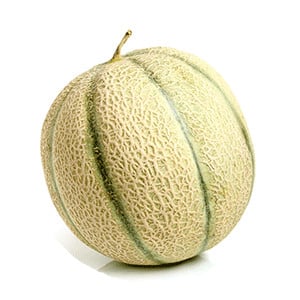
Melon (Sugar melon)
Cucumis melo
Pflanzenfamilie
Curcurbits (Cucurbitaceae)
Saisonübersicht
Voranzucht
Pflanzung
Ernte
J
F
M
A
M
J
J
A
S
O
N
D
Details


Lichtbedarf
Sonnig

Wasserbedarf
Sehr feucht

Boden
Mittelschwer (lehmig)

Nährstoffbedarf
Hoch

Pflanzabstand
80 cm

Reihenabstand
80 cm

Saattiefe
2 cm
Anleitungen
Anfang April

Propagating
Beschreibung
The sugar melon (Cucumis melo) is an annual plant species whose berry fruits are used as fruit. It usually forms climbing shoots up to five meters long. Various cultivated forms of the sugar melon exist. The sweet forms are mostly used as dessert, the non-sweet forms are more similar to a cucumber.
Herkunft:
Tropical to subtropical parts of Africa
Anbautipps
Your sugar melons should be grown in a warm environment (windowsill, greenhouse, conservatory). When the first leaves are formed, you can separate the seedlings. Continue to grow them in a warm environment until the soil in the field is warm enough (end of May - beginning of June). The small melon plants can be carefully planted in compost-filled planting holes. Protect the young plants from strong sunlight at the beginning. Water your melons regularly without waterlogging them. It is best not to use cold water from the tap (especially at colder temperatures), but always stale water from the rain barrel. When watering, make sure that you never water the melon plants from above onto the leaves, otherwise there is a risk of mold. During the main growing season, you can regularly prune the tops to form abundant branches with many flowers. During the year, these branches also form many large leaves, most of which you should cut off so that the melon plants put their energy into fruit development. Only a handful of leaves should remain on each branch above the fruit after pruning in the summer. Thin side shoots can be cut off completely except for a base of a few centimeters.

Gute Nachbarn


Krankheiten
Downy mildew
Ascochyta blight
Powdery mildews

Schädlinge
Leaf bugs
Nematodes
Land snails
Leaf-miner flies
Thrips
Aphids
Spider mites
White fly