Hugin

Variety
Hugin
Approved Data
created by Alex&Sempi at 05.04.2026
Features
Resistances
robust
Pest-resistant
hardy down to -30°C
krankheitstolerant
Location
light: sunny to semi-shady
Growth habit
self-fruiting
insect pollination
Taste
raw edible
sour
Edible
Essbarkeit: Frucht
Color
red leaves in fall
Herbstfärbung: orange
Herbstfärbung: purpur
Herbstfärbung: kupfer
Fruit shape
Kernfrucht
Season Overview
Planting
Harvest
Harvest
J
F
M
A
M
J
J
A
S
O
N
D
1ST YEAR
FOLLOWING YEARS
Description
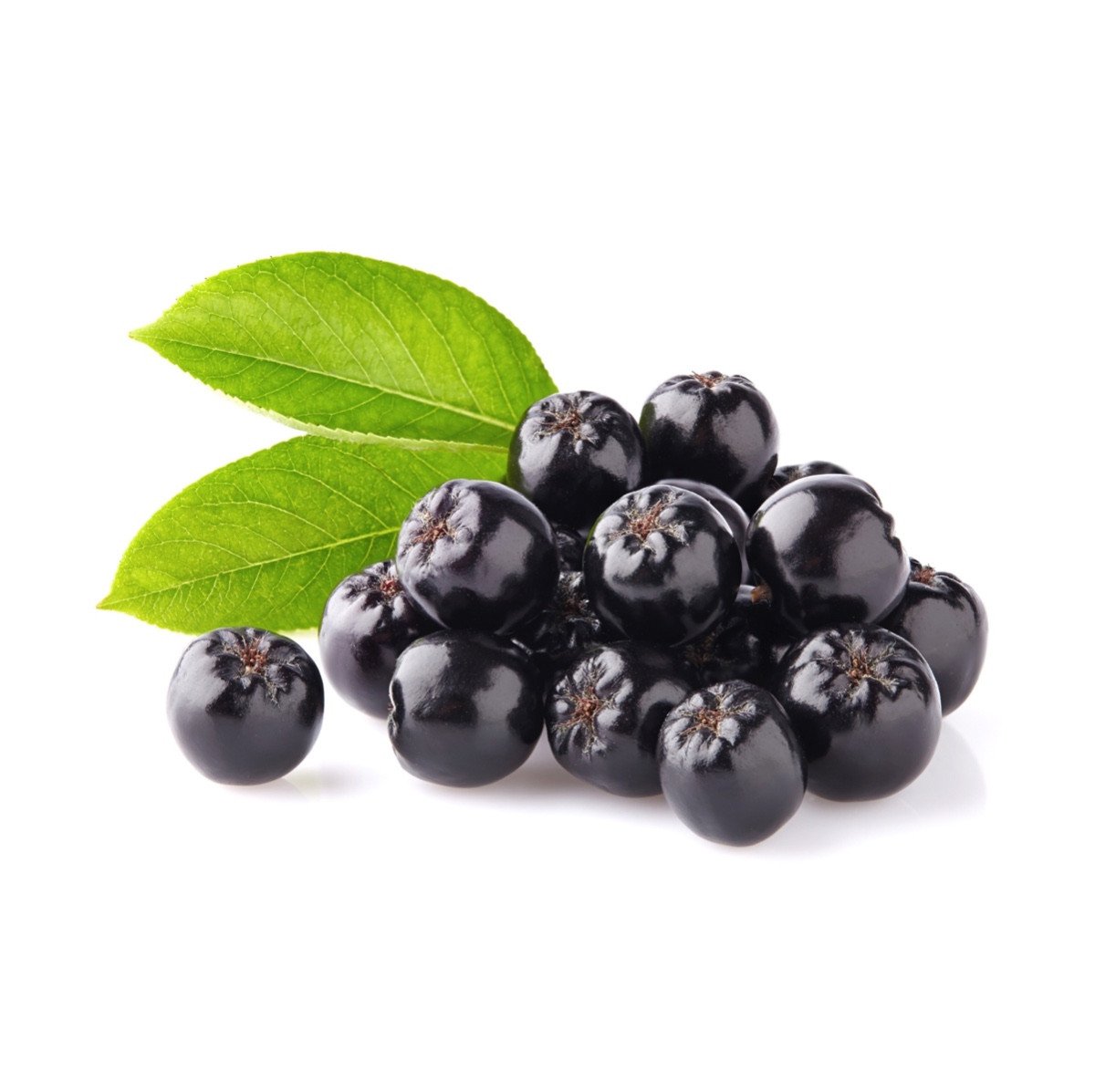
A new Swedish variety of black chokeberry, characterized by its very compact growth habit and ideal for small gardens and container gardening. It forms a shrub spreading 1 meter in all directions, producing simple clusters of small white flowers starting in May, followed by black-purple, edible berries that are highly prized by birds. They are highly nutritious and rich in vitamin C, and also possess digestive and antioxidant properties. Its large, smooth, oval foliage is very decorative in the fall, turning red, yellow, and purple before falling to the ground. It is a highly hardy species that can adapt to colder mountain climates or more humid environments. Provide it with a location without direct sunlight and well-drained, humus-rich, lime-free soil for more intense foliage coloration and abundant fruit production. The 'Hugin' variety is a very compact plant that grows to only 1 meter in height. It grows fairly slowly and has dense foliage. Its bark is smooth and reddish-brown. It bears deciduous, alternate, simple, oval, finely toothed leaves, about 6 cm long, of a glossy dark green hue, which truly blaze in the fall, taking on various shades of orange, copper, dark red, and violet. In April–May, fragrant pure-white flowers with a diameter of 2 cm appear. They are grouped in numerous umbels and attract bees. They give way to clusters of round green-violet fruits that turn black-violet and glossy, while their stems turn red. These edible fruits have a slightly tart taste but are rich in antioxidants and keep quite well through the winter if not eaten by birds. The genus of chokeberries (botanical name: Aronia) belongs to the rose family (Rosaceae). It comprises three species, two of which are relevant for fruit cultivation. The small pome fruits contain many minerals, trace elements, vitamins, and phytochemicals. The chokeberry is a true treasure in the garden, and its popularity as a fruit-bearing shrub is on the rise. It is not only appealing because of its fruit. The chokeberry impresses with its attractive appearance in every season. In May, the Aronia shrub blooms with beautiful white inflorescences. These are popular gathering spots for hungry insects. The beautifully veined, glossy green foliage adorns the shrub in summer. At the same time, small, spherical fruits form, their red color providing a striking contrast to the foliage. When the fruits are ripe, they turn red or black-blue. They are a coveted treat for both people and birds. To protect the fruits until harvest, a bird netting is recommended. When the leaves turn colorful in the fall, the aronia shrub shines like a jewel in the garden. Almost as valuable as its attractive appearance is the great hardiness of this plant genus. Chokeberries thrive in any garden soil, are extremely hardy, are resistant to diseases and pests, and require little care. Distribution The three species of chokeberry are native to eastern North America. Their range extends from Canada to the U.S. state of Florida. Growth All species of serviceberry are deciduous, upright-growing shrubs. They reach heights of one to three meters. Their growth is bushy and dense. The roots run deep. Serviceberries can live for 20 to 30 years. Leaves The simple leaves of chokeberries are ovate or elliptical. Depending on the species, they grow to be two to eight centimeters long. The leaf tip is pointed, and the margin is serrated. They feel coarse and leathery to the touch. The leaves are arranged alternately along the stem. On the upper surface of the midrib, two species develop black-red hairs. In autumn, the leaves glow in bright orange, intense red, and sometimes dark red. Chokeberries bear striking wine-red, pointed buds in winter. Flower Aronia shrubs bloom in corymbs consisting of ten to twenty individual flowers. The individual flowers have five sepals and five free petals. These are white or slightly pink. The approximately twenty stamens are fused at the base. The anthers are purple-red in color and add to the flowers’ appeal. The pretty individual flowers grow up to 15 millimeters in size and bloom one after another. Each individual flower blooms for about five days; the flowering period lasts a total of ten days. The flowers are hermaphroditic and self-pollinate. Fruit The fruits of the serviceberry ripen in the summer. Up to twenty small fruits hang from a cluster. In shape, they resemble apples. They are initially red in color and have a white waxy coating. They are between five and twelve millimeters in size. Depending on the variety and location, chokeberries are ripe from late August to early October. When ripe, they are red or black-blue. They ripen at different rates, and harvesting takes place in several stages. The flavor is aromatic, sweet-tart, and sometimes slightly tart. The longer they ripen, the sweeter the chokeberries taste. The flesh is a deep red color. Uses Aronia bushes are becoming increasingly popular as both ornamental and fruit-bearing plants. The fruits are said to have many beneficial properties. Among the indigenous peoples of North America, chokeberries were a valuable part of the diet, providing an abundant supply of vitamin C. Today, chokeberries are known in folk medicine as a "superfood." Those who enjoy the slightly tart taste of the fruit eat it straight from the bush. Others prefer to process chokeberries into jam, juice, or liqueur and combine them with sweeter ingredients. When dried, they add an intense flavor to muesli. The fruit is suitable for freezing. The intense color of the fruit’s skin serves as a natural dye in the food industry.
F1 Hybrid
Frostproof
Growing tips
🌞 Location & soil - Sunny to semi-shady, cool to warm location - Wind tolerant - Humus, loose, sandy-loamy - pH value: 5.5-6.5 (slightly acidic to neutral) - Rather poor soil (moderately rich in nutrients) - well-drained, permeable, no waterlogging 🌱 Sowing & planting - Direct sowing: October/November (natural stratification) - Pre-cultivation: possible from December/January - Substrate: loose, humus-rich (sowing soil + sand) - Cold germination: 2-5°C, stratification 6-8 weeks - Germination temperature: 15-20 °C - Germination time: several weeks - Sowing depth: 0.5 cm (half-light germinator) - Planting time: March/April or September/October (plant) May/June (after sowing) - Planting distance: 150-200 cm / hedge planting: 100-150 cm - Row spacing: 150-200 cm - Keep evenly slightly moist - Can only be propagated by cuttings 💧 Care - Watering: little, regular - Fertilization: little (compost, organic fertilizer in spring) 🌾 Pruning & harvesting - Fruits: End of August - mid-September (deep black, slightly ripe, soft, juice dark red / birds peck berries) - Pruning: Rejuvenation after 4-7 years (late winter - early spring) - Maintenance pruning: Shorten leading shoots by 1/3 (late winter - early spring) ❄️ Winter protection - not required (-35°C) 🌿 Good neighbors - Blue honeysuckle, currants, gooseberries, chokeberry, rock pear - Cornelian cherry, fragrant snowball, pussy willow, roses, astilbe, lupine, catmint - Elderberry, hydrangea, blueberries, rhododendron, ferns - Yarrow, marigold, cosmos, magerites, marigolds, sunflower - Lady's mantle, purple bells, crocuses, snowdrops, winter aconites, elf flower - Woodruff, lungwort, cranesbill, comfrey, clover, phacelia, wild garlic, mint (pot) - Fragrant nettle, sedge, blue fescue, lamp-cleaning grass, small Chinese reed, nasturtium - Echinacea, phlox, peonies, funkia, hellebores, umbrella bamboo - Chives, onions, garlic, lettuce, spinach, chard - Parsnips, carrots, beet, salsify, strawberries - Potentilla, spirea, summer lilac - Ornamental cherry, hazelnut, ornamental apple, dwarf pear - Forsythia, privet, weigelie 🚫 Bad neighbors - Raspberries, blackberries - Oregano, thyme, sage, savory, lemon balm, dill, coriander, parsley - Lavender, limb herbs, sedum, houseleek, wormwood - ivy, goutweed - Lovage, tomatoes, cucumbers, pumpkin, zucchinis, cabbage - Bamboo (stoloniferous), reeds, begonia - Walnut, maple, birch, willow, chestnut 🍂 Diseases - Root rot - Rust - mildew - Leaf spot diseases Pests - Birds - Aphids - Cherry vinegar fly - Codling moth
Details


Light requirement
Sunny

Water requirement
Moist

Soil
Medium (loamy)
Nutrient requirement
Medium

Light germinator

Germination temperature
18 - 20 °C (Degrees Celsius)

Plant distance
100 cm

Row spacing
100 cm

Seeding depth
0.5 cm

Companion Plants
Aronia berries
Beetroot
Black salsify
Blueberry
Buddleja / Butterfly Bushes
Carrots
Catnip
Chard
Chives
Clover / Trefoil
Comfrey
Common marigold
Coneflower (Echinacea)
Crocus
Currant
Daisies
Dogwood
Elderberry
Forsythia
Funk
Garden cosmos / Mexican aster
Garlic
Garlic chives
Geranie/Pelargonie
Gooseberry
Grasses - feather-bristled grasses, lamp-cleaning grasses
Grasses - Fescue
Grasses - Sedges
Hazelnut
Hellebores
Honigbeere (Lonicera kamtschatica)
Hydrangea / Hortensia
Large cranberry / American cranberry
Lettuce (Lettuce)
Lingonberry / Partridgeberry / Mountain cranberry
Lung herbs
Lupine / Bluebonnet
Make
Nasturtium
Onion
Onion (Spring onion)
Parsnip
Peony
Phacelia / Scorpionweed / Heliotrope
Phlox, flame flower
Privet
Purple bellflower, silver bellflower
Quadriceps
Rhododendron
Rock pear (Amelanchier)
Rose
Rudbeckia (Coneflower / Black-eyed-susans)
Scented nettles
Snowdrop
Spinach (Summer)
Spinach (Winter)
Spirea
Strawberry
Sunflower
Sweet woodruff / Sweetscented bedstraw
Tagetes / Marigolds
Weigela
Wild garlic
Women's coats
Yarrow

Antagonistic Plants
Aubergine / Eggplant
Begonias
Blackberry / Brambles
Broccoli
Broccoli raab / Stem cabbage / Cima di rapa
Brussels sprouts
Brussels sprouts
Cabbage (Cabbage)
Cabbage (Pointed cabbage)
Cabbage (red cabbage)
Cabbage (Savoy cabbage)
Cauliflower
Chili
Chinese kale - Kai-lan / Chinese broccoli
Collard greens
Collard greens (Kale)
Collard greens (Tuscan kale / Dinosaur kale / Palm tree kale)
Common mugwort
Coriander / Cilantro
Corn / Maize
Courgette / Zucchini
Cucumber (African horned cucumber / Kiwano)
Cucumber (Caigua)
Cucumber (Melothria)
Cucumber / Gherkin
Dill
Fennel
Florence fennel / Finocchio
Garden squash - Patisson / UFO squash
Grasses - Bamboos
Grasses - reeds, cattails, bulrushes
Hair cucumbers / snake gourds
horse chestnut
Ivy
Kohlrabi / German turnip / Turnip cabbage
Lavender
Lovage
Maples
Melissa
Mizuna / Japanese mustard greens
Napa cabbage / Chinese cabbage
Okra
Oregano
Ornamental pumpkin
Pak Choi
Parsley
Pepper / Paprika
Potato
Pumpkin / Squash
Rapeseed
Rapeseed - Sheer cabbage / Siberian cabbage
Rapini / Broccoli rabe
Raspberry
Rhubarb
Rutabaga / Swedish turnip
Sage
Savory
Sponge gourd / Egyptian cucumber / Vietnamese luffa
Stem herbs
Succulents
Thyme
Tomato (Bush tomato)
Tomato (Cocktail bush tomato)
Tomato (Cocktail Stake Tomato)
Tomato (Stake tomato)
Turnip
Turnip greens - Choy Sum / Chinese flowering cabbage
Turnip greens - Mizuna
Turnip greens - Tatsoi
Turnips - Oilseed turnips
Turnips - Wild turnips
Vegetable cabbage - Forage cabbage
Vegetable cabbage - Ribbed cabbage / Portuguese cabbage
Vegetable cabbage - wild cabbage / ancient cabbage
Walnut family
Willows
Yalta tomatoes
Diseases
Septoria
Root Rot
Angular leaf spot of cucumber
Powdery mildews
Pests
Caterpillars
Spotted wing drosophila
Aphids
Common winter moth