Nektarine 'Nektarose'

Variety
Nektarine 'Nektarose'
created by Ninchen28 at 22.01.2025
Features
Color
yellow
red
Resistances
heat resistant
Taste
sweet
Growth habit
growth habit: compact
Location
Heat requirement: high
sheltered from the wind
Season Overview
Planting
Harvest
Harvest
J
F
M
A
M
J
J
A
S
O
N
D
1ST YEAR
FOLLOWING YEARS
Description
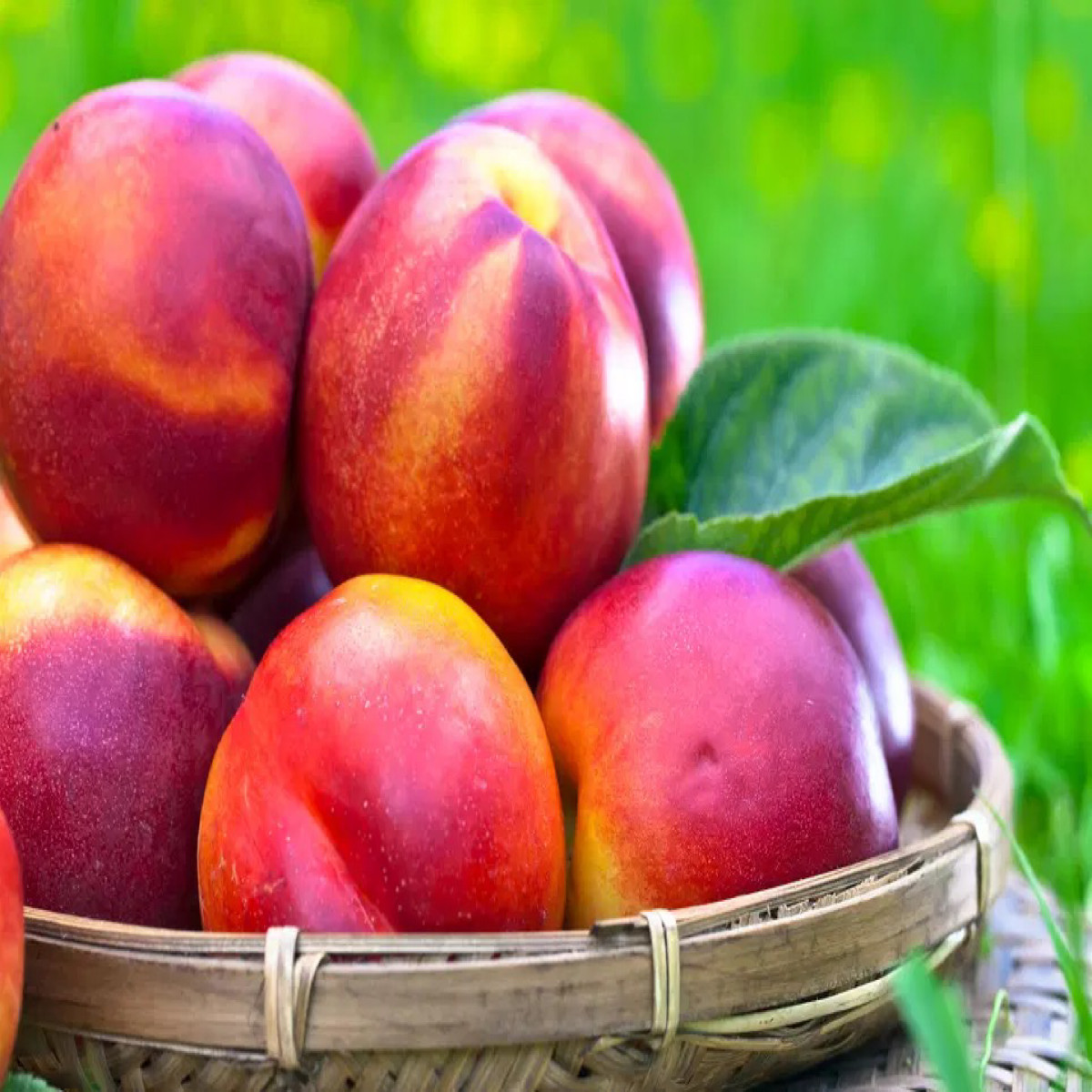
The nectarine 'Nektarose' is a real highlight for all lovers of sweet and juicy fruits that are reminiscent of a warm summer in the south. The fruit tree bears small white flowers in May. The hardy (bot.) Prunus persica var. nucipersica 'Nektarose' impresses with its large fruits, which are harvested from the end of August. A warm, sheltered location with plenty of sun is important for a rich harvest so that the fruits of the nectarine 'Nectarose' develop the necessary size and ripen accordingly. When fully ripe, the greenish-yellow nectarines, which are almost completely covered in red, have white flesh with a hint of green. Once the fruits have reached full ripeness, they are sensitive to pressure due to their softness and the stone can be easily removed.
F1 Hybrid
Frostproof
Growing tips
The nectarine 'Nectarose' has a compact and vigorous growth habit. Due to its growth width of 2 - 3 m, the tree can be used as a great eye-catcher. For example, the nectarine looks very attractive as a solitary tree on a lawn or in front of a light-colored wall. A normal but nutrient-rich garden soil is sufficient for planting. With this variety, it is not absolutely necessary to plant another nectarine tree of the same or a different variety, as this variety does not require a pollinator. However, several trees increase the yield. Prunus persica var. nucipersica 'Nectarose', which belongs to the heart-root family, grows between 30 and 50 cm per year and reaches an impressive height of around 400 cm after a few years. After the leaves change color beautifully in autumn, the nectarine 'Nectarose' loses its foliage and goes dormant for the winter.
Details


Light requirement
Sunny

Water requirement
Moist

Soil
Medium (loamy)
Nutrient requirement
Medium

Plant distance
250 cm

Row spacing
250 cm

Seeding depth
Not specified

Companion Plants
Apple
Bean (Dwarf bean)
Beetroot
Black salsify
Borage
Buddleja / Butterfly Bushes
Carrots
Catnip
Chives
Common marigold
Coneflower (Echinacea)
Coriander / Cilantro
Daisies
Dill
Garden cosmos / Mexican aster
Garlic
Garlic chives
Geranie/Pelargonie
Lavender
Lettuce (Lettuce)
Melissa
Mountain mints
Nasturtium
Onion
Onion (Spring onion)
Oregano
Parsnip
Pear
Phacelia / Scorpionweed / Heliotrope
Phlox, flame flower
Rock pear (Amelanchier)
Rose
Rudbeckia (Coneflower / Black-eyed-susans)
Sage
Savory
Scented nettles
Spinach (Summer)
Spinach (Winter)
Stem herbs
Strawberry
Succulents
Tagetes / Marigolds
Thyme
Women's coats
Yarrow

Antagonistic Plants
Abyssinian cabbage / Ethiopian mustard
Aubergine / Eggplant
Bean (Broad bean / Faba bean / Field bean)
Bean (Runner bean)
Bergenias
Blackberry / Brambles
Blueberry
Broccoli
Brussels sprouts
Brussels sprouts
Cabbage (Cabbage)
Cabbage (Pointed cabbage)
Cabbage (red cabbage)
Cabbage (Savoy cabbage)
Cauliflower
Chili
Chinese kale - Kai-lan / Chinese broccoli
Collard greens
Collard greens (Kale)
Collard greens (Tuscan kale / Dinosaur kale / Palm tree kale)
Comfrey
Common mugwort
Corn / Maize
Courgette / Zucchini
Cucumber (African horned cucumber / Kiwano)
Cucumber (Caigua)
Cucumber (Melothria)
Cucumber / Gherkin
Currant
Elderberry
Fennel
Florence fennel / Finocchio
Funk
Garden squash - Patisson / UFO squash
Gooseberry
Grasses - Bamboos
Grasses - reeds, cattails, bulrushes
Hair cucumbers / snake gourds
Hazelnut
Hellebores
horse chestnut
Hydrangea / Hortensia
Ivy
Jerusalem artichoke / Topinambur
Kohlrabi / German turnip / Turnip cabbage
Lovage
Lung herbs
Lupine / Bluebonnet
Make
Maples
Mizuna / Japanese mustard greens
Napa cabbage / Chinese cabbage
Ornamental pumpkin
Pak Choi
Pepper / Paprika
Potato
Privet
Pumpkin / Squash
Purple bellflower, silver bellflower
Quadriceps
Rapeseed
Rapeseed - Sheer cabbage / Siberian cabbage
Rapini / Broccoli rabe
Raspberry
Rhododendron
Rutabaga / Swedish turnip
Sea coal
Sponge gourd / Egyptian cucumber / Vietnamese luffa
Spruce trees
Sunflower
Sweet potato
Sweet woodruff / Sweetscented bedstraw
Tomato (Bush tomato)
Tomato (Cocktail bush tomato)
Tomato (Cocktail Stake Tomato)
Tomato (Stake tomato)
Turnip
Turnip greens - Choy Sum / Chinese flowering cabbage
Turnip greens - Mizuna
Turnip greens - Tatsoi
Turnips - Oilseed turnips
Turnips - Wild turnips
Vegetable cabbage - Forage cabbage
Vegetable cabbage - Ribbed cabbage / Portuguese cabbage
Vegetable cabbage - wild cabbage / ancient cabbage
Walnut family
Wild Cherry / Bird Cherry / Sweet Cherry
Wild garlic
Willows
Yalta tomatoes

Diseases
Powdery mildews
Root Rot

Pests
Schildläuse
Spider mites
Aphids