Mountain mints

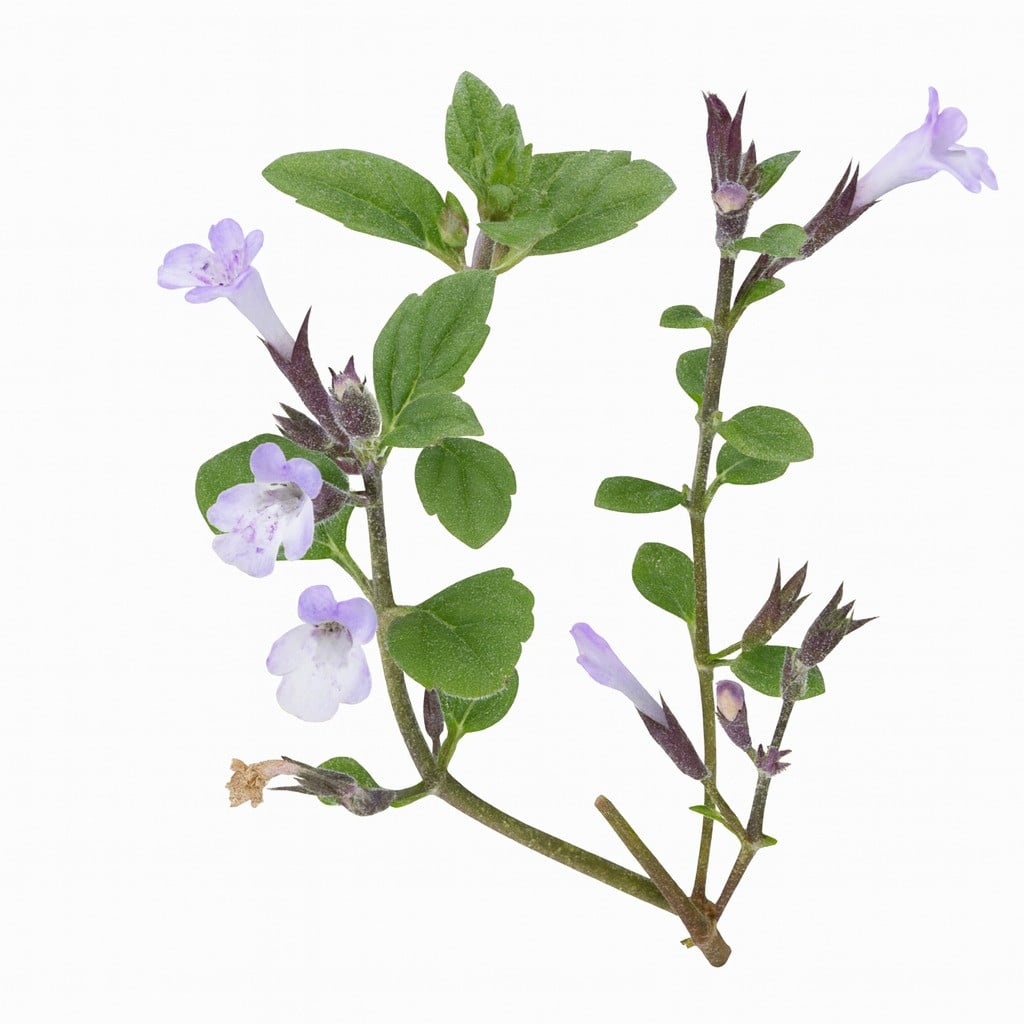
Mountain mints
Clinopodium (ehemals Calamintha)
Plant family
Mint family (Lamiaceae)
Season Overview
Sowing
Harvest
Harvest
J
F
M
A
M
J
J
A
S
O
N
D
1ST YEAR
FOLLOWING YEARS
Details


Light requirement
Sunny

Water requirement
Dry

Soil
Light (sandy)
Nutrient requirement
Low

Light germinator

Germination temperature
18 - 22 °C (Degrees Celsius)

Plant distance
25 cm

Row spacing
30 cm

Seeding depth
0.5 cm
Instructions
Description
Mountain mints, also known as stonecrops, are bee-friendly, mint-scented perennials. Mountain mints belong to the Lamiaceae family. The genus of mountain mints, recently described under the term Clinopodium, comprises around 170 species. However, the name Calamintha is more common and is still used in nurseries. Mountain mint, also known as stonecrop, is a perennial herbaceous plant. It originally comes from Central to Southern Europe and Asia. Depending on the species and variety, mountain mint grows to a height of 30 to 60 cm and often forms runners. It resembles catmint (Nepeta) in appearance. On square, downy, hairy stems are staggered, opposite, pointed ovate, hairy leaves with slightly toothed to strongly serrated edges. The leaves of mountain mint in particular contain oil reservoirs with essential oil, which is released when touched. It gives the flowering perennial a minty, tart, aromatic scent that gives it its name. The lip-shaped flowers, which grow together to form a long, thin tube, appear in clusters on inflorescences arranged in tiers, each emerging from a leaf axil. The flowers of mountain mint can be white, pink or purple. The flowering period of mountain mint begins in July and ends between September and October. Although mountain mint does not produce large quantities of nectar and pollen, it is a valuable plant. Thanks to their late and extremely long flowering period from July to October, they are very popular with bees and other pollinators. Mountain mints are therefore often the most popular flowering perennials in flower beds. After pollination, numerous dark, egg-shaped to round seeds, 4 in each case, are formed in a cymose fruit, the seed head of the mountain mint. The wild mountain mint (Clinopodium menthifolium) is occasionally found in forests. The two most common species in our gardens are the true mountain mint (Clinopodium nepeta), also known as small-flowered mountain mint or glandular mountain mint, and the large-flowered mountain mint (Clinopodium grandiflora Syn. Calamintha grandiflora). The latter is usually offered without a variety name as a wild form with runners and significantly larger, pink flowers, but there is also a variegated variety 'Variegata'. Uses Mountain mint leaves and flowers are best cut and used fresh or gently dried in summer when they are in bloom. They can be brewed into refreshing mountain mint tea, which has an intense, cool mint flavor with a slightly tart note. It is effective against nervous restlessness, inner tension and relieves cramps. In folk medicine, mountain mint was used as a digestive and diuretic spice. Apart from that, mountain mint can be used to enhance anything for which normal mint (Mentha) would otherwise be used. Miscellaneous Mountain mint is not poisonous and all parts of the plant are edible. The flowers of mountain mint are also edible and can be used as decoration. There is also no risk to pets or children if you want to plant mountain mint in your garden. Mountain mint attracts bees and numerous other pollinators and can also be grown for its fragrant herb.
Origin:
Central to Southern Europe, Asia
Growing tips
☀️ 1. Location - Sunny to semi-shady - full sun promotes fragrance and abundance of flowers. - Warm & dry - ideal for rock gardens, dry stone walls, herb beds. - Insect magnet: Bees, bumblebees and hoverflies love them. 🌱 2. soil - Well-drained, rather poor, sandy-gravelly. - No waterlogging - better too dry than too moist. - pH neutral to slightly calcareous. 🌿 3 Planting & sowing - Sowing: Spring (March-May). - Planting: Spring or fall. - Planting distance: approx. 25-30 cm (spreads loosely). - Mountain mint is perennial and can remain in the same place for up to 20 years. 💧 4. care - Very easy to care for - Mediterranean character. - Watering: only during long periods of drought. - Fertilizing: not necessary, too much fertilizer reduces aroma. - Pruning: ◦ Cut back slightly after flowering for compact growth. ◦ Remove old shoots in spring. ❄️ 5. Winter hardiness - Fully hardy (down to -23 °C). - Only provide some protection in pots. ✂️ 6. Harvest & use - Leaves and flowers fresh or dried for tea, cooking, fragrance. - Aroma: minty, slightly oregano-like. - Very good bee pasture. Mountain mint is robust, aromatic and spreads easily. It often repels pests, but can overgrow weaker plants. The choice of neighbors is therefore important. ✅ Good neighbors - Thyme - oregano - Sage - Lavender - Cabbages (white cabbage, broccoli, kale) - zucchinis - pumpkin - onions - leek - garlic - Echinacea - Hyssop - Borage ❌ Bad neighbors - Basil - Parsley - Chervil - Carrots - Parsnips - beet - other mints (Mentha species) Mountain mint is considered to be very hardy, but under stress (too moist, too shady, too rich in nutrients) similar problems can occur as with other mints. 🍄 8. diseases Powdery mildew Mint rust 🐞 9. pests Mint leaf beetle Aphids Caterpillars / butterfly larvae

Companion Plants
Abyssinian cabbage / Ethiopian mustard
Borage
Broccoli
Brussels sprouts
Brussels sprouts
Cabbage (Cabbage)
Cabbage (Pointed cabbage)
Cabbage (red cabbage)
Cabbage (Savoy cabbage)
Cauliflower
Chinese kale - Kai-lan / Chinese broccoli
Chives
Chives
Collard greens
Collard greens (Kale)
Collard greens (Tuscan kale / Dinosaur kale / Palm tree kale)
Coneflower (Echinacea)
Courgette / Zucchini
Garden squash - Patisson / UFO squash
Garlic
Garlic chives
Hyssop
Kohlrabi / German turnip / Turnip cabbage
Lavender
Leeks
Onion
Onion (Spring onion)
Oregano
Ornamental alliums
Pumpkin / Squash
Sage
Thyme
Vegetable cabbage - Forage cabbage
Vegetable cabbage - Ribbed cabbage / Portuguese cabbage
Vegetable cabbage - wild cabbage / ancient cabbage

Antagonistic Plants
Diseases
Root Rot
Peppermint rust
Powdery mildews
Pests
Caterpillars
Aphids