Tamarillo / Baumtomate

Variety
Tamarillo / Baumtomate
Approved Data
created by iamjuliekk at 15.04.2023
Features
Growth habit
growth habit: high
growth habit: high ranking
Color
red
Location
planting: greenhouse
Taste
sweet
Slightly bitter
Cultivation Break
4 Years
Season Overview
Propagating
Planting
Harvest
Harvest
J
F
M
A
M
J
J
A
S
O
N
D
1ST YEAR
FOLLOWING YEARS
Description
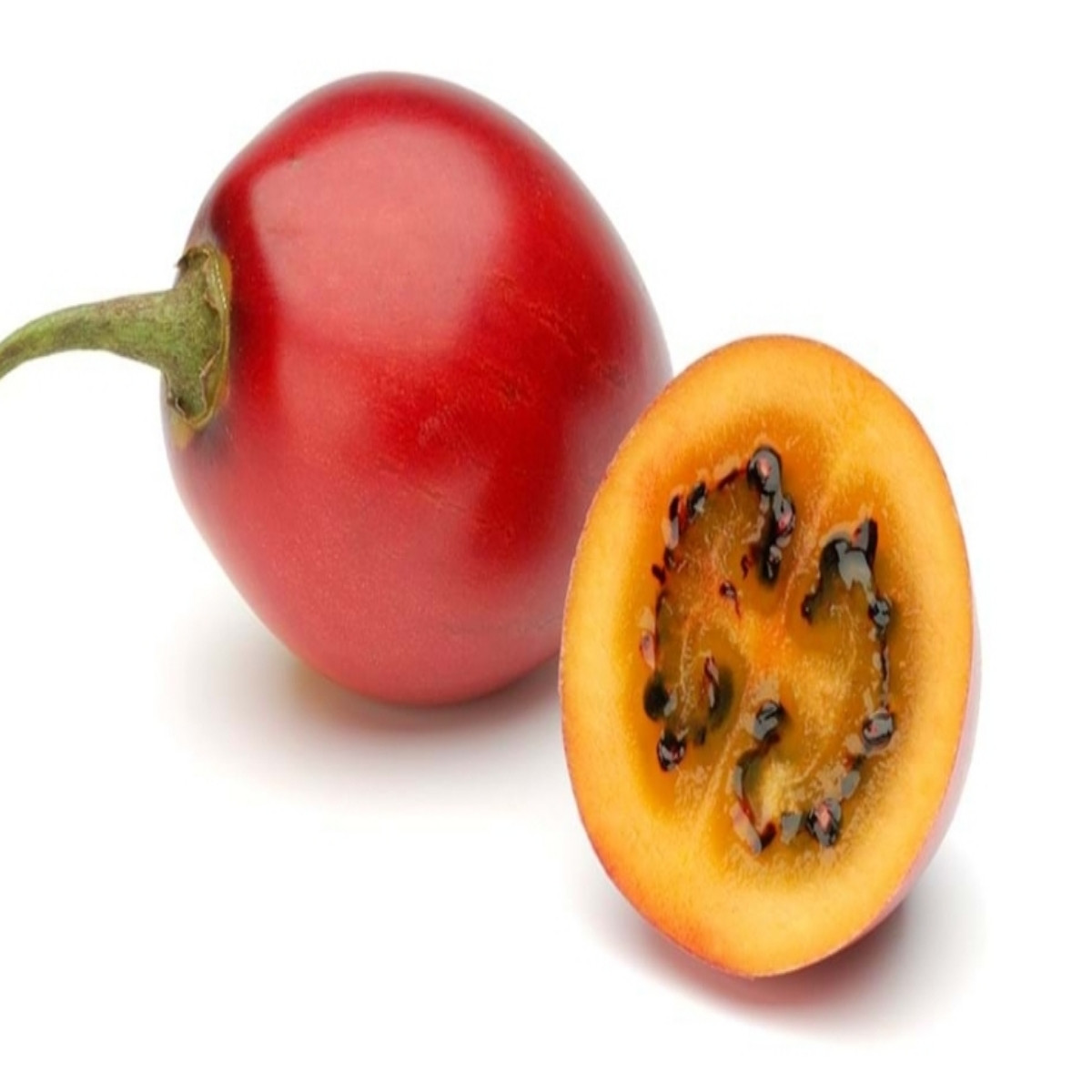
Like the tomato, the tamarillo or tree tomato (Solanum betaceum) is also a nightshade plant. The tree tomato and tomato are therefore related, but the tree tomato is not one of the varieties of tomato plants we use in the garden, so it is actually a separate species. The tamarillo is best known for its small, egg-shaped red or yellow fruit, 4-7 cm/1.6-2.8 in long, which should be peeled as the skin contains bitter substances. The flesh has a very interesting sweet aroma, which becomes more bitter as it ripens. To get to the delicious flesh, the fruit can also be simply spooned out. They are small trees (2-7 m/2.2-7.7 yd high) with densely hairy trunks. The first flowers are already formed at a height of 1.5 m/1.6 yd.
Non hybrid
Not frost resistant
Growing tips
Tropical tree for greenhouses, conservatories or as a container plant. Press seeds into sowing soil and keep warm. Germinates at 15-25°C/59-77°F in 2-4 weeks. The tamarillo usually bears tomato-like fruit from the second year onwards. Ideal location: Full sun. Plenty of water and fertilizer. Prune back in winter if necessary. Tamarillos require a lot of light, warmth and water. They are grown from seed from March (after the Ice Saints) on the windowsill. The plants also need wooden/corrugated wire rods or a trellis to which you can regularly tie them. Under-sowing with low-growing plants is also possible. Tamarillos are not hardy and must never be kept below 15°C/59°F. In our latitudes, the plant can only survive in a pot that is kept indoors.
Details


Light requirement
Sunny

Water requirement
Wet

Soil
Light (sandy)

Nutrient requirement
High

Plant distance
150 cm

Row spacing
200 cm

Seeding depth
0Not specified

Companion Plants

Antagonistic Plants
Beetroot
Celery (Celeriac / Celery root)
Celery (Celery)
Celery (Leaf celery / Chinese celery)
Courgette / Zucchini
Fennel
Florence fennel / Finocchio
Ornamental pumpkin
Pea
Pepper / Paprika
Potato
Pumpkin / Squash
Tomato (Bush tomato)
Tomato (Cocktail bush tomato)
Tomato (Cocktail Stake Tomato)
Tomato (Stake tomato)

Diseases
Grey mold
Downy mildew
Brown rot
Powdery mildews

Pests
Thrips
Land snails
Aphids
Spider mites
White fly