Echter Schaf-Schwingel (Wildform)

Variety
Echter Schaf-Schwingel (Wildform)
Approved Data
created by Alex&Sempi at 26.02.2026
Features
Color
grey-green
Resistances
robust
hardy down to -30°C
Taste
not edible
Location
Light: Sun
Growth habit
wind pollination
Fruit shape
Type: Closing fruit - caryopsis
Season Overview
Sowing
Harvest
J
F
M
A
M
J
J
A
S
O
N
D
1ST YEAR
Description
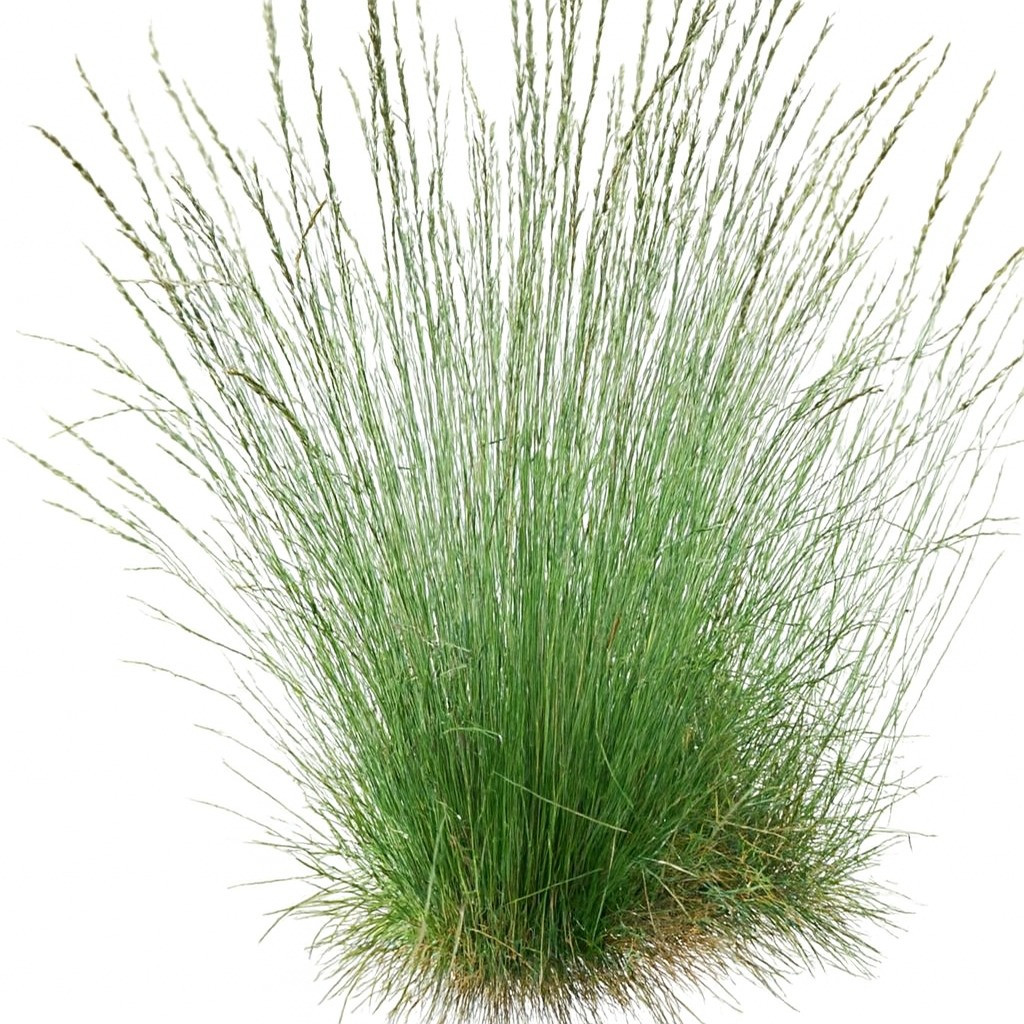
Sheep's fescue is a beautiful ground cover that offers many creative design ideas for the garden. Since Festuca ovina is low-maintenance and robust, the plant is ideal for beginners in gardening. This variety is extremely hardy and can tolerate temperatures down to -34°C. With its dense root system, it is excellent for stabilizing slopes and is a versatile ornamental grass! The thin, long leaves shimmer in an elegant gray-green color. They adorn their surroundings in every season. In summer, delicate flower panicles on long stalks delight the eye. Their greenish-yellow hue is covered with a hint of violet. Festuca ovina is native to the temperate zones of Europe and North Africa. Belonging to the sweet grass family, it thrives in the wild on pastures, rough grasslands, in sparse forests, and on slopes. It grows upright to overhanging, bushy, and forms dense, spherical clumps. Its height ranges from 20 to 40 centimeters. It is 20 to 30 centimeters wide. The sheep's fescue is particularly appealing to the eye with its picturesque gray-green foliage. Its leaves are frosted, grass-like, and evergreen. From July to August, the delicate flower panicles appear in a beautiful greenish-yellow hue. The flowers form brown fruit clusters called caryopses. These adorn the plant until late autumn. Festuca ovina is an enchanting ground cover in natural open spaces. The ornamental grass forms a dense, spherical carpet of plants in groups of eight to ten clumps per square meter. In this way, it covers areas and shines at the edge of woodlands. It lines paths and frames flower beds. It forms impressive partnerships with other ornamental grasses such as blue fescue or Chinese silver grass. Together with grasses with foliage in various shades of green, it offers a fairytale play of colors. In perennial beds, it adds charming accents alongside flowering perennials such as coneflowers. Sheep's fescue is an enchanting addition to rock gardens and heath gardens. Here it joins broom or broom heath. In planters, it adorns balconies and terraces. It can also be used to green roofs and design graves. Fescues (bot. Festuca) belong to the sweet grass family, which also includes all types of grain, sugar cane, and bamboo. Like most members of this plant family, they are herbaceous and have a round, hollow stem (culm). So-called nodes divide it into sections. Fescues are panicle grasses. The genus, with a total of around 650 species, is found worldwide. These typical border plants find a foothold even on rocky ground and are a decorative eye-catcher in any garden. They thrive reliably and are suitable as ground cover, solitary plants, and container plants. Normal garden soil or poor sandy soil is ideal for them. Distribution This extremely hardy genus is found worldwide. Its native habitat is various mountain regions. Endemic to rocky ground, the undemanding Festuca genus is found in many mountain ranges in Europe, Turkey, Central Asia, the Caucasus, and Siberia. Growth Grass plants of the Festuca genus grow into dense, cushion-like tufts or a dense, rich green carpet of individual grasses. The respective growth heights of Festuca plants range from a few centimeters to half a meter. Some tuft-like specimens grow up to one meter in width. The plants are small, medium green, blue-green to steel blue and are ideal for creating interesting color contrasts in the garden. Leaf The leaves of this genus from the true grass family are arranged in two parts. Each of the long, parallel-veined leaves of the fescue surrounds the stem in the form of a leaf sheath. This grows upwards from the base of the so-called grass node. The surface of the leaf is lanceolate and smooth-edged. Leaf colors range from green to blue-green to steel blue. At the front, the edges of the foliage leaves converge lanceolate. The leaf sheath is mostly open. Flower Festuca plants produce loosely branched, pale inflorescences in the form of so-called spike panicles in summer. These flowers hang on their own towering stems. They are oval and taper to a point. The spike panicle is a cluster of several individual flowers, called spikelets, which together form a bushy overall flower. Each individual spikelet is roundish and pointed, hermaphroditic, and enclosed in glumes: from the inside out, these are the lemma, palea, and lodicula. Awns are located at the tip of the spike. The lodicules at the base cause the glumes to open for fertilization. Pollination is carried out by the wind (anemophily), a typical feature of the monocotyledonous plant family. Fruit The fruit of fescue plants is called a caryopsis. It develops from an ovule after fertilization. During the ripening process, the seed coat fuses with the pericarp. The result is a closed fruit. After leaving the fruit, the seedling attaches itself to the ground with a special shield-shaped suction organ. Location Fescues are typical plants in heath and rock garden communities. They are hardy. Some varieties grow together on barren soil to form a perennial ground cover. Plants of this genus have low soil requirements. It is recommended to place them in a sunny location. Airy stone, sand, or limestone soils offer ideal conditions for these representatives of the grass family. Use Whether in heath gardens, rock gardens, as cemetery greenery, roof plants, or ground cover: the robust grass plants of the fescue make an impression as decorative elements. Festuca species are popular in rock gardens, as ground cover, and for greening slopes due to their robust nature. They are suitable for filling gaps next to and on stone, gravel, and park paths in green spaces. They are also a popular component of lawn seed mixtures. With their dense growth, they ensure a gap-free, resistant turf. Another use is to create a moss-like, grass-green, continuous green carpet in rock gardens. When planting in a pot, this popular ornamental grass is best overwintered indoors. This is particularly advantageous in cooler regions where ground frost persists long into the spring. Most grasses of this genus do not require any winter protection. Due to their low water and nutrient requirements, they are easy to care for in a large pot.
Non hybrid
Frostproof
Growing tips
Festuca ovina loves sunny locations. The grass is undemanding in terms of its substrate. It thrives on lean, nutrient-poor, dry to fresh soil. A well-drained substrate is important, as waterlogging has a negative effect. After flowering, the sheep's fescue should be pruned back vigorously to the top of the leaves. Thanks to its hardy characteristics, it does not require any protective measures during the cold season. 🌞 Location & soil - Full sun, warm, airy locations - Fescue grows on rocky, open regions - Ideal for rock gardens, gravel beds, dry stone walls, roof gardens or sunny slopes - Wind-tolerant - Mineral, loose, gravelly, sandy, stony, well-drained - Low in nutrients, sparse, low in humus - Dry to fresh, never permanently moist - Usually slightly acidic to slightly alkaline (pH 5.5-7.5), lime-tolerant 🌱 Sowing & planting - Direct sowing: April-May / September - Substrate: lean, loose, fine, sandy, slightly moist - Germination temperature: 15-20 °C - Germination period: 10-20 days - Sowing depth: 0.2 cm (light germinator) - Planting distance: 20-30 cm - Propagation: Division in spring or fall 💧 Care - Watering: very little, only in case of prolonged drought or new planting, no waterlogging - Fertilization: not necessary, rather harmful - In spring (February-March) comb out old foliage, remove brown parts, no radical pruning 🌿 Good neighbors - Sedum, sempervivum, lavender, thyme, mugwort, coneflower, gaura - Heather, broom, cinquefoil, grass clove, yarrow, woolly cicely, rosemary - Limb herbs, catmint, steppe sage, bellflower, lady's mantle 🚫 Bad neighbors - Ivy, goutweed, periwinkle, Waldsteinia - Bamboo, Japanese knotweed, mint - Dahlias, delphiniums, sunflowers, pipe grass, horsetail - Ferns, funkia, Caucasian forget-me-not, foam flower, fairy flower - Lungwort, geraniums, purple bellflower, bergenia, marsh marigold - Astilbe, hellebore, forest grasses, ostrich fern, honeysuckle, saxifrage, ligularia - Roses, peonies, hydrangeas, rhododendrons, blueberries 🍂 Diseases - Fungal infections - Helminthosporium leaf spot - Rust - Root rot 🐌 Pests - Aphids - Voles, field mice - Caterpillars
Details


Light requirement
Sunny

Water requirement
Dry

Soil
Light (sandy)

Nutrient requirement
Low

Light germinator

Germination temperature
15 - 20 °C (Degrees Celsius)

Plant distance
20 cm

Row spacing
30 cm

Seeding depth
0.2 cm

Companion Plants

Antagonistic Plants
Bergenias
Blueberry
Caucasian forget-me-not
Dahlia
Evergreen
Funk
Geranie/Pelargonie
Grasses - Bamboos
Grasses - reeds, cattails, bulrushes
Hellebores
Horsetail
Hydrangea / Hortensia
Ivy
Large cranberry / American cranberry
Larkspur
Lingonberry / Partridgeberry / Mountain cranberry
Lung herbs
Make
Mint
Peony
Purple bellflower, silver bellflower
Quadriceps
Rhododendron
Rose
Succulents - Saxifragaceae
Sunflower

Diseases
Powdery mildews
Root Rot
Pests
Caterpillars
Aphids
Voles