Siniczka

Variety
Siniczka
Approved Data
created by Alex&Sempi at 05.04.2026
Features
Growth habit
insect pollination
Color
blue
Taste
aromatic
Location
light: sunny to semi-shady
Resistances
robust
Winterhärte bis -40°C
Fruit shape
Typ: Schließfrucht - Beere
Season Overview
Planting
Harvest
Harvest
J
F
M
A
M
J
J
A
S
O
N
D
1ST YEAR
FOLLOWING YEARS
Description
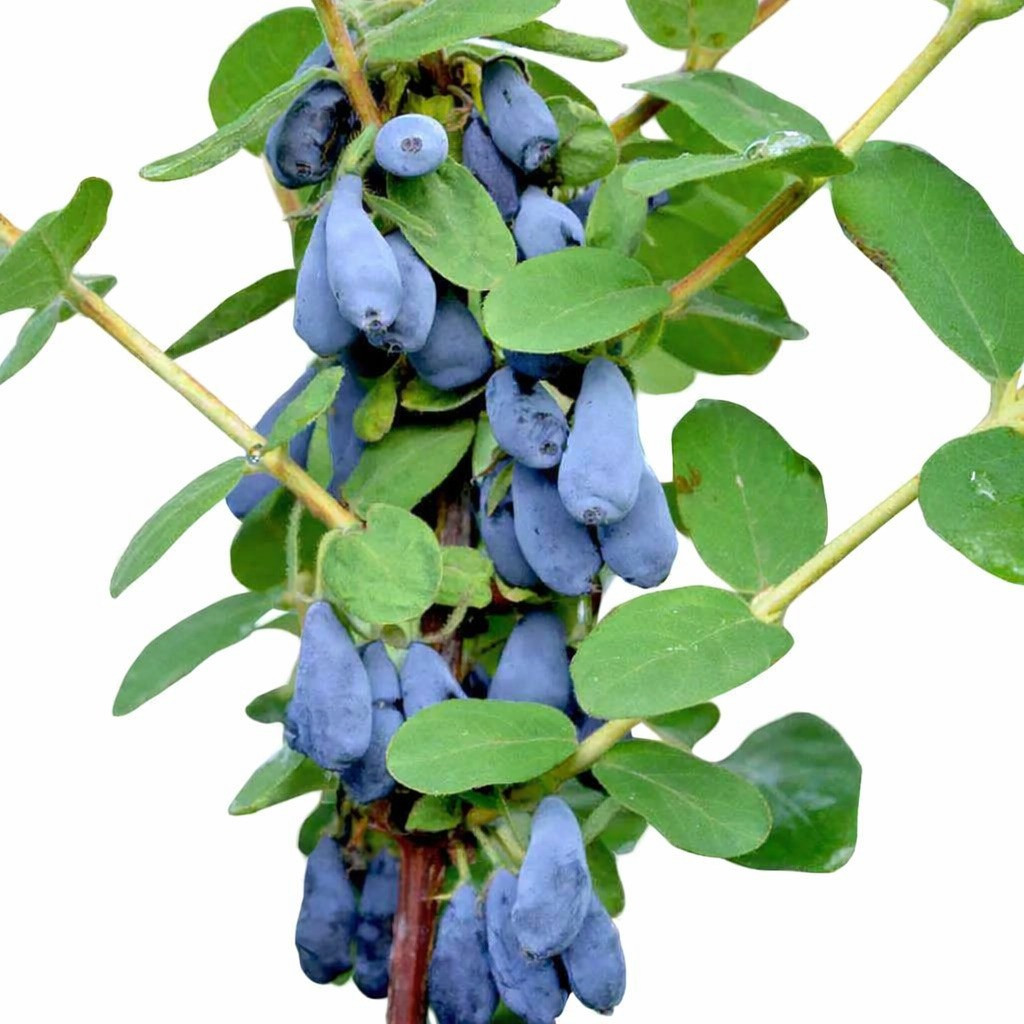
The 'Siniczka' variety is a Russian selection that was introduced in 1998. Robust and hardy, it forms a bushy shrub with a dense, rounded crown, reaching 1.60 m in height and 1.20 m in width. The shrub is deciduous, featuring opposite, oval, dark green leaves with a slight gray-bluish sheen, 3 to 8 cm long. Flowering begins in March with tubular, paired yellow-green flowers that are fairly inconspicuous but attract many bees. Fruiting occurs mainly on one- and two-year-old branches. The shrub is then covered with barrel-shaped, oval berries that have a characteristic ring in the center, are covered in a blue bloom, 1.5 to 2 cm long, 0.6 to 0.7 cm in diameter, weigh about 1 gram, and have a honey-like scent. They contain tiny seeds that are not noticeable when eaten. Ripening begins in early June, and the berry is filled with greenish-yellow, juicy, sweet-and-sour flesh, similar in taste and appearance to blueberries. Harvesting takes place gradually as the flesh turns red. A single plant produces about 2.5 to 4 kg of fruit per plant, depending on age and growing conditions. To improve fruit set, it is advisable to plant at least two plants. The varieties 'Morena', 'Nimfa', and 'Silginka' can be good pollination partners. The flowers attract bees and are rich in vitamins B and C, fiber, minerals, and antioxidants. In the kitchen: After harvesting, May berries keep in the refrigerator for only 2 to 3 days, preferably in the crisper drawer. The fruits of the 'Siniczka' can be enjoyed fresh, and for added flavor, they can be sprinkled with a little granulated sugar. They are excellent for jellies or jams and can also be used in fruit salads, muffins, smoothies, cakes, etc. Even when dried, the berries retain their nutritional value. They can easily be frozen to extend their enjoyment. Create a true culinary garden in your yard by choosing the edible honeysuckle. Ideal for a tasty or rustic hedge, choose a sunny spot that is protected from excessive heat, in cool, fertile, and lime-free soil. Combine them with other delicacies such as raspberries, currants, blackberries, blueberries, or goji berries (Lycium barbarum) for delicious harvests. You can also grow it in a pot on a patio to enjoy nature. For a splash of color, combine it with ornamental shrubs such as fragrant osmanthus, lilac, spirea, abelia, Mexican orange blossom, or kolkwitzia, keeping in mind the honeysuckle’s space requirements. Let yourself be enchanted by its beguiling fragrance in the spring! The blue honeysuckle (Lonicera caerulea), also known as the blue doubleberry or Siberian blueberry, is a plant species in the honeysuckle genus (Lonicera) within the honeysuckle family (Caprifoliaceae). It has a circumpolar distribution. It is the only honeysuckle species that produces fruit edible to humans, although Northeast Asian populations produce significantly tastier berries than North American and European populations. Consequently, the names Kamchatka berry, Gimolost (the Russian name for the berry), and Haskap (the name used by the Ainu indigenous peoples of the Kuril Islands and northern Japan) were borrowed from its eastern ranges and established primarily as collective terms for its cultivated varieties, but also generally applied to the entire species. Other common names include (referring to the very early harvest period) Mayberry, Firstberry, and Honeyberry. Distribution In Europe, in addition to the subspecies caerulea, the subspecies borbasiana and pallasii are also found, particularly in high-mountain regions and in cool, northern areas. A major distribution area is in the Alps and the Alpine foothills. In Germany, it occurs only in Baden-Württemberg and Bavaria; in Austria, in all federal states except Vienna and Burgenland; and in Switzerland, in the Alps, on the Alpine edge of the Mittelland, and in the Jura. Additional populations are found in the Pyrenees, the Bavarian Forest, and in the mountains of Southeast Europe (e.g., Bulgaria, Romania) and Italy. Further natural populations extend from Scandinavia (Sweden, Finland) through the Baltic region and large parts of northern Russia to Ukraine. The blue honeysuckle grows in moist forests, shrublands, in the dwarf shrub zone, and in raised bogs. It primarily colonizes moist to wet, nutrient-poor, and low-lime raw humus soils and occurs from the subalpine to the montane altitudinal zones up to elevations of 2,100 meters. In the Allgäu Alps, it reaches an altitude of 2,010 meters in the Tyrolean section on the Mutte near the Jöchelspitze. In Central Europe, it is a characteristic species of the spruce forest order (Piceetalia abietis), but also occurs in the communities of the blackthorn hedge order (Prunetalia spinosae) and the gray willow scrub order (Salicion cinereae). Growth The blue honeysuckle is a bare to more or less hairy shrub that reaches heights of 60–80 cm, rarely exceeding 150 cm. The non-twining branches and twigs contain a solid, white pith; their bark is initially reddish to dark brown and partially frosted, later turning gray-brown and peeling. The winter buds are brown-red, sometimes with a bluish bloom. The terminal buds are spherical, nine millimeters long, with an elongated tip. The lateral buds are oblong, protruding, and have keeled bud scales. Serial (gradually smaller toward the top) axillary buds are common. Leaf The opposite leaves are divided into a petiole and a blade. The hairy petiole is up to five millimeters long. The simple, pointed to rounded-pointed leaf blade, up to seven centimeters long, is elliptical or ovate to obovate and entire; it is dull with a bluish-green, sparsely hairy upper surface and a lighter, mainly hairy underside along the veins; the margin is ciliate. Flower Depending on the local climate and elevation, flowering can begin as early as March. The hermaphroditic, five-parted, yellowish-green, weakly zygomorphic (almost radially symmetrical) flowers with a double perianth hang in pairs in the leaf axils on a common stalk that is shorter than the flowers. They are accompanied by various bracts, the two longer outer ones being hairy. The calyx is very small with minimal lobes. The hairy corolla, about one centimeter long, is tubular and fused with shorter lobes. Fruit If fertilization occurs, the two ovules develop into double berries that are up to 1.5 centimeters long (up to 4 centimeters in cultivars), containing few seeds, and are black-blue, roundish to ellipsoid, and “frosted,” located within the fleshy inner bracts (pseudofruit) with persistent outer bracts. The flattened, brownish seeds are up to two millimeters long. Uses Since late 2018, the berries of the blue honeysuckle have been approved in the EU as a novel food for human consumption under the Novel Food Regulation. Beyond its primary use as a berry-bearing shrub, it is also used as an ornamental shrub due to its decorative flowers and remarkable fruits and is valued as one of the first blooming, insect-friendly harbingers of spring. Blue honeysuckle has been used for thousands of years in traditional medicine in Russia, Japan, the Kuril Islands, China, and several other Asian countries. It is believed that in local folk medicine, it was used to prevent high blood pressure, glaucoma, heart attacks, anemia, malaria, and osteoporosis, as well as to treat gastrointestinal disorders. Infusions prepared from berries and other plant parts were also used as a diuretic, antiseptic, and to treat throat and eye infections. From today’s perspective, its significance in folk medicine is easily explained by its chemical composition: The berries contain the macronutrients magnesium, sodium, potassium, calcium, and phosphorus, as well as significant amounts of vitamins A, C, and E, and trace elements such as boron, manganese, copper, barium, silicon, and iodine. They also contain sugars, mainly in the form of glucose, pectins, and tannins. A meta-study from 2024 compiled the key scientific publications from 2016 to 2023 on the antioxidant and anti-inflammatory effects, the preventive and therapeutic effects on lipid metabolism disorders, diabetes and obesity, as well as their liver- and blood vessel-protective efficacy. The juicy berries of the blue honeysuckle can be eaten both raw and cooked. This results in the following consumption and processing options, among others: • Fresh consumption (snacking; cake toppings; fresh fruit ingredient for muesli, yogurt, fruit salads, and smoothies) • Home-style processing into preserves such as jam, jelly, compote, fruit puree, fruit juice, and fruit leather. They can also be baked directly into sweet pastries. • Commercial processing into jams, fruit juices, fruit syrups, fruit preparations, freeze-dried berries, and granules (e.g., as ingredients for ice cream, granola bars, fruit yogurt, etc.) • Preparation of liqueurs, fruit wines, and fruit brandies The dark red juice also serves as a good natural colorant for other juices and foods. The berries are also suitable for freezing; depending on the variety, they either retain their shape after thawing or break down into a purée that works well as a dessert. Ecology The blue honeysuckle is primarily an insect-pollinated plant; its flowers are simple and structured to be easily accessible to most insects. The productivity of the flowers is rated as 2 (medium) for both pollen and nectar value. Depending on the local climate and elevation, the flowers appear as early as March, and their very early blooming period makes them a particularly important food source for insects active early in the year (e.g., overwintering butterfly species, bumblebee queens, and wild bees). Due to the often still low temperatures at this time, honeybees rarely play a role in pollination. Not only the flowers, but also the foliage has a very high ecological value for the insect world: To date, at least 27 different diurnal and nocturnal butterfly species (e.g., the honeysuckle fritillary and the bumblebee hawk-moth) have been documented as using the blue honeysuckle as a host plant for their caterpillars; eight of these species have also been observed visiting the flowers.
F1 Hybrid
Frostproof
Growing tips
🌞 Location & soil - Sunny to semi-shady, cool location - Protected from the wind, but airy - Humus-rich, loose, sandy-loamy - pH value: 6-7 (slightly acidic) - Rather poor soil (moderately rich in nutrients) - well-drained, permeable, no waterlogging 🌱 Sowing & planting - Direct sowing: October/November (natural stratification) - Pre-cultivation: possible from December/January - Substrate: loose, humus-rich (sowing soil + sand) - Cold germination: 2-5°C, stratification 6-8 weeks - Germination temperature: 15-20 °C - Germination time: several weeks - Sowing depth: 0.5 cm (light / half-light germinator) - Planting time: March/April or September/October (plant) May/June (after sowing) - Planting distance: 120-150 cm / hedge planting: 80-110 cm - Row spacing: 120-150 cm - Keep evenly slightly moist - Can only be propagated by cuttings 💧 Care - Always plant at least two different varieties - Watering: regularly, moderately - Fertilization: little (compost, organic fertilizer in spring), optional top dressing possible in summer 🌾 Pruning & harvesting - Fruits: May-June (dark blue, slightly frosted, soft) - Pruning: after the harvest (topiary) - Pruning: thin out older shoots if necessary ❄️ Winter protection - not required (-40°C) 🌿 Good neighbors - Blue honeysuckle (pollinator), currants, gooseberries, chokeberry, rock pear - Cornelian cherry, fragrant snowball, pussy willow, roses, astilbe, lupine, catmint - Elderberry, hydrangea, blueberries, rhododendron, ferns - Yarrow, marigold, cosmos, magerites, marigolds, sunflower - Lady's mantle, purple bells, crocuses, snowdrops, winter aconites, elf flower - Woodruff, lungwort, cranesbill, comfrey, clover, phacelia, wild garlic, mint (pot) - Fragrant nettle, sedge, small Chinese reed, nasturtium - Echinacea, phlox, peonies, funkia, hellebores, umbrella bamboo - Chives, onions, garlic, lettuce, spinach, chard - Parsnips, carrots, beet, salsify, strawberries - Potentilla, spirea, summer lilac - Ornamental cherry, hazelnut, ornamental apple, dwarf pear - Forsythia, privet, weigelie 🚫 Bad neighbors - Raspberries, blackberries - Oregano, thyme, sage, savory, lemon balm, dill, coriander, parsley - Lavender, limb herbs, sedum, houseleek, wormwood - ivy, goutweed - Lovage, tomatoes, cucumbers, pumpkin, zucchinis, cabbage - Bamboo (stoloniferous), reeds, begonia - Walnut, maple, birch, willow, chestnut 🍂 Diseases - Powdery mildew - Chlorosis - Leaf spot diseases 🐌 Pests - Aphids - Caterpillars - Leaf beetle - Cherry vinegar fly
Details

Light requirement
Semi-shaded

Water requirement
Moist

Soil
Medium (loamy)
Nutrient requirement
Low

Light germinator

Germination temperature
15 - 20 °C (Degrees Celsius)

Plant distance
135 cm

Row spacing
135 cm

Seeding depth
0.5 cm

Companion Plants
Arctic Bramble, Mammure
Aronia berries
Beetroot
Black salsify
Blueberry
Buddleja / Butterfly Bushes
Carrots
Catnip
Chard
Chives
Clover / Trefoil
Comfrey
Common marigold
Crocus
Currant
Daisies
Dogwood
Elderberry
Forsythia
Funk
Garden cosmos / Mexican aster
Garlic
Geranie/Pelargonie
Gooseberry
Grasses - Sedges
Hazelnut
Hellebores
Hydrangea / Hortensia
Jostaberry
Large cranberry / American cranberry
Lettuce (Lettuce)
Lung herbs
Lupine / Bluebonnet
Make
Mint
Nasturtium
Onion
Onion (Spring onion)
Parsnip
Peony
Phacelia / Scorpionweed / Heliotrope
Phlox, flame flower
Pines
Privet
Purple bellflower, silver bellflower
Quadriceps
Rhododendron
Rock pear (Amelanchier)
Rose
Rudbeckia (Coneflower / Black-eyed-susans)
Scented nettles
Snowdrop
Spinach (Summer)
Spinach (Winter)
Spirea
Spruce trees
Strawberry
Sunflower
Sweet woodruff / Sweetscented bedstraw
Tagetes / Marigolds
Weigela
Wild garlic
Women's coats
Yarrow

Antagonistic Plants
Abyssinian cabbage / Ethiopian mustard
Aubergine / Eggplant
Begonias
Blackberry / Brambles
Broccoli
Broccoli raab / Stem cabbage / Cima di rapa
Brussels sprouts
Brussels sprouts
Cabbage (Cabbage)
Cabbage (Pointed cabbage)
Cabbage (red cabbage)
Cabbage (Savoy cabbage)
Cauliflower
Chili
Chinese kale - Kai-lan / Chinese broccoli
Collard greens
Collard greens (Kale)
Collard greens (Tuscan kale / Dinosaur kale / Palm tree kale)
Common mugwort
Coriander / Cilantro
Courgette / Zucchini
Cucumber (African horned cucumber / Kiwano)
Cucumber (Caigua)
Cucumber (Melothria)
Cucumber / Gherkin
Dill
Garden squash - Patisson / UFO squash
Grasses - Bamboos
Grasses - reeds, cattails, bulrushes
Hair cucumbers / snake gourds
horse chestnut
Ivy
Kohlrabi / German turnip / Turnip cabbage
Lavender
Lovage
Maples
Melissa
Mizuna / Japanese mustard greens
Napa cabbage / Chinese cabbage
Oregano
Ornamental pumpkin
Pak Choi
Parsley
Pepper / Paprika
Potato
Pumpkin / Squash
Rapeseed
Rapeseed - Sheer cabbage / Siberian cabbage
Rapini / Broccoli rabe
Raspberry
Rutabaga / Swedish turnip
Sage
Savory
Sea coal
Sponge gourd / Egyptian cucumber / Vietnamese luffa
Stem herbs
Succulents
Thyme
Tomato (Bush tomato)
Tomato (Cocktail bush tomato)
Tomato (Cocktail Stake Tomato)
Tomato (Stake tomato)
Turnip
Turnip greens - Choy Sum / Chinese flowering cabbage
Turnip greens - Mizuna
Turnip greens - Tatsoi
Turnips - Oilseed turnips
Turnips - Wild turnips
Vegetable cabbage - Forage cabbage
Vegetable cabbage - Ribbed cabbage / Portuguese cabbage
Vegetable cabbage - wild cabbage / ancient cabbage
Walnut family
Willows
Yalta tomatoes
Diseases
Septoria
Angular leaf spot of cucumber
Powdery mildews
Pests
Caterpillars
Spotted wing drosophila
Common winter moth
Aphids