Lecesterias / Colorful roof flowers

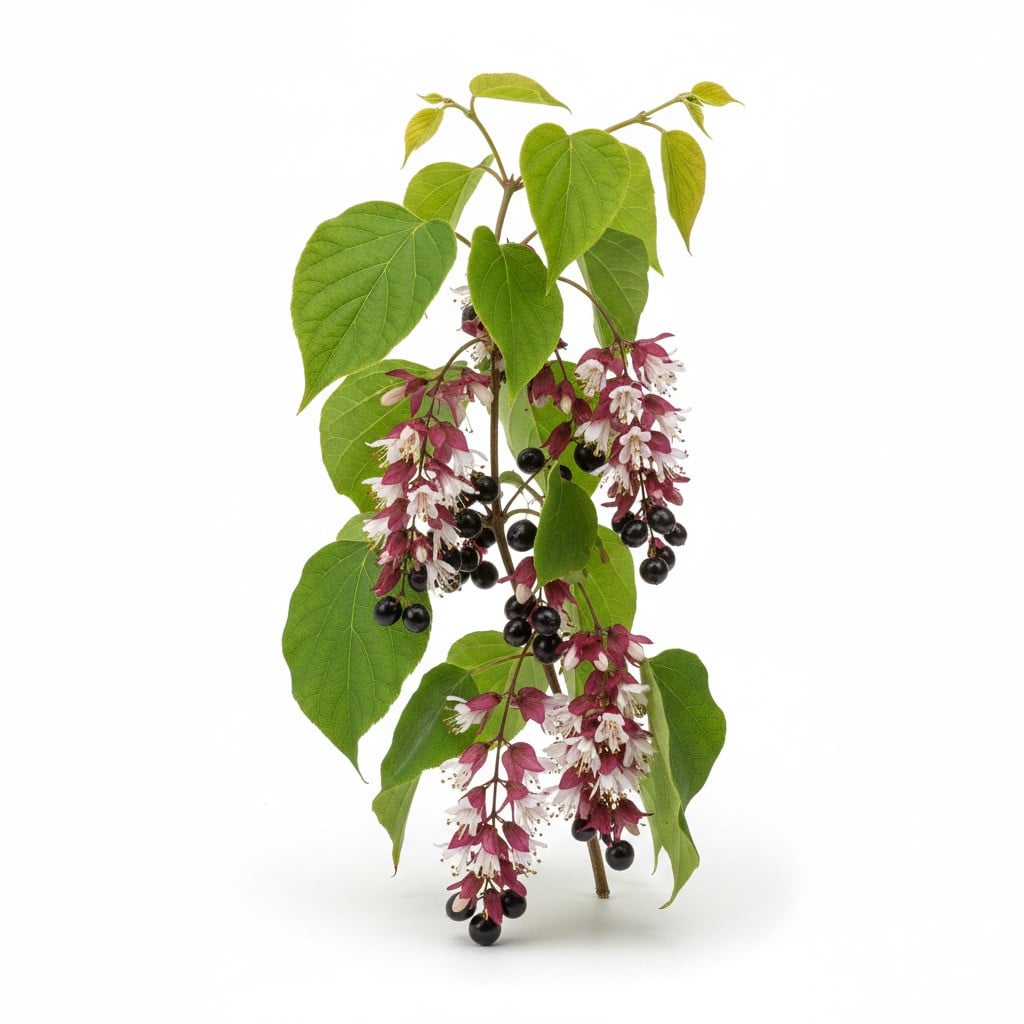
Lecesterias / Colorful roof flowers
Leycesteria
Plant family
Honeysuckle family (Caprifoliaceae)
Season Overview
Propagating
Planting
Harvest
Harvest
J
F
M
A
M
J
J
A
S
O
N
D
1ST YEAR
FOLLOWING YEARS
Details


Light requirement
Semi-shaded

Water requirement
Moist

Soil
Light (sandy)

Nutrient requirement
High

Light germinator

Germination temperature
18 - 22 °C (Degrees Celsius)

Plant distance
100 cm

Row spacing
100 cm

Seeding depth
0.2 cm
Instructions
Description
Leycesterias (bot. Leycesteria) are deciduous shrubs. They belong to the honeysuckle family (Caprifoliaceae). They are native to the north-western regions of the Himalayas as far as south-west China. The Leycesteria genus is divided into around five species. The green shrubs are now popular ornamental shrubs in our latitudes. Their exotic flair makes them striking eye-catchers. The spike-shaped red flowers are typical. They are beautiful and exude a pleasantly mild fragrance. Leycesterias reach 100 to over 250 centimetres in height and width. Some species are partially frost hardy. They are also suitable for keeping in containers. Leycesterias first came to Europe around one hundred years ago and are still not widely represented today. They are amateur shrubs. The semi-shrub often freezes back in cold winters. However, it sprouts again in spring. In mild climatic regions or in sheltered locations, the ornamental shrubs remain green in winter. In this case, they flower earlier in spring and reach greater heights. Leaf The Leycesteria genus has simple, lanceolate or ovate leaves. These taper to a point at the front. The foliage coloration of Leycesteria is green to light green. The leaves are between five and 20 centimeters long. They have a smooth leaf edge, which is irregularly serrated in some species. The underside of the leaves is light green. In autumn, the leaves of some species take on a decorative autumn color. They present themselves with a bright yellow or orange-red foliage. Flowering Leycesteria plants form striking reddish inflorescences. These appear in elongated, hanging spikes. The flowering period is from July to September, in some species it lasts until late fall. The flowers are usually clustered together in whorls between the large, colorful bracts. The flowers are tubular or trumpet-shaped and five-petaled. They have five unequal sepals. The five petals are funnel-shaped and reddish to purple. The flowers have a circle of five stamens and short filaments. The ovary consists of the five fused carpels. The stigma of Leycesteria is capitate. Fruit After flowering, Leycesteria shrubs produce soft berries or red-black, bitter, edible drupes. Growth habit Leycesteria shrubs grow upright and are undemanding woody plants. Depending on the species and location, they shed their foliage in the fall; some are evergreen. The fresh shoots, flower and leaf stems are slightly hairy. With increasing age, the shoots become woody and hollow on the inside. The plants grow densely, with multiple shoots and sprawling growth. They require sufficient space due to their broad growth.
Origin:
East Asia, northwestern Himalayas to southwestern China
Growing tips
Location Leycesteria plants develop best in sunny to semi-shady locations. They prefer a cool, mildly humid climate. Ideally, the soil should be moist, humus-rich and well-drained. The plants do not do well in wet conditions. Distribution The genus is distributed in East Asia. The shrubs can be found from the north-western Himalayas to south-western China. Utilization Leycesterias are popular ornamental shrubs because of their beautiful flowers, decorative berries and fragrance. Care/pruning Leycesterias are extremely easy to care for. The plants are pruning resistant. Due to the long flowering period, the best time for pruning is spring. Diseases/pests Leycesterias are not known to be susceptible to certain pests or diseases. Wintering plants in cellars or conservatories are occasionally infested with aphids or moth scale insects.

Companion Plants

Antagonistic Plants

Diseases
Root Rot
Pests
Land snails
Aphids
White fly