Dara (Wilde Möhre)

Variety
Dara (Wilde Möhre)
Approved Data
created by Hyldeblomst at 10.04.2023
Seed packet
Features
Color
white
pink
light pink
Location
planting: bed
planting: outdoor
Heat requirement: high
light: sunny to semi-shady
planting: rain-protected
Growth habit
growth habit: half-high
Resistances
drought tolerant
Cultivation Break
3 Years
Season Overview
Sowing
Harvest
J
F
M
A
M
J
J
A
S
O
N
D
Description
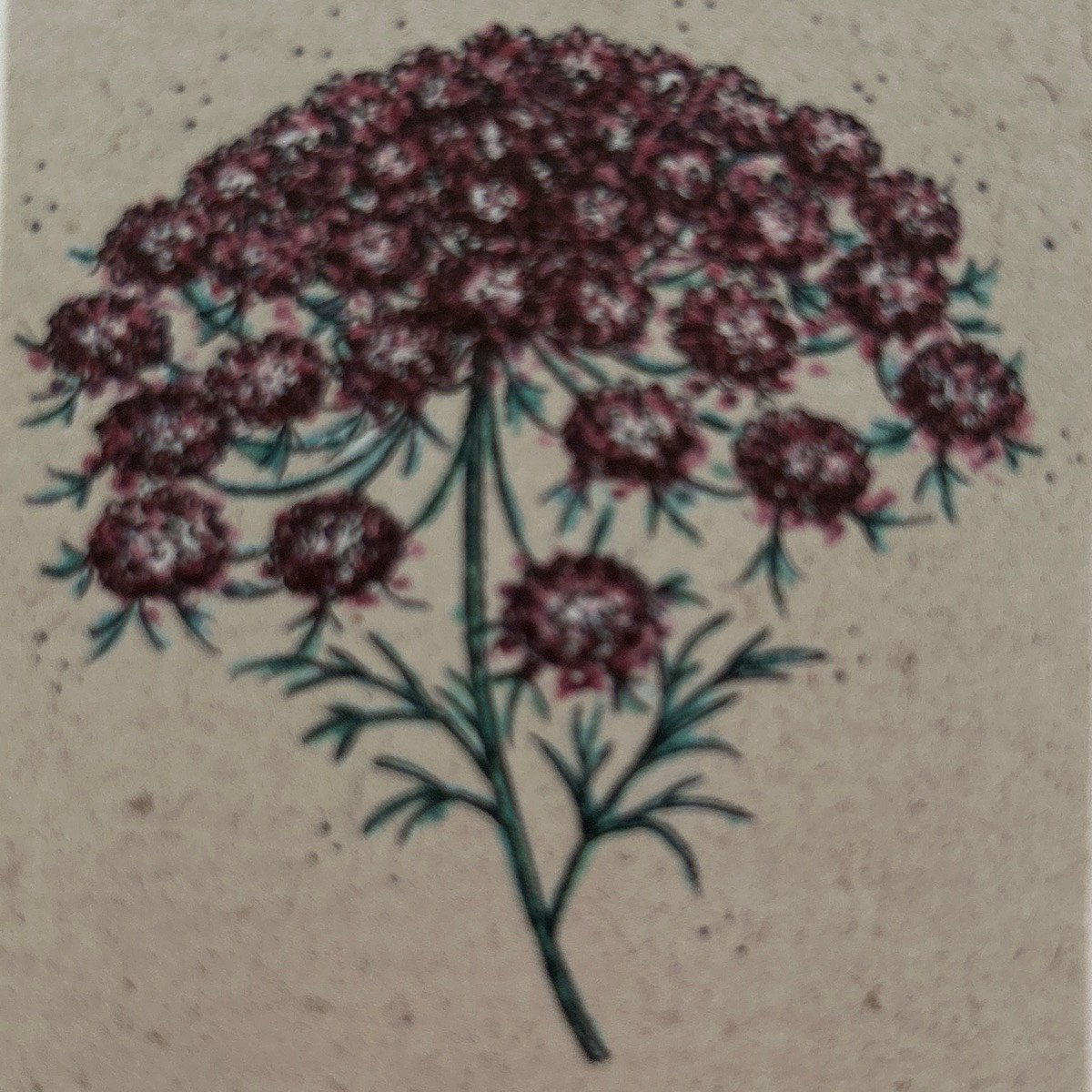
'Dara' is an impressive cultivar of the wild carrot and impresses with purple to pale pink umbels of approx. 10 cm/3.9 in Ø. 'Dara' flowers for a very long time and is the ideal structural and cut flower. The numerous small flowers are nectar- and pollen-bearing, it is an important insect plant and is also ideal for planting on fallow land and lawns. Its roots are rather small and woody, so they are not suitable for consumption. Growth height approx. 100-150 cm/1.1-1.6 yd.
Non hybrid
Frostproof
Growing tips
Germination period 7-14 days at 18-25°C/64-77°F. Remove faded plants regularly, support if necessary. Tolerates dry periods well. The wild form of the carrot forms comparatively small, woody roots, the usefulness is low, but this native wild plant (including this cultivar) is valuable for nature: numerous insects find food and shelter on the large umbel flowers, especially wild bees, flies and beetles. It is not uncommon to find the beautiful caterpillars of the swallowtail on the leaves, which like to feed on the wild carrot. Carrots are biennial and usually only flower in their second year! If the seeds are sown in January/February, they will flower in the first year. Dara is also ideal as a container plant and develops its full beauty on balconies and terraces.
Details


Light requirement
Sunny

Water requirement
Dry

Soil
Light (sandy)
Nutrient requirement
Low

Plant distance
25 cm

Row spacing
30 cm

Seeding depth
0.5 cm

Companion Plants
Arugula / Rocket
Aubergine / Eggplant
Basil
Bean ((Scarlet) runner bean)
Bean (Dwarf bean)
Bean (Hyacinth bean / Lablab-bean)
Bean (Lima Bean)
Bean (Runner bean)
Borage
Chard
Chickpea
Chili
Chives
Common columbine
Common marigold
Cornflower
Cress
Garden cosmos / Mexican aster
Garlic
Garlic chives
Hyssop
Kohlrabi / German turnip / Turnip cabbage
Lavender
Leeks
Lettuce (Common chicory)
Lettuce (Endive / Escarole / Erisée)
Lettuce (Lamb's lettuce)
Lettuce (Lettuce)
Lettuce (Radicchio / Italian chicory)
Lettuce (Sugar loaf)
Malva / Mallow
Okra
Onion
Onion (Spring onion)
Oregano
Pea
Pepper / Paprika
Phacelia / Scorpionweed / Heliotrope
Radish
Radishes
Rosemary
Sage
Spinach (Summer)
Spinach (Winter)
Sunflower
Sweet pea
Tagetes / Marigolds
Thyme
Tomato (Bush tomato)
Tomato (Cocktail bush tomato)
Tomato (Cocktail Stake Tomato)
Tomato (Stake tomato)
Yalta tomatoes
Zinnia

Antagonistic Plants
Abyssinian cabbage / Ethiopian mustard
Broccoli raab / Stem cabbage / Cima di rapa
Brussels sprouts
Cabbage (red cabbage)
Caraway / Meridian fennel / Persian cumin
Celery (Celeriac / Celery root)
Celery (Celery)
Celery (Leaf celery / Chinese celery)
Chervil
Comfrey
Common mugwort
Coriander / Cilantro
Cucumber (African horned cucumber / Kiwano)
Cucumber (Caigua)
Cucumber (Melothria)
Cucumber / Gherkin
Fennel
Florence fennel / Finocchio
Garden squash - Patisson / UFO squash
Horseradish
Jerusalem artichoke / Topinambur
Lovage
Melon (Sugar melon)
Melon (Watermelon)
Mint
Ornamental pumpkin
Parsley
Parsnip
Pimpinella
Potato
Pumpkin / Squash
Rapeseed
Rapeseed - Sheer cabbage / Siberian cabbage
Root parsley
Rutabaga / Swedish turnip
Sea coal
Sponge gourd / Egyptian cucumber / Vietnamese luffa
Turnip
Turnip-rooted chervil
Turnips - Oilseed turnips
Turnips - Wild turnips
Vegetable cabbage - Forage cabbage
Vegetable cabbage - Ribbed cabbage / Portuguese cabbage
Vegetable cabbage - wild cabbage / ancient cabbage
Diseases
Root Rot
Soft rot
Powdery mildews
Blight of carrot
Pests
Land snails
Aphids
Root knot nematodes
Carrot fly
Voles