Chinesische Yamswurzel / Lichtwurzel / Nagaimo / Brotwurz

Variety
Chinesische Yamswurzel / Lichtwurzel / Nagaimo / Brotwurz
created by Alexandro at 19.02.2026
Features
Growth habit
lifespan: perennial
growth habit: high ranking
growth habit: climbing
Climbing plant
Game Variety
growth habit: sprawling
root type: taproot
fast growth
Nutzungsart: Ur-/Alte Sorte
leaves: densely leafed
growth habit: needs climbing support
wide: over 400 cm
height: over 400 cm
root type: bulb, tuber
propagation by offsets
Color
green
brown
Frucht: grün
Stamm, Stiel: grün
Wurzel: cremeweiß
Wurzelfleisch: weiß
Taste
nutty
mild
sweetish
Resistances
Snail resistant
Late blight resistant
fungus resistant
hardy down to -20°C
heat resistant
Location
Soil: loosened
Soil: deep
Planting: pots, tubs, or boxes
soil moisture: no waterlogging
planting: outdoor
planting: raised bed
Heat requirement: high
Fruit shape
capsule
Cultivation Break
3 Years
Season Overview
Propagating
Planting
Harvest
Harvest
J
F
M
A
M
J
J
A
S
O
N
D
1ST YEAR
FOLLOWING YEARS
Description
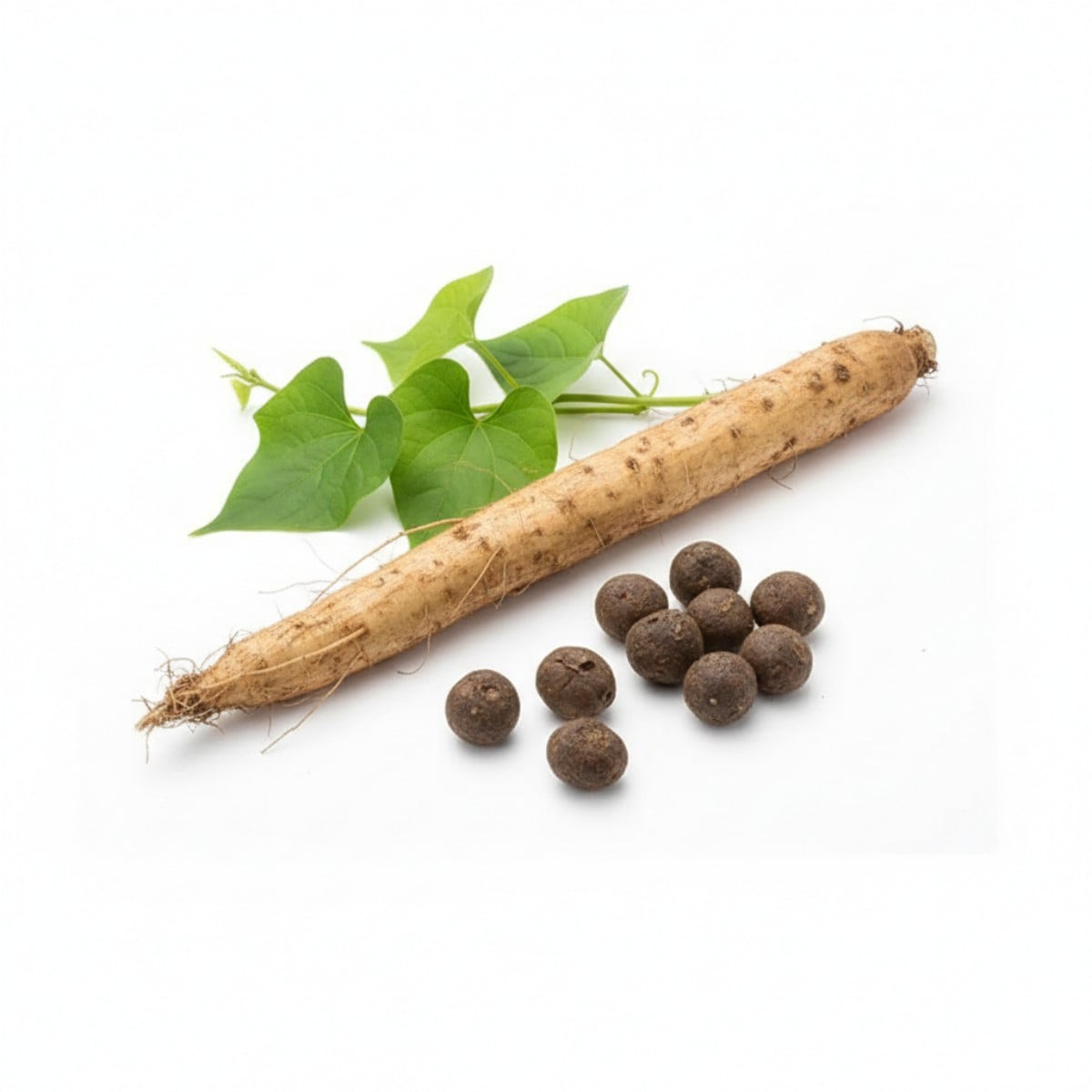
The Chinese yam is a fascinating climbing plant that plays a special role in both ornamental gardens and self-sufficiency. Originally from East Asia, it captivates in summer with its rapid growth and decorative, heart-shaped leaves, which quickly form a dense, green screen on trellises. Particularly characteristic are the small, edible tubers that grow in the leaf axils and can be harvested directly in autumn like mini potatoes. However, the actual heart of the plant is hidden deep in the earth. The taproots, which can grow up to one meter long, have snow-white flesh and a pleasantly mild, nutty flavor. The light root is extremely versatile in the kitchen: whether grated raw in salads, steamed, fried, or as an ingredient in soups, it always retains its fine texture. Beyond its culinary merits, it is particularly highly valued in anthroposophical nutrition, as it is said to have a special ability to store light energy. Lichtwurzel is surprisingly easy to grow and robust. It is winter-hardy in our latitudes and sprouts reliably from the ground every spring, provided that the soil is deep and loose enough to allow the root to grow deep. This makes it the ideal choice for gardeners who want to combine an aesthetic climbing plant with real culinary value.
Non hybrid
Frostproof
Growing tips
The trick with the loose soil The biggest obstacle to light rooting is harvesting. In heavy clay soil, the long, brittle root almost always breaks off. Sandy soil: Mix sand into the soil to keep it loose. The trench trick: Dig a trench about 60-80 cm deep and fill it with a mixture of compost and plenty of sand. Plant the nodules on top of this "soft" track. Box or tub cultivation: Many professionals grow the light root in tall wooden boxes (similar to raised beds, only narrower and deeper), with one side wall removed in the fall. This allows the roots to tumble out of the soil almost by themselves. Climbing support is a must Never underestimate the drive of this plant. As soon as the temperatures rise, the greenery shoots upwards. Provide sturdy poles (bamboo or wood) at least 3 meters high. The plant is a left winder. You can help it a little at the beginning by carefully guiding the young shoots counter-clockwise around the support. Fertilization and water Little nitrogen: Too much nitrogen fertilizer will cause the foliage to explode, but the roots will remain small. A good, mature compost in spring is usually sufficient. Even moisture: The soil should not dry out completely, especially in midsummer (July/August) when the bulb formation under the soil really gets going. Mulching helps enormously here to retain moisture. Harvesting the bulbils The small nodules form in the leaf axils from September. Place a fleece or tarpaulin under the plants when they are ripe. They fall off easily in the wind or when touched - so you can collect them in seconds instead of laboriously searching for them in the weeds. Overwintering the harvest If you dig up the roots and don't leave them in the ground: Store them like carrots in a box with slightly damp sand in a cool cellar. This will keep them crisp and prevent them from sprouting prematurely.
Details


Germination temperature
15 – 20 °C (Degrees Celsius)

Plant distance
40 cm

Row spacing
90 cm

Seeding depth
5 cm

Companion Plants
Basil
Bean ((Scarlet) runner bean)
Bean (Broad bean / Faba bean / Field bean)
Bean (Dwarf bean)
Bean (Hyacinth bean / Lablab-bean)
Bean (Lima Bean)
Bean (Runner bean)
Beetroot
Begonias
Carrots
Catnip
Celtuce / Stem lettuce
Chickpea
Chili
Chives
Common marigold
Coneflower (Echinacea)
Coriander / Cilantro
Corn / Maize
Currant
Dill
Garden cosmos / Mexican aster
Garlic
Garlic chives
Gooseberry
Hellebores
Hydrangea / Hortensia
Lettuce (Common chicory)
Lettuce (Endive / Escarole / Erisée)
Lettuce (Lamb's lettuce)
Lettuce (Lettuce)
Lettuce (Oriental greens / Brown mustard)
Lettuce (Puntarelle / Cicoria di catalogna / Cicoria asparago)
Lettuce (Radicchio / Italian chicory)
Lettuce (Sugar loaf)
Lovage
Lupine / Bluebonnet
Make
Onion
Onion (Spring onion)
Oregano
Parsnip
Pea
Peanut / Groundnut
Pear
Pepper / Paprika
Phacelia / Scorpionweed / Heliotrope
Privet
Purple bellflower, silver bellflower
Rock pear (Amelanchier)
Rudbeckia (Coneflower / Black-eyed-susans)
Sage
Savory
Soybean
Spinach (Summer)
Spinach (Winter)
Spirea
Stem herbs
Strawberry
Succulents
Sweet pea
Thyme
Weigela
Yarrow

Antagonistic Plants
Abyssinian cabbage / Ethiopian mustard
Akebia, blue cucumber vine
Apple
Blueberry
Broccoli
Broccoli raab / Stem cabbage / Cima di rapa
Brussels sprouts
Brussels sprouts
Buddleja / Butterfly Bushes
Cabbage (Cabbage)
Cabbage (Pointed cabbage)
Cabbage (red cabbage)
Cabbage (Savoy cabbage)
Cauliflower
Celery (Celeriac / Celery root)
Celery (Celery)
Celery (Leaf celery / Chinese celery)
Chinese kale - Kai-lan / Chinese broccoli
Collard greens
Collard greens (Kale)
Collard greens (Tuscan kale / Dinosaur kale / Palm tree kale)
Common mugwort
Courgette / Zucchini
Cucumber (African horned cucumber / Kiwano)
Cucumber (Caigua)
Cucumber (Melothria)
Cucumber / Gherkin
Elderberry
Forsythia
Funk
Garden squash - Patisson / UFO squash
Grasses - Bamboos
Grasses - reeds, cattails, bulrushes
Hair cucumbers / snake gourds
Hazelnut
horse chestnut
Ivy
Jerusalem artichoke / Topinambur
Kohlrabi / German turnip / Turnip cabbage
Maples
Mint
Mizuna / Japanese mustard greens
Morning glories
Napa cabbage / Chinese cabbage
Ornamental pumpkin
Pak Choi
Potato
Pumpkin / Squash
Rapeseed
Rapeseed - Sheer cabbage / Siberian cabbage
Rapini / Broccoli rabe
Raspberry
Rhododendron
Rutabaga / Swedish turnip
Sponge gourd / Egyptian cucumber / Vietnamese luffa
Sunflower
Sweet potato
Turnip
Turnip greens - Choy Sum / Chinese flowering cabbage
Turnip greens - Mizuna
Turnip greens - Tatsoi
Turnips - Oilseed turnips
Turnips - Wild turnips
Vegetable cabbage - Forage cabbage
Vegetable cabbage - Ribbed cabbage / Portuguese cabbage
Vegetable cabbage - wild cabbage / ancient cabbage
Walnut family
Willows

Diseases
Root Rot
Powdery mildews
Brown rot
Ascochyta blight

Pests
Aphids
Spider mites
Land snails
Larvae
Voles
Wireworms