Wilde Yams (Wildform)

Variety
Wilde Yams (Wildform)
created by Alexandro at 18.02.2026
Cultivation Break
3 Years
Season Overview
Propagating
Planting
Harvest
Harvest
J
F
M
A
M
J
J
A
S
O
N
D
1ST YEAR
FOLLOWING YEARS
Description
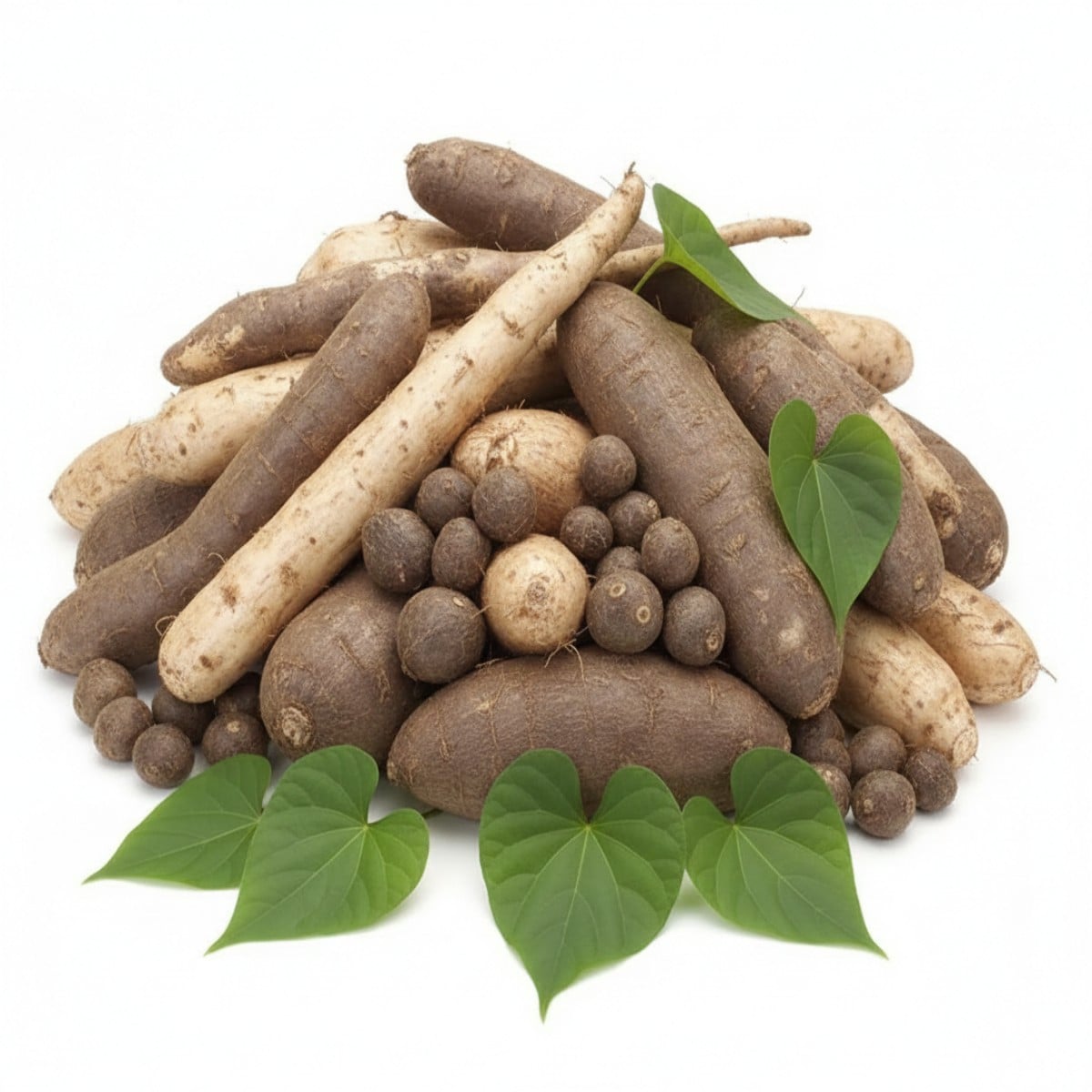
The Dioscorea genus comprises over 600 species worldwide. Unlike sweet potatoes, yams are climbing plants that belong to the yam family. Growth form: They are mostly perennial, herbaceous vines that climb several meters high on supports. The tuber: The heart of the plant. Depending on the species, the tubers can range in size from that of a potato to gigantic proportions of over 50 kg. The skin is often rough and bark-like, and the flesh varies from snow-white to yellow to deep purple. Nutrients: Yams are rich in starch and vitamins. Of medical interest is their diosgenin content, a precursor to steroid hormones, which is why some species are also valued in naturopathy.
Non hybrid
Growing tips
Location and soil Yams like a warm, sunny and sheltered location. Soil: It must be deep and loose. As the tubers grow deep, compacted soil leads to deformation. A mix of compost and sand is ideal. Container cultivation: In our latitudes, cultivation in large containers (at least 30-40 liters) is recommended, as the substrate warms up more quickly. 2. planting and pre-cultivation Timing: Start pre-cultivation indoors in March/April. To do this, place sections of a tuber (with at least one "eye") in pots. Planting out: The plants can only be planted outside after the Ice Saints (mid-May), when there is no longer any danger of frost. 3. care during growth Climbing support: Yams absolutely need scaffolding, a fence or poles. The shoots twine upwards very quickly. Water: The water requirement is high, especially during the main growth phase in summer. However, waterlogging must be avoided. Fertilizer: A potassium-rich fertilizer supports tuber formation. 4 Harvest and storage Harvest in late fall as soon as the foliage turns yellow and dies back. Dig out the tubers carefully so as not to damage the sensitive skin. Yams can be stored at cool (but not cold!) temperatures (approx. 12-15 °C) for several months. Important: Never store in the fridge as they lose their texture and spoil there. A little tip: There is one hardy exception! The light root (Dioscorea batatas) can even overwinter in the garden in our regions.
Details


Germination temperature
20 – 25 °C (Degrees Celsius)

Plant distance
60 cm

Row spacing
100 cm

Seeding depth
7 cm

Companion Plants
Basil
Bean ((Scarlet) runner bean)
Bean (Broad bean / Faba bean / Field bean)
Bean (Dwarf bean)
Bean (Hyacinth bean / Lablab-bean)
Bean (Lima Bean)
Bean (Runner bean)
Beetroot
Begonias
Carrots
Catnip
Celtuce / Stem lettuce
Chickpea
Chili
Chives
Common marigold
Coneflower (Echinacea)
Coriander / Cilantro
Corn / Maize
Currant
Dill
Garden cosmos / Mexican aster
Garlic
Garlic chives
Gooseberry
Hellebores
Hydrangea / Hortensia
Lettuce (Common chicory)
Lettuce (Endive / Escarole / Erisée)
Lettuce (Lamb's lettuce)
Lettuce (Lettuce)
Lettuce (Oriental greens / Brown mustard)
Lettuce (Puntarelle / Cicoria di catalogna / Cicoria asparago)
Lettuce (Radicchio / Italian chicory)
Lettuce (Sugar loaf)
Lovage
Lupine / Bluebonnet
Make
Onion
Onion (Spring onion)
Oregano
Parsnip
Pea
Peanut / Groundnut
Pear
Pepper / Paprika
Phacelia / Scorpionweed / Heliotrope
Privet
Purple bellflower, silver bellflower
Rock pear (Amelanchier)
Rudbeckia (Coneflower / Black-eyed-susans)
Sage
Savory
Soybean
Spinach (Summer)
Spinach (Winter)
Spirea
Stem herbs
Strawberry
Succulents
Sweet pea
Thyme
Weigela
Yarrow

Antagonistic Plants
Abyssinian cabbage / Ethiopian mustard
Akebia, blue cucumber vine
Apple
Blueberry
Broccoli
Broccoli raab / Stem cabbage / Cima di rapa
Brussels sprouts
Brussels sprouts
Buddleja / Butterfly Bushes
Cabbage (Cabbage)
Cabbage (Pointed cabbage)
Cabbage (red cabbage)
Cabbage (Savoy cabbage)
Cauliflower
Celery (Celeriac / Celery root)
Celery (Celery)
Celery (Leaf celery / Chinese celery)
Chinese kale - Kai-lan / Chinese broccoli
Collard greens
Collard greens (Kale)
Collard greens (Tuscan kale / Dinosaur kale / Palm tree kale)
Common mugwort
Courgette / Zucchini
Cucumber (African horned cucumber / Kiwano)
Cucumber (Caigua)
Cucumber (Melothria)
Cucumber / Gherkin
Elderberry
Forsythia
Funk
Garden squash - Patisson / UFO squash
Grasses - Bamboos
Grasses - reeds, cattails, bulrushes
Hair cucumbers / snake gourds
Hazelnut
horse chestnut
Ivy
Jerusalem artichoke / Topinambur
Kohlrabi / German turnip / Turnip cabbage
Maples
Mint
Mizuna / Japanese mustard greens
Morning glories
Napa cabbage / Chinese cabbage
Ornamental pumpkin
Pak Choi
Potato
Pumpkin / Squash
Rapeseed
Rapeseed - Sheer cabbage / Siberian cabbage
Rapini / Broccoli rabe
Raspberry
Rhododendron
Rutabaga / Swedish turnip
Sponge gourd / Egyptian cucumber / Vietnamese luffa
Sunflower
Sweet potato
Turnip
Turnip greens - Choy Sum / Chinese flowering cabbage
Turnip greens - Mizuna
Turnip greens - Tatsoi
Turnips - Oilseed turnips
Turnips - Wild turnips
Vegetable cabbage - Forage cabbage
Vegetable cabbage - Ribbed cabbage / Portuguese cabbage
Vegetable cabbage - wild cabbage / ancient cabbage
Walnut family
Willows
Diseases
Root Rot
Powdery mildews
Brown rot
Ascochyta blight
Pests
Aphids
Spider mites
Land snails
Larvae
Voles
Wireworms