Silverweed

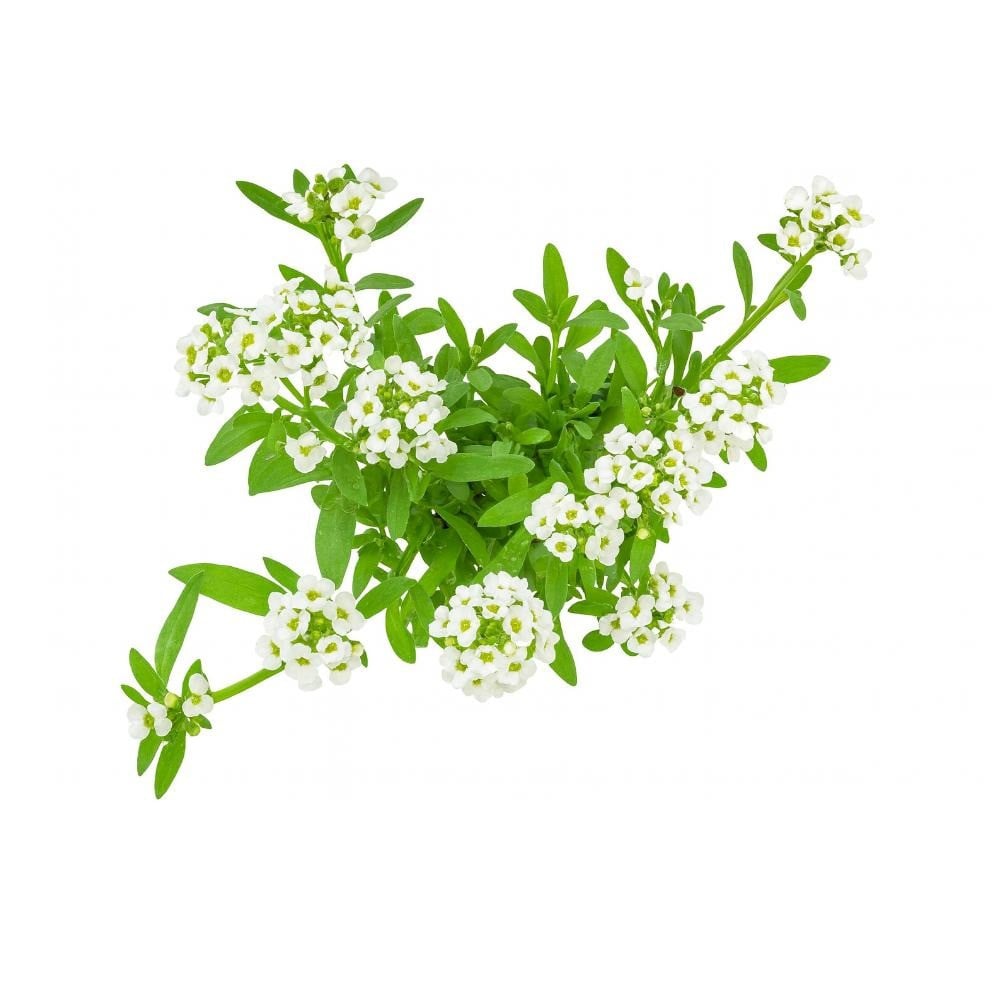
Silverweed
Lobularia
Plant family
Crucifers (Brassicaceae)
Cultivation Break
0 Years
Season Overview
Propagating
Planting
Harvest
J
F
M
A
M
J
J
A
S
O
N
D
Details


Light requirement
Sunny

Water requirement
Moist

Soil
Light (sandy)

Nutrient requirement
Low

Light germinator

Germination temperature
15 - 18 °C (Degrees Celsius)

Plant distance
20 cm

Row spacing
20 cm

Seeding depth
0.2 cm
Instructions
Description
Silverweed or Lobularia is a genus of four species of flowering plants from the cruciferous family (Brassicaceae). It is closely related to the genus Alyssum and was often included with it in the past. The genus is native to Macaronesia, the Mediterranean region, Iran and Saudi Arabia and includes annual and perennial plants that grow to a height of 10-40 cm and have hairy, elongated oval leaves and clusters of cross-shaped, fragrant white flowers. The name Lobularia is derived from the Greek word for small pod and refers to the fruits. Four species: - Lobularia arabica - Lobularia canariensis - Lobularia libyca - Lobularia maritima Lobularia maritima (formerly: Alyssum maritimum ) is a very popular garden plant and is widespread throughout the temperate world.
Origin:
Macaronesia, Mediterranean region, Iran, Saudi Arabia
Growing tips
🌿 Sowing - Pre-cultivation: from February - April, light - Light germinator: Press seeds lightly, barely cover - Substrate: lean, sandy growing medium - Germination temperature: 15-18 °C, slightly moist soil - Germination time: 5-7 days - Prick out after two to three true leaves - Direct sowing: from mid-May (no frosts) - Keep slightly moist until germination Planting time - Planting time: from mid-May (after late frosts) - Planting distance: 15-20 cm 🌱 Location & soil - Full sun - partial shade - Nutrient-poor to moderately nutrient-rich - slightly humusy, loose, sandy, gravelly - No waterlogging, well drained - airy 💧 Care - Evenly moist, no waterlogging - Rarely, but thoroughly - Drought tolerant - little fertilization / starter fertilization 🌿 Harvest - Flowering: (May-October) - For seed production: dry, brownish pods - Pruning plant: cut shoots in the morning ✂️ Pruning - Light pruning after first flowering (promotes second flowering phase) 🌼 Propagation - Self-seeding 🌿 Use Lobularia is perfect for borders, rock gardens, balcony boxes and as an underplanting for taller summer flowers. It fills gaps quickly, suppresses weeds and attracts many pollinators. It looks particularly beautiful in combination with Mediterranean plants such as lavender, thyme or santolina. ❄️ Winter - Limited hardiness (-5°C for a short time) - Protected, frost-free, cool, lots of light ✅ Good neighbors - Sage, lavender, savory, basil - Thyme, oregano, rosemary, hyssop, lemon balm - Catnip, quilted sage, magnificent candles - Coneflower (Echinacea), daisies, cape magerites, delphinium - Stonecrop (Sedum) - Grasses such as fescue or feather grass - Tomatoes, peppers, chili peppers, eggplants, bush beans - Lettuce, radishes - Garlic, onions ❌ Bad neighbors - Ferns, funkia, astilbe, purple bellflower, ragwort - Parsley, chives, mint, chervil, coriander - Hydrangea, rhododendron, snowball, hazelnut - Plants that like waterlogging or heavy shade - Spinach, cabbage, celery, leek, cucumber, pumpkin - Beech, ash, willow, alder, maple, spruce, fir - Sea buckthorn, rock pear, dog rose, butterfly bush - Gorse, privet, barberry - Field maple, rowan, pine, birch, black locust 🦠 Diseases - Root rot - mildew - Gray mold 🐛 Pests - Aphids - Earth fleas - Thrips

Companion Plants
Aubergine / Eggplant
Basil
Bean (Dwarf bean)
Calyx
Catnip
Chili
Coneflower (Echinacea)
Garlic
Grasses - Feather grasses
Grasses - Fescue
Hyssop
Larkspur
Lavender
Lettuce (Common chicory)
Lettuce (Endive / Escarole / Erisée)
Lettuce (Lamb's lettuce)
Lettuce (Lettuce)
Lettuce (Puntarelle / Cicoria di catalogna / Cicoria asparago)
Lettuce (Radicchio / Italian chicory)
Lettuce (Sugar loaf)
Melissa
Onion
Onion (Spring onion)
Oregano
Pepper / Paprika
Radishes
Rosemary
Sage
Savory
Succulents
Thyme
Tomato (Bush tomato)
Tomato (Cocktail bush tomato)
Tomato (Cocktail Stake Tomato)
Tomato (Stake tomato)
Yalta tomatoes

Antagonistic Plants
Abyssinian cabbage / Ethiopian mustard
Alder trees
barberries
Broccoli
Brussels sprouts
Brussels sprouts
Buddleja / Butterfly Bushes
Cabbage (Cabbage)
Cabbage (Pointed cabbage)
Cabbage (red cabbage)
Cabbage (Savoy cabbage)
Carrots
Cauliflower
Celery (Celeriac / Celery root)
Celery (Celery)
Celery (Leaf celery / Chinese celery)
Chervil
Chinese kale - Kai-lan / Chinese broccoli
Chives
Collard greens
Collard greens (Kale)
Collard greens (Tuscan kale / Dinosaur kale / Palm tree kale)
Coriander / Cilantro
Courgette / Zucchini
Cucumber (African horned cucumber / Kiwano)
Cucumber (Caigua)
Cucumber (Melothria)
Cucumber / Gherkin
Funk
Garden squash - Patisson / UFO squash
Hair cucumbers / snake gourds
Hazelnut
Hydrangea / Hortensia
Kohlrabi / German turnip / Turnip cabbage
Leeks
Make
Maples
Mint
Ornamental pumpkin
Parsley
Parsnip
Pimpinella
Pines
Privet
Pumpkin / Squash
Purple bellflower, silver bellflower
Quadriceps
Rhododendron
Rock pear (Amelanchier)
Root parsley
Rose
Rowanberries / Serviceberries
Sea buckthorn
Spinach (Summer)
Spinach (Winter)
Sponge gourd / Egyptian cucumber / Vietnamese luffa
Spruce trees
Vegetable cabbage - Forage cabbage
Vegetable cabbage - Ribbed cabbage / Portuguese cabbage
Vegetable cabbage - wild cabbage / ancient cabbage
Willows

Diseases
Root Rot
Grey mold
Downy mildew
Powdery mildews
Pests
Thrips
Flea beetles
Aphids