Salpichroa

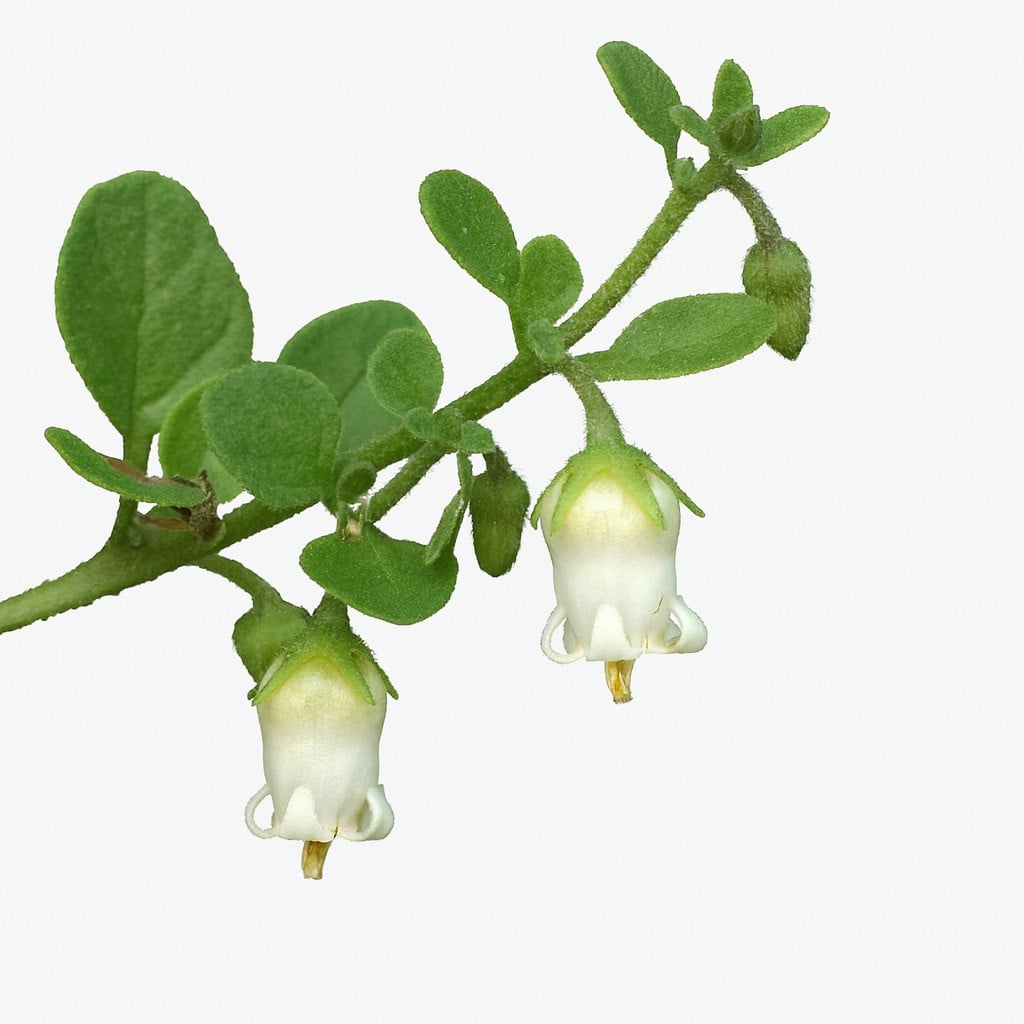
Salpichroa
Salpichroa
Plant family
Solanums (Solanaceae)
Cultivation Break
4 Years
Season Overview
Propagating
Planting
Harvest
Harvest
J
F
M
A
M
J
J
A
S
O
N
D
1ST YEAR
FOLLOWING YEARS
Details


Light requirement
Sunny

Water requirement
Dry

Soil
Light (sandy)

Nutrient requirement
Low

Light germinator

Germination temperature
18 - 22 °C (Degrees Celsius)

Plant distance
30 cm

Row spacing
40 cm

Seeding depth
0.2 cm
Instructions
Description
Salpichroa is a group of bluebonnets from the family of the Nachtschattengewächse (Solanaceae). Its natural habitat stretches from western and southern South America to South Brazil. In botany, the Salpichroa species is a relatively small, but fascinating group of bluetrees. These most common species, which are typically found in South America, grow in various habitats, including mountain and subtropical areas. The 15 or so species of the Salpichroa species are found throughout the world in mountain and subtropical climate zones. In Europe, an art is becoming increasingly popular. They produce good, long-lasting, humus-rich plants, which are able to compensate for the many environmental conditions in the South Tyrol. These plants grow in difficult environments, however, they also grow during the growing season and are therefore resistant to climatic changes. Salpichroa -Arten are typically bald, bushy plants that grow in a variety of shapes and sizes. They are typically located at a height of 1 to 2 meters. Most of them are made by their self-cleaning, gas-pressurized blades, which can reach a beachtliche distance. Typically, they are elliptical to ephemeral, with thin strips and a narrower surface. The blades of the Salpichroa are often brightly colored in violet, blue or yellow - a bright view of the green color of their blades. Meist sind sie trompetenförmig, mit fünf Lappen und oft einer Kombination aus leuchtenden Farben. As members of the family of the nightshade family (Solanaceae) they have common characteristics, such as, for example, a long-lasting bluetongue and a number of stems that create an almost hypnotic effect in the wind. The Fortress is started with the bluebird, which is usually found in the warm season. Some of the Salpichroa -Arten bluebirds are still alive. Their blades open up often in the morning and lock in the most active seeds, which is decisive for their success. In addition, many artists have developed the idea that their bright colors and their dark colors make them look like a true collector's book. After a successful application, the plank shows small, small, rounded fruit, which are included in the sample. These samples are essential for the production of the art. They fall to the ground or are broken from the ground. The Salpichroa plants play a decisive role in their oil systems. They offer a wide range of products, in particular seeds and plants, protection and nourishment. The new blades lock in the best trees, which are essential for the planting of many different types of plants. These plants are quickly proven to be indispensable for the maintenance of a healthy ecosystem and offer a wide range of living conditions. Although Salpichroa is not always commercially available, it has a significant impact on certain cultures. Some of them are used in traditional medicine on the basis of their specific characteristics or as an aid to various medical treatments. In addition, they make their bright blades into attractive plant species - they make the beauty of biodiversity visible and show how people can both culturally and aesthetically enhance these plants. Salpichroa -Arten sind derzeit durch Lebensraumverlust und Klimawandel in unterschiedlichem Maße bedroht. The development and expansion of the cities are reducing their natural habitat, which is why the protection measures are essential. The preservation of habitats does not only contribute to the balance, but also promotes the overall biodiversity and the health of the ecosystem.
Origin:
west and southwest South America up to South Brazil
Growing tips
🌱 Pre-cultivation (indoor cultivation) - February to April. - Germination temperature: 18-22 °C - Light germinator: Press seeds only lightly, do not cover with soil. - Germination period: 10-25 days (sometimes somewhat irregular). - Fine, loose potting compost. - Optionally 20-30 % sand or perlite for better aeration. - Soil evenly moist, but never wet. - Mini greenhouse or foil cover helps, ventilate daily. - As soon as seedlings are 3-4 cm high: more light, plant lamp if necessary. - When the plants have 2-3 true leaves, transfer to small pots (8-10 cm). - Then keep them in a bright and slightly cooler place (14-18 °C) so that they grow compactly. 🌼 Planting out - After the Ice Saints (mid-May), as soon as there is no risk of frost. - Full sun to partial shade, warm, sheltered from the wind. - Ideal for: ◦ Balcony boxes ◦ hanging baskets ◦ Tubs ◦ Beds on warm house walls 🌱 Soil / substrate - Loose, humusy, permeable, well drained. - Avoid waterlogging - mix in sand or fine gravel if necessary. - pH value: 6.0-7.0 (slightly acidic to neutral). - For pot culture: high-quality potted plant soil + 20 % sand/perlite. 🪴 Planting distance - In the bed: 30-40 cm - In a pot: 1 plant per 20-25 cm pot diameter. 💧 Watering - Keep well moist for the first 2 weeks. - After that: water moderately but regularly. - Avoid waterlogging at all costs. - Water as soon as the top layer of soil is dry. 🌿 Fertilization - Start 2 weeks after planting out. - Liquid fertilizer or slow-release fertilizer every 2-3 weeks. - Do not overfertilize - Salpichroa grows rather compactly and does not need large amounts of nutrients. 🌡️ Temperature & climate - Originally from South America, loves mild to warm temperatures. - Not fully hardy in Central Europe. - Overwintering: ◦ Bright and frost-free (5-10 °C). Water little, do not fertilize. ◦ Can also be cultivated as an annual plant. ✂️ Pruning & growth - Growth habit: upright, drooping or creeping, 100-200 cm tall. - Regular pruning promotes more compact growth. - Remove faded flowers to encourage new ones. 🪴 Propagation - Cuttings in spring or summer (easy & reliable). - Sowing is possible, but slower. - For pot culture, repot annually when the root ball is rooted. 🌿 Good neighbors 🌞 Sun-loving, drought-tolerant partners - Lavender, thyme, oregano, sage, rosemary, sedum species 🌼 Flowering plants that encourage pollinators - Gaura (magnificent candle), Verbena bonariensis, Bidens, Cape daisies (Osteospermum) 🪴 Good neighbors in a pot - Hanging petunias, Calibrachoa, Lobelia, Portulaca (Portulaca) 🚫 Bad neighbors ❌ Other nightshade plants - Tomatoes, potatoes, peppers/chillies, physalis, eggplants ❌ Heavy eaters - Cabbage plants, pumpkin plants, corn ❌ Plants that need a lot of water - Fuchsias, begonias, astilbes, hydrangeas ❌ Aggressive ground cover plants - Ground ivy, ivy, woodruff, mint 🦠 Diseases - Powdery mildew - Downy mildew - Root rot - Leaf spot diseases - Viral diseases (e.g. mosaic virus) Pests - Aphids - Whitefly - Thrips - Spider mites - snails - Caterpillars - fungus gnats

Companion Plants

Antagonistic Plants
Abyssinian cabbage / Ethiopian mustard
Aubergine / Eggplant
Beetroot
Begonias
Broccoli
Broccoli raab / Stem cabbage / Cima di rapa
Brussels sprouts
Brussels sprouts
Cabbage (Cabbage)
Cabbage (Pointed cabbage)
Cabbage (red cabbage)
Cabbage (Savoy cabbage)
Cauliflower
Celery (Celeriac / Celery root)
Celery (Celery)
Celery (Leaf celery / Chinese celery)
Chili
Chinese kale - Kai-lan / Chinese broccoli
Collard greens
Collard greens (Kale)
Collard greens (Tuscan kale / Dinosaur kale / Palm tree kale)
Corn / Maize
Courgette / Zucchini
Cucumber (Caigua)
Cucumber (Melothria)
Cucumber / Gherkin
Fuchsias
Garden squash - Patisson / UFO squash
Grasses - Bamboos
Grasses - reeds, cattails, bulrushes
Grasses - Sedges
Grasses - Sedges, Rushes
Hair cucumbers / snake gourds
Hydrangea / Hortensia
Ivy
Kohlrabi / German turnip / Turnip cabbage
Melon (Sugar melon)
Melon (Watermelon)
Mint
Mizuna / Japanese mustard greens
Napa cabbage / Chinese cabbage
Nightshades (Other)
Okra
Ornamental pumpkin
Pak Choi
Pepper / Paprika
Physalis
Potato
Pumpkin / Squash
Quadriceps
Rapeseed
Rapeseed - Sheer cabbage / Siberian cabbage
Rapini / Broccoli rabe
Sea coal
Sweet woodruff / Sweetscented bedstraw
Tomato (Bush tomato)
Tomato (Cocktail bush tomato)
Tomato (Cocktail Stake Tomato)
Tomato (Stake tomato)
Turnip
Turnip greens - Choy Sum / Chinese flowering cabbage
Turnip greens - Mizuna
Turnip greens - Tatsoi
Turnips - Oilseed turnips
Turnips - Wild turnips
Vegetable cabbage - Forage cabbage
Vegetable cabbage - Ribbed cabbage / Portuguese cabbage
Vegetable cabbage - wild cabbage / ancient cabbage
Yalta tomatoes

Diseases
Root Rot
Septoria
Downy mildew
Angular leaf spot of cucumber
Powdery mildews
Early blight of potato

Pests
Thrips
Spider mites
Land snails
Caterpillars
Aphids
White fly