Petunias

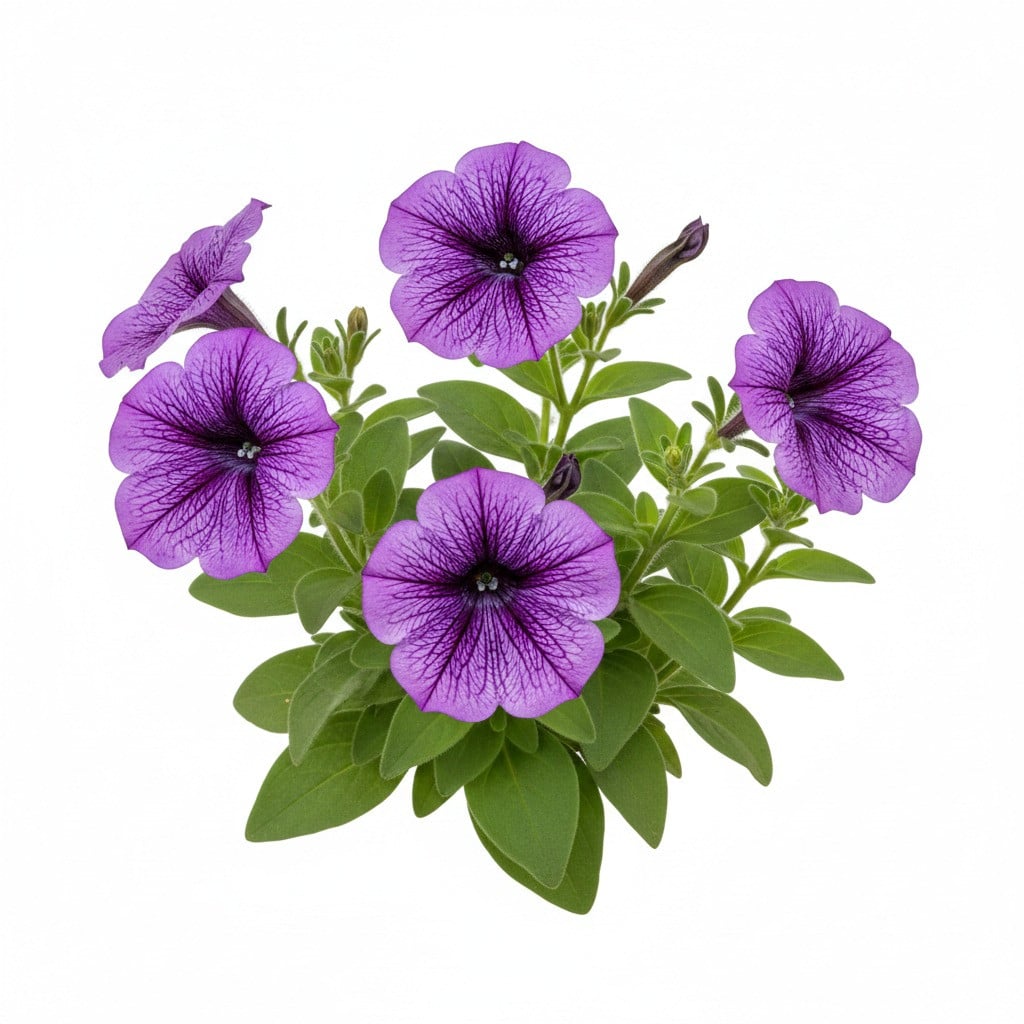
Petunias
Petunia
Plant family
Solanums (Solanaceae)
Season Overview
Propagating
Planting
Harvest
Harvest
J
F
M
A
M
J
J
A
S
O
N
D
1ST YEAR
FOLLOWING YEARS
Details


Light requirement
Sunny

Water requirement
Moist

Soil
Medium (loamy)

Nutrient requirement
High

Light germinator

Germination temperature
20 - 25 °C (Degrees Celsius)

Plant distance
20 cm

Row spacing
20 cm

Seeding depth
0.2 cm
Instructions
Description
The petunia plant genus belongs to the nightshade family (Solanaceae) and is related to the tobacco plants (Nicotiana), to which it owes its name - "petun" means "tobacco" in the language of the Brazilian natives. Its original home is tropical South America. Petunias are among the garden flowers with the longest garden tradition, as the magnificent summer flowers bloom tirelessly from May until the first frosts with large, brightly colored blossoms. The garden petunia (Petunia x hybrida) originated in the 19th century from a cross between the white petunia (Petunia axillaris) and the purple petunia (Petunia integrifolia). Most of the varieties currently on the market are garden petunias. Growth habit The petunia is a herbaceous plant that is cultivated here as an annual in pots and containers. Its appearance with the funnel-shaped flowers on dark foliage is typical of the plant genus and easy to recognize. The classic garden petunias are divided into four main groups: Grandilflora petunias, which stand out with their oversized flowers, Multiflora petunias with compact growth and countless smaller flowers on short stems, NanaCompacta petunias, which are rather small at 15 centimetres, and the elegantly drooping Pendula petunias. Leaves Petunia leaves are dark green, with entire margins and slightly hairy. They are typically slightly sticky. They form a contrasting background to the fresh flower colors. Caution: As the petunia belongs to the nightshade family, its foliage is poisonous! Flowers Petunias are characterized by their trumpet-shaped flowers in the summer colors of white, pink, purple, red or blue, with spotted, starred or striped patterns, which appear tirelessly and in large numbers from May to October. Grandiflora petunias and multiflora petunias differ in flower size. Representatives of the Grandiflora varieties are characterized by a very large, flat flower that sits individually on the stem. Multiflora petunias, on the other hand, bear their somewhat smaller flowers close together and appear rather compact due to their shorter shoots. With their round heads, double specimens are reminiscent of rose blossoms and are therefore also sold under the name rose petunias.
Origin:
Tropical South America
Growing tips
Location and substrate Petunias are typical summer-flowering balcony flowers, so they need plenty of light. The plants will also thrive in partial shade, although they will produce fewer flowers. Hot summers and blazing sun do not harm these sun worshippers. However, their delicate flowers suffer greatly from cold, wet weather, so a sheltered location is recommended. Grandiflora petunias should always be protected from the rain, as the large flowers quickly fade. The smaller the flower, the more robust the variety. Special iron-rich petunia soil with a low pH value (around 5.5), which is well suited to the needs of the plants, is commercially available for flower pots and containers. Alternatively, normal potting soil can be mixed half and half with bog potting soil as a substrate. Planting and care Petunias can be sown in seed trays in the greenhouse or on the windowsill from mid-February at 20 to 21 degrees Celsius. The seedlings can then be slowly acclimatized to fresh air after the Ice Saints. However, summer flowers are usually sold as young plants in pots, which are then simply planted directly in the desired spot in early summer. To stimulate the beautiful growth of the petunia, it is necessary to clean out the plants regularly. This involves removing dead flowers, wilted shoots and damaged areas. Occasional pruning also has a stimulating effect on flower formation. Water generously with low-lime water (rainwater), on hot days in the morning and evening. Always water the soil directly, do not spray the leaves or flowers! The colorful summer bloomers grow very quickly, so they need a lot of nutrients. These heavy growers need well-drained, fertile soil. They should be fertilized every 14 days with phosphorus-rich flowering plant fertilizer. Overwintering Garden petunias are annuals and not frost-hardy. If you would like to overwinter your petunias, you can do so in a bright, cool room (five to ten degrees). To do this, cut the plant back considerably. The plants should be put away before the night temperatures drop below zero. In their winter quarters, they should then be watered a little regularly. Use in the garden Due to their lush growth and abundance of flowers, petunias are very popular for planting in pots, window boxes and hanging baskets. Whether as a solitary plant or as an underplanting for standard plants such as roses or ramblers - these colorful flowering wonders cut a fine figure anywhere as long as they get enough sun. Garden petunias also feel at home in the border in company with other annual summer bloomers. However, do not plant the fast-growing petunias together with slow-growing partners. Suitable companions for petunias include snowflake flowers, marigolds, verbena, pelargonium, ipomoea, lobelia, dahlia, fuchsia or coneflower. Petunias are classic cottage garden plants, so they can also be used decoratively with vegetable plants or herbs in boxes, tubs, barrels or troughs. Ornamental grasses create a delicate contrast and break up the sometimes somewhat gaudy petunia flowers. Ornamental foliage plants such as groundsel or variegated nettle also bring visual calm to the planting. Propagation If you want to propagate a particularly popular variety, you can collect seeds from the dead plant in the fall. To do this, do not clean out the petunia, but wait until seed capsules have formed. These are then harvested and allowed to ripen in a warm room. When the seed capsules burst open by themselves, the seeds can be collected and stored in a cool, dry place. In February, the seeds are sown under glass. Once seedlings have formed, the small petunias are pricked out and separated into pots. Caution! Many modern cultivars are designed as disposable plants and therefore do not bear germinable seeds. Find out in advance from a specialist shop whether growing seeds is worth the effort at all. Diseases and pests Petunias are susceptible to tomato wilt and powdery mildew. Mosaic disease also affects summer flowers from time to time. You should therefore look out for wilted leaves or white spots on the plants when you buy them. In addition, balcony flowers should be checked regularly for infestation by aphids and whitefly. In the garden, petunias often suffer from slugs and snails. If the summer flowers in pots and tubs suddenly develop yellow leaves, this is probably due to an iron deficiency (chlorosis). This can be seen in the young leaves that grow back. A fertilizer containing ammonium can help.

Companion Plants
No companion plants

Antagonistic Plants
No antagonistic plants

Diseases
No diseases

Pests
No pests