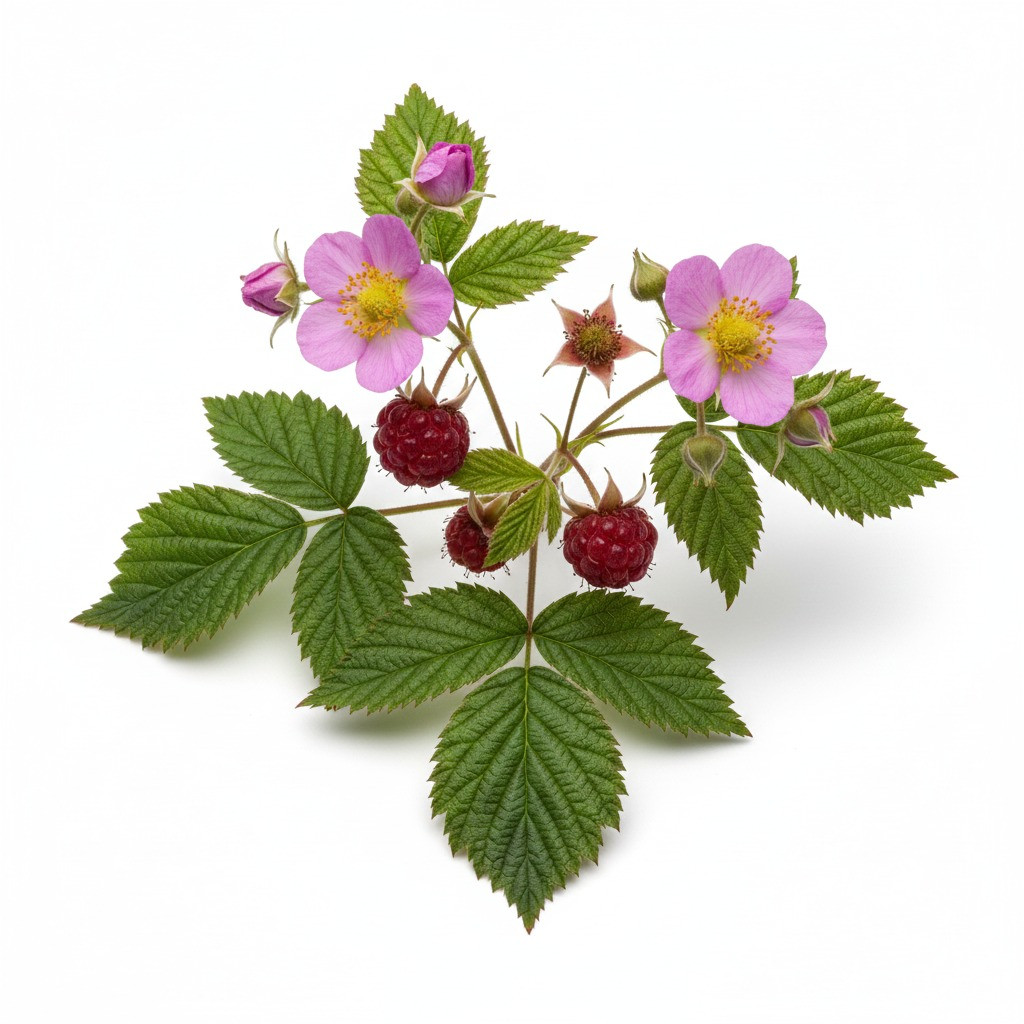
Allackerbeere, Mammure (Wildform)

Variety
Allackerbeere, Mammure (Wildform)
Approved Data
created by Alex&Sempi at 23.02.2025
Features
Growth habit
lifespan: perennial
growth habit: thornless
flower: flowering
root type: shallow-rooted
leaves: Deciduous
Cold germination
cross-pollination
ornamental plant
Location
planting: bed
planting: outdoor
light: sunny to semi-shady
Soil: permeable soil
soil moisture: no waterlogging
fertilization: humus-enriched
soil moisture: moist
soil moisture: not too dry
fertilization: lime-free
Water: Adequate
Planting: edge of wooded areas or beneath trees
Fertilization: nutrient-poor
Soil: light
Resistances
Winter hardy
hardy down to -30°C
Season Overview
Sowing
Harvest
Harvest
J
F
M
A
M
J
J
A
S
O
N
D
1ST YEAR
FOLLOWING YEARS
Description
Allacker berries are also known as field berries, Swedish field berries or Arctic raspberries. It is a perennial berry species that is native to northern Scandinavia. In spring, the allackberry sprouts from the rootstock and reaches heights of 10 to 30 cm. Its fresh green leaves are approx. 2-3 cm in size, pinnate and serrated at the edges. A beautiful effect can be achieved by planting 8-10 plants per square meter: The field berry can then develop into a dense ground cover over time. In May to June, the attractive pink-red flowers of the allackberry are particularly effective.
Non hybrid
Frostproof
Growing tips
Rubus arcticus is very frost-hardy and prefers loose, acidic, humus-rich, slightly moist soil. The allackberry forms runners, making it suitable as a ground cover species for rock gardens, borders and bog beds. Nevertheless, the Swedish fieldberry is easy to keep in check and care should be taken to ensure that it is not crowded out by other plants. If fertilization occurs, you can taste the sweet, edible fruits of the allackberry in autumn. Similar to raspberries, they are shiny and reddish in color. The simple species Rubus arcticus bears little fruit and is mainly planted for its ornamental value. If a ground cover with fruit yield is desired, the American cranberry, for example, would be a suitable alternative.
Details


Light requirement
Semi-shaded

Water requirement
Moist

Soil
Light (sandy)
Nutrient requirement
Low

Light germinator

Germination temperature
15 - 20 °C (Degrees Celsius)

Plant distance
30 cm

Row spacing
30 cm

Seeding depth
0.2 cm

Companion Plants

Antagonistic Plants
Abyssinian cabbage / Ethiopian mustard
Anemone
Aubergine / Eggplant
Beetroot
Blackberry / Brambles
Broccoli
Broccoli raab / Stem cabbage / Cima di rapa
Brussels sprouts
Brussels sprouts
Cabbage (Cabbage)
Cabbage (Pointed cabbage)
Cabbage (red cabbage)
Cabbage (Savoy cabbage)
Cauliflower
Chili
Chinese kale - Kai-lan / Chinese broccoli
Clematis
Collard greens
Collard greens (Kale)
Collard greens (Tuscan kale / Dinosaur kale / Palm tree kale)
Courgette / Zucchini
Cucumber (African horned cucumber / Kiwano)
Cucumber (Caigua)
Cucumber (Melothria)
Cucumber / Gherkin
Garden squash - Patisson / UFO squash
Grasses - feather-bristled grasses, lamp-cleaning grasses
Grasses - Fescue
Grasses - Pampas grass
Grasses - Reedgrass
Green lavender cotton
Hair cucumbers / snake gourds
Hazelnut
Hellebores
Horsetail
Ivy
Kohlrabi / German turnip / Turnip cabbage
Lavender
Lily of the valley
Maples
Mizuna / Japanese mustard greens
Napa cabbage / Chinese cabbage
Nightshades (Other)
Okra
Oregano
Ornamental pumpkin
Pak Choi
Pepper / Paprika
Phlox, flame flower
Potato
Pumpkin / Squash
Rapeseed
Rapeseed - Sheer cabbage / Siberian cabbage
Rapini / Broccoli rabe
Raspberry
Rose
Rosemary
Rutabaga / Swedish turnip
Sage
Sea coal
Sponge gourd / Egyptian cucumber / Vietnamese luffa
Stem herbs
Stinging nettle
Strawberry
Succulents
Sweet woodruff / Sweetscented bedstraw
Thyme
Tomato (Bush tomato)
Tomato (Cocktail bush tomato)
Tomato (Cocktail Stake Tomato)
Tomato (Stake tomato)
Turnip
Turnip greens - Choy Sum / Chinese flowering cabbage
Turnip greens - Mizuna
Turnip greens - Tatsoi
Turnips - Oilseed turnips
Turnips - Wild turnips
Vegetable cabbage - Forage cabbage
Vegetable cabbage - Ribbed cabbage / Portuguese cabbage
Vegetable cabbage - wild cabbage / ancient cabbage
Walnut family
Wild garlic
Willows
Yalta tomatoes

Diseases
Root Rot
Septoria
Grey mold
Pests
Land snails
Gall mites
Spider mites
Aphids