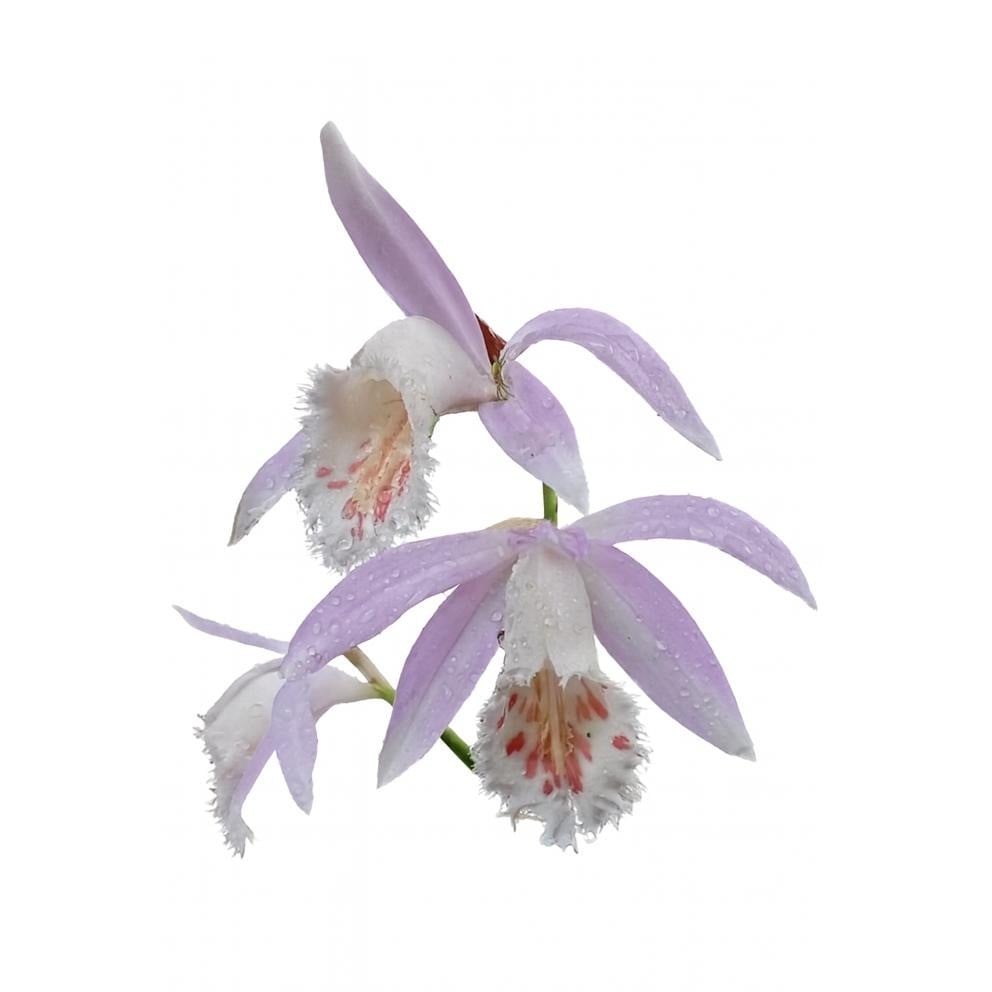
Tibetorchidee 'Glacier Peak'

Variety
Tibetorchidee 'Glacier Peak'
Approved Data
created by Alex&Sempi at 18.02.2026
Features
Color
light green / pale green
medium green
Blüte: orangebraun
Flower: white
Flower: light-violet
Taste
not edible
Toxizität: ungiftig
Fruit shape
capsule
Resistances
hardy with protection
hardy down to -10°C
resistant
robust
Growth habit
insect pollination
lifespan: perennial
tubular flower
leaves: Deciduous
early flowering
root type: rhizome
seed-fixed: no
height: 20 - 30 cm
wide: 20 - 30 cm
entire leaves
large flowers
Spear shaped leaves
propagation by offsets
Blätter: zugespitzt
Blätter: mittelgroß
Blätter: elliptisch
Blütenstand: einzeln, kleine Gruppen
Blütenform: zygomorph (spiegelbildlich)
Lebenszyklus: zieht im Herbst ein
Wuchsform: terrestrisch
Wurzeltyp: Bulben / Pseudobulben
Wuchsform: epiphytisch
Life cycle: sprouts in spring
Blüte: gefranst
Blütenform: trompetenförmig
Blätter: gefaltet
Location
Herkunft: Züchtung
sheltered from the wind
planting: rain-protected
soil moisture: no waterlogging
fertilization: humus-enriched
Light: Semi-Shade
soil moisture: well-drained
Soil: light
Soil moisture: dry to moderately moist
planting: heat protected
fertilization: lime-free
water: no tap water
Planting: rock garden / alpine garden
Planting: frost-protected
Planting: pots, tubs, or boxes
Heat requirement: cool
Licht: vor Mittagssonne geschützt
Düngung: flüssig
Pflanztechnik: Mulchen
Pflanzung: Gewächshaus
Season Overview
Propagating
Planting
Harvest
Harvest
J
F
M
A
M
J
J
A
S
O
N
D
1ST YEAR
FOLLOWING YEARS
Description
The Pleione hybrid Glacier Peak is a small orchid that will delight collectors with its beautiful spring flowers in a size appropriate for a Pleione. These white to light purple flowers have a distinctive shape and a tubular, fringed lip that is yellow on the inside and marked with orange-brown spots. It is a rhizomatous orchid that develops pseudobulbs as storage organs. Semi-hardy and with a dry winter dormancy, this variety thrives best in a pot. In regions with mild winters, it can also be planted between the stones of a semi-shaded rock garden in a bag filled with soil that is protected from winter rain. Pleione 'Glacier Peak' is a hybrid of Pleione formosana 'Alba' and P. grandiflora. All Pleiones are Asian plants that originate from the humid subtropical high forests. They belong to the orchid family. These orchids thrive best in a cold greenhouse with a winter break. Although they are biologically epiphytes (growing on trees), Pleiones can also be cultivated in a well-drained substrate like other garden orchids (Cypripediums, for example). Pleione Glacier Peak has deciduous foliage that is withdrawn in winter. A mature plant reaches a size of about 10 inches in all directions. Already towards the end of winter, sometimes as early as March, the plant sprouts new young shoots. The flowering period is in April-May. Each bulb produces one or two flower stalks, each bearing a single flower about 12 cm in size. Each flower consists of long, thin sepals and petals surrounding a large, trumpet-shaped, fringed lip. After flowering, this orchid forms leaves and new pseudobulbs from the original pseudobulb. The 15 cm long leaves are lanceolate, elliptical in shape and medium green in color. In autumn, the leaves turn yellow and fall off, and the plant goes into hibernation. The plant survives thanks to the reserve substances in its pseudobulbs. In the following spring, new bulbs are formed from the old ones, causing the Pleione to grow larger over the years. The genus Pleione belongs to the orchid family (bot. Orchidaceae). It comprises around 20 species native to Asia. In addition, there is a wide variety of Pleione hybrids, whose attractive flowers vary in shape, size, and color. The representatives of this Asian orchid genus are known in this country as Tibetan orchids. Other synonyms are Himalayan orchids and mountain orchids. The genus name is derived from the Greek goddess Pleione. These are plants that mainly root in the ground, sometimes growing as epiphytes on trees or clinging to rocks. In our latitudes, plants of this genus are only partially winter hardy, so they are found exclusively in cultivation. Leaf The leaves of Pleione are simple and usually grow individually, more rarely in pairs from the so-called bulb. This is an onion-like thickened part of the shoot axis. While the leaf is initially curled up, it grows to its full size after flowering. In autumn, it turns yellow and the plant sheds it in winter. Flower Like the leaf, the flower emerges from the bulb. The leaf encloses its stem at the base. The hermaphroditic flowers are beautifully shaped and conspicuous due to their size. Fruit Pleiones form capsule fruits that are spindle-shaped. They have three longitudinal ribs. The capsules contain the seeds of the plants. Growth Pleiones grow herbaceous and reach a height of ten to twelve centimeters. They survive the winter in pseudobulbs, which are thickened areas at the base of the stem that act as water and nutrient stores. Distribution Members of the Pleione genus are widespread in Asia. They mainly originate from China, Nepal, Tibet, and Taiwan. The plants can also be found in Southeast Asian countries. The occurrence of many species is often limited to a small distribution area. They often settle at altitudes between 1000 and 3500 meters. At the beginning of the 20th century, Pleiones were introduced to England as cultivated plants. Use Pleiones are popular ornamental plants. Orchid lovers particularly appreciate their large flowers. They look best in the front row of a flower bed. They can be combined very well with delicate grasses and ferns.
F1 Hybrid
Frostproof
Growing tips
Plant Pleione Glacier Peak in partial shade, sheltered from the wind, in a light, humus-rich soil that remains slightly moist from spring to the end of summer. Plant it in a cool rock garden between stones together with Cypripedium, Bletilla and small ferns. Due to its low winter hardiness, the rhizome should be protected from harsh winters and moisture. This plant thrives well in large pots that are overwintered in a cold greenhouse without watering. Tip: After flowering, it is essential not to allow the soil to dry out, as this is when the pseudobulbs grow and multiply. Pleione Glacier Peak prefers sheltered environments, partial shade, light humus and always remains slightly moist between March and September, but dry in winter. Winter moisture combined with frost will cause the rhizome to rot. In dry soil, the plant can tolerate frost down to -10 °C for short periods. In a rock garden, winter protection against cold and moisture is essential. To do this, place a 20 cm thick layer of leaf soil or shredded bark over the rhizome and cover it with a waterproof cover. Cultivation in large pots or planters is perfectly possible, in a mixture of 60% heather soil, 20% potting soil and 20% coarse sand. Pleiums require a lot of nutrients during the growing season: weekly fertilization with geranium fertilizer from mid-May to mid-September at half the recommended dose is recommended. The bulb at the base of the plant should not be completely buried: It should protrude at least halfway out of the soil. Water with lime-free and chlorine-free water. Location Pleions thrive very well in a light to partially shaded location. Morning and evening hours of sunshine are ideal, whereas the plants cannot tolerate midday sun. The plants grow well in substrates that are loose, moist, well-drained and lime-free. The plants mostly grow terrestrially, i.e. they root in the soil. Some representatives grow lithophytically, colonizing rock crevices, while others thrive as epiphytes on trees. Care/pruning Although Pleione plants should always be kept moist, they do not tolerate waterlogging. Excess water should therefore be removed from the cachepot or drip tray. From May to September, make sure that the substrate dries out before the next watering. Depending on the substrate used, fertilizing is recommended every two weeks or one month. After the growing season, occasional watering is sufficient. Fertilizing is no longer necessary from autumn onwards. Before the first frosts, the plants move into their winter quarters, where they rest at temperatures between five and ten degrees. Diseases/pests Slugs and snails like to attack the pseudobulbs of the pleione and thus damage the new shoots of the plants. The plants are also susceptible to fungal diseases such as Pythum and Fusarium. Location Light: Semi-shady to shady, no direct midday sun. Temperature: Cool to cold, but frost-free (5-15 °C in winter, 15-20 °C in summer). Humidity: High (60-70%), especially during the growth phase. Substrate Recommended: Airy orchid substrate made from bark, peat or seramis. Alternative: Water- and air-permeable potting soil for outdoor cultivation. Drainage: Very important, avoid waterlogging. Planting Plant bulbs: Shallow in the substrate, cover only lightly. Time: Spring, when the new shoots appear. Choice of pot: Transparent pots or glass planter to control moisture and root growth. Care Watering: Regularly during the growth phase, keep substrate slightly moist. Reduce watering after flowering, keep almost dry in winter. Fertilization: From spring to summer every 2 weeks with a weak orchid fertilizer. Do not fertilize during the dormant phase. Winter dormancy: Store bulbs in a cool, dry place (e.g. in a cellar or refrigerator at 5-8 °C). Only repot and water in spring. Special features Flowering time: Spring, often before the leaves emerge. Flowers: Large, showy, often fragrant; the fringed lip is characteristic. Life span of the bulbs: Each pseudobulb is only active for about 12 months, but forms new daughter bulbs. Propagation: By dividing the bulbs after the dormant period.
Details


Light requirement
Semi-shaded

Water requirement
Moist

Soil
Light (sandy)

Nutrient requirement
Medium

Light germinator

Germination temperature
5 - 10 °C (Degrees Celsius)

Plant distance
30 cm

Row spacing
30 cm

Seeding depth
0.5 cm


Antagonistic Plants
No antagonistic plants

Diseases
Grey mold
Fusarium
Root Rot
Pests
Mealybugs
Spider mites
Land snails
Aphids