Teppich-Spiere

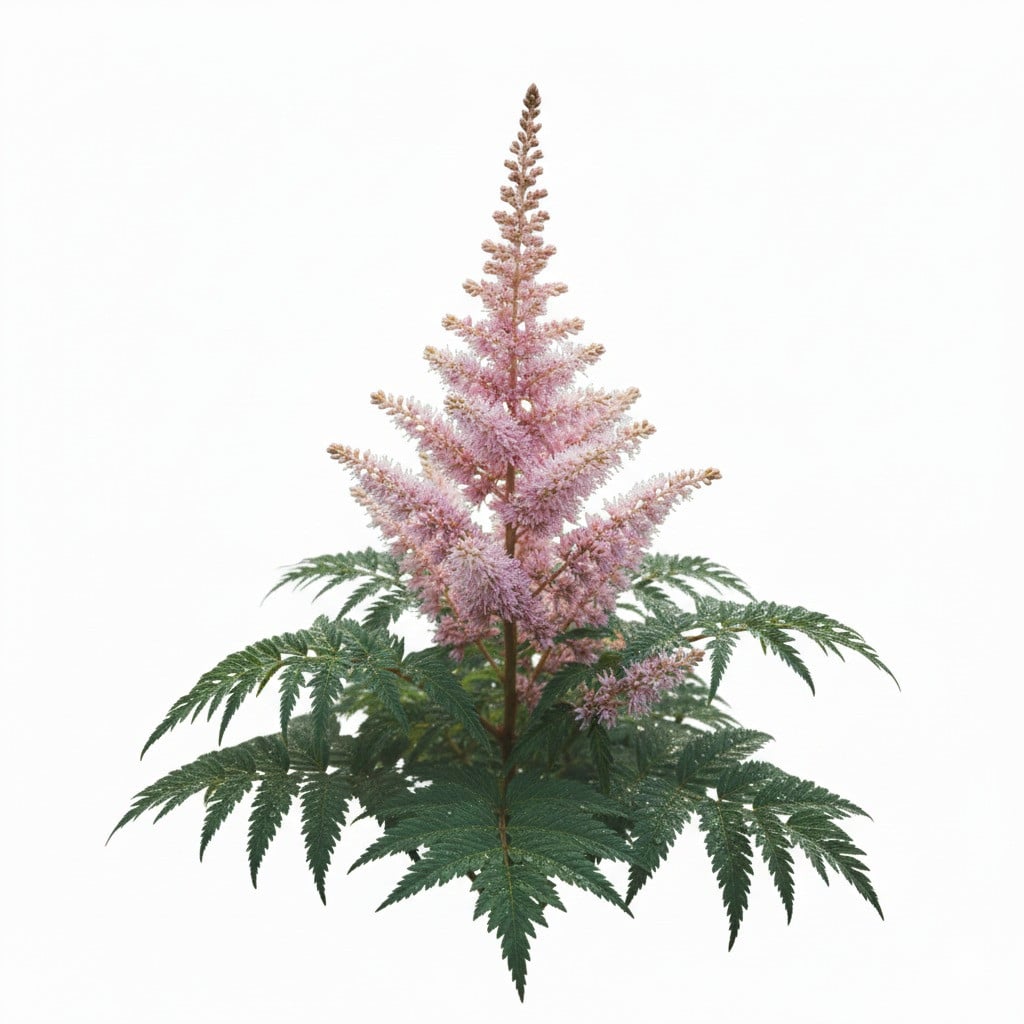
Variety
Teppich-Spiere
created by Lennox D. at 07.08.2025
Season Overview
Sowing
Harvest
Harvest
J
F
M
A
M
J
J
A
S
O
N
D
1ST YEAR
FOLLOWING YEARS
Description
Astilbes, also known as "splendid spires", are perennials that enhance any garden with their eye-catching, feathery inflorescences and delicate foliage. Depending on the variety, they flower from June to August in vibrant colors such as pink, white, red or purple and form dense, upright panicles that look like fine feathers. Astilbes are particularly appreciated for their ability to fill even shady and semi-shady locations with color and structure. They prefer moist, humus-rich soil and are ideal for beds at the edge of shrubs, pond edges or as underplanting for trees. Thanks to their decorative appearance and long flowering period, they are not only popular in the garden but also as cut flowers. Many varieties are also hardy and easy to care for - an ideal choice for naturalistic or romantic gardens.
Non hybrid
Growing tips
Additional professional tips for growing astilbe 1. slightly acidic soil = better growth Astilbes thrive particularly well in soil with a pH value of 5.5-6.5. If the soil is too calcareous (high pH), they can take care of - 👉 Work in bark humus or acidic compost from coniferous wood! 2. do not combine astilbes with lime-loving plants Astilbes do not get on well with plants that like a lot of lime (e.g. lavender, sage, steppe sage). Better suited as bedding partners: funkia, ferns, rodgersia, woodruff, watering heart. --- 3. shade the root area - keep the soil cool Mulching alone is not always enough - 👉 Plant ground-covering companions (e.g. ivy flower, golden strawberry) to protect the root area from heat. 4. store water in the root area In dry regions: Work in a layer of bentonite, clay flour or water storage granules** before planting - keeps moisture in the soil for longer. 5. astilbe in a tub? Only with a trick! Choose large pots (min. 10-15 liters), preferably clay instead of plastic (to prevent evaporation). Mix a layer of rotted leaves or coconut fibers under the soil = better water retention. 6. astilbes react to excess nitrogen with lazy flowering Too much nitrogen → Lush foliage, but few or no flowers. Therefore: More potassium and phosphorus, less pure nitrogen fertilizer! 7. astilbes in the shade flower longer In full sun, flowering is shorter, often only 2 weeks. In partial shade or light shade: Flowering time is often twice as long! 8. leave wilted flowers for fall effect The dry inflorescences remain decorative into the winter 👉 Can be used in late fall to add structure to the bed.
Details


Germination temperature
18 – 22 °C (Degrees Celsius)

Plant distance
30 cm

Row spacing
40 cm

Seeding depth
0.5 cm

Companion Plants

Antagonistic Plants

Diseases
Grey mold
Root Rot
Downy mildew
Powdery mildews

Pests
Land snails
Aphids
Spider mites