Birnen-Quitte 'Lescovack'

Variety
Birnen-Quitte 'Lescovack'
created by Ninchen28 at 14.08.2025
Features
Growth habit
lifespan: perennial
growth habit: bushy
harvest: profitable
growth habit: upright
growth habit: stable
leaves: Deciduous
tree
Nutzungsart: Ur-/Alte Sorte
cross-pollination
bush tree
standard tree
half-standard tree
height: over 400 cm
weak to medium growth
insect pollination
Geschlechtertyp: einhäusig
Schnitt: Auslichtung
Schnitt: Verjüngung
Schnitt: Erhaltung
Schnitt: zeitiges Frühjahr
Schnitt: notwendig
Color
green
light yellow
Flower: white
Frucht: gelb
Taste
intensive
floral
Fruit shape
pear-shaped
Resistances
cold tolerant
resistant
robust
drought tolerant
heat resistant
Location
planting: outdoor
light: sunny to semi-shady
Soil: permeable soil
soil moisture: no waterlogging
Fertilization: nutrient-rich
planting: suitable for year-round cultivation
Soil: Well fertilized
soil moisture: fresh to moist
Soil: loamy
Soil: regular garden soil
wind: airy
Soil: medium to heavy
Wind: windverträglich
Season Overview
Planting
Harvest
Harvest
J
F
M
A
M
J
J
A
S
O
N
D
1ST YEAR
FOLLOWING YEARS
Description
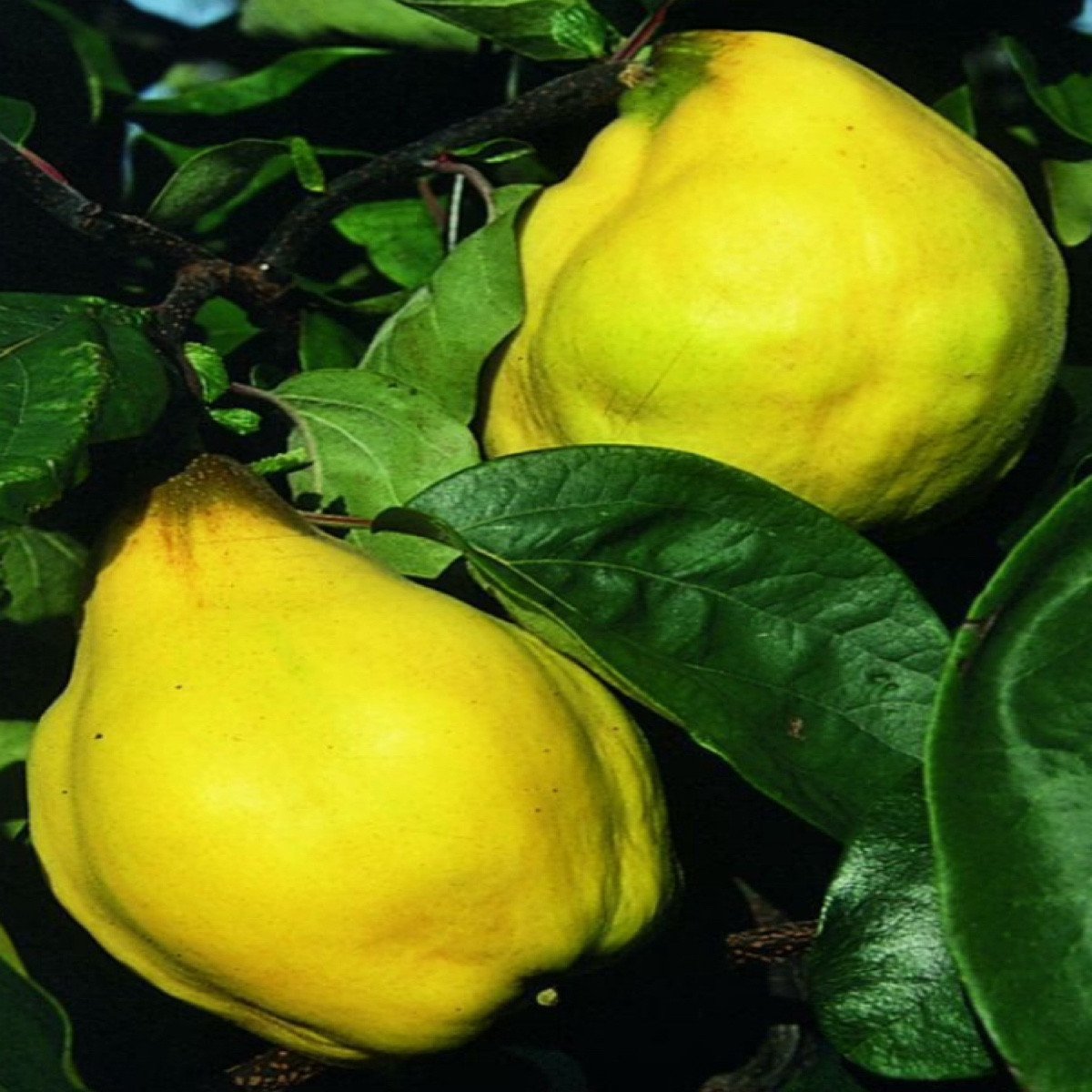
Origin: - Traditional variety from the region around Leskovac in present-day Serbia. - Widespread in the Balkans since the 19th century, later also cultivated in Central Europe. - Name literally means "originating from Leskovac" - spellings vary: Leskovacka, Leskowatzka, Leskowacka, Leskovatzka Kruška (Kruška = "pear"). Fruit: - Shape: Elongated pear-shaped, clearly tapering towards the stem base. - Size: Large, often 350-500 g per fruit. - Skin: Yellow, often golden yellow when fully ripe. - Flesh: Firm, light yellow, very aromatic, high pectin content. - Taste: Strong, typically "quincey" - ideal for jelly, juice, quince bread. - Ripening time: End of September to October. - Shelf life: Very good, often lasts until December/January. Tree: - Medium to strong-growing, robust, hardy. - High-yielding, usually bears early. - Fertilization: Not self-fertile, needs a suitable partner (e.g. Bereczki, Konstantinopeler, Vranja). Important information: The Leskovacka pear quince is not simply a "variant" of the Leskovac apple quince - both are independent varieties that simply have the same place of origin in their name.
Non hybrid
Frostproof
Growing tips
1st location - Sun: Full sun to maximum light partial shade. The more sun, the more intense the aroma. - Wind: Protect from wind if possible, as fruits and shoots are sensitive to wind. - Soil: - Loose, rich in humus, well-drained. - pH value slightly acidic to neutral (6.0-7.0). - No waterlogging - otherwise risk of root rot. 2. planting - Time: Fall (October/November) or spring (March/April), depending on soil climate. - Spacing: standard trunk 4-5 m, half trunk 3-4 m, bush form 2.5-3 m. - Planting hole twice as wide/deep as the root ball, enrich with compost. - Place a stake in windy locations. 3. fertilization - Leskovacka is not self-fertile → always plant a second variety. - Good partners: Bereczki (pear-shaped), Constantinople (apple-shaped), Vranja (pear-shaped). - Optimal distance between the trees: max. 20-30 m for reliable pollination. 4. care - Pruning: - In late winter (February/March), remove old, overlapping and inward-growing wood. - Ensure that the crown is flooded with light - quinces bear on one-year-old wood. - Watering: - Water regularly in the first 2-3 years, especially in dry summers. - Later only in extreme drought. - Fertilization: - Work in 2-3 liters of mature compost + some organic complete fertilizer annually in spring. - Do not over-fertilize with nitrogen → this makes the shoots fattened and sensitive to frost.
Details


Plant distance
800 cm

Row spacing
800 cm

Seeding depth
30 cm

Companion Plants


Diseases
Downy mildew
Powdery mildews
Bacterial canker
Soft rot
Pests
Spider mites
Sesiidae
Gall midges
Aphids