Schönorche

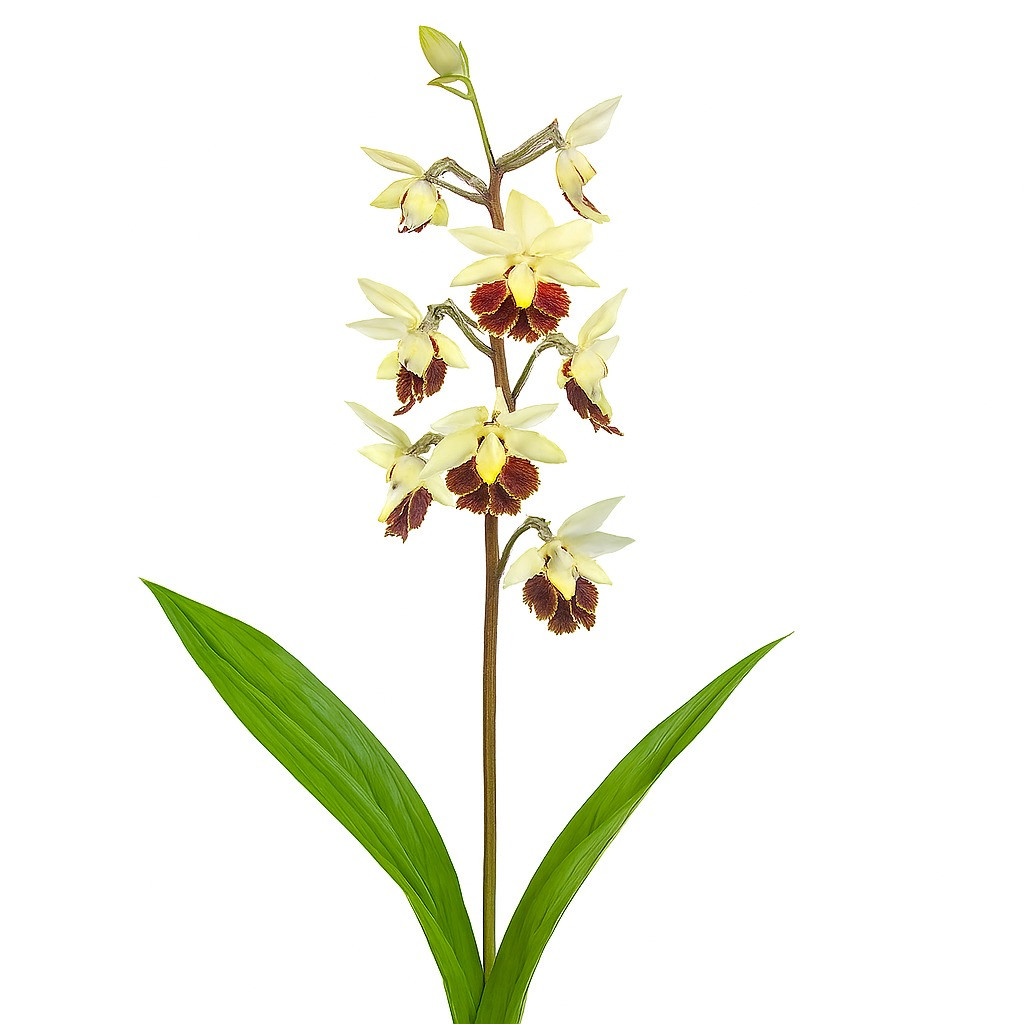
Variety
Schönorche
Approved Data
created by Alex&Sempi at 29.11.2025
Features
Growth habit
lifespan: perennial
growth habit: compact
growth habit: upright leaf position
growth habit: herbaceous
leaves: loosely leafed
flower: flowering
leaves: Deciduous
strong leaves
normal growth
warm germination
cross-pollination
growth habit: upright slender
ornamental plant
root type: rhizome
growth habit: slightly arching
wide: 20 - 30 cm
height: 30 - 40 cm
hermaphroditic
growth habit: upright flower stems
simple flower
large flowers
non-woody
no lateral shoot development
Spear shaped leaves
propagation by seeds
propagation by division
leaves slim
perennial
insect pollination
hand pollination
leaves: slightly wavy
Blütenstand: traubenförmig
Blätter: zugespitzt
Blätter: gerillt
Keimung: Lichtkeimer
Blätter: weich/zart
Blüte: duftend schwach
Wuchs: nicht invasiv
Blätter: einfach
Schnitt: nicht erforderlich
Winter variety
Spring variety
leaves: rosulate
growth habit: horst-forming
growth habit: rosette-shaped
early flowering
leaves: evermoist
wide: 60 - 70 cm
late-flowering
height: 60 - 80 cm
large leaves
Blüte: mittelgroß
Geschlechtertyp: einhäusig
Blätter: oval
Blätter: länglich
Wuchs: mittel
Blütenform: lippenförmig
Blüte: kurzlebig
Blütenstand: einzeln, kleine Gruppen
Blütenform: zygomorph (spiegelbildlich)
Lebenszyklus: zieht im Herbst ein
Wuchsform: terrestrisch
Wurzeltyp: Bulben / Pseudobulben
Wuchsform: epiphytisch
entire leaves
Color
striped
multicolor
brown
light green / pale green
creamy
speckled
glossy
medium green
yellow-green
Flower: white
Flower yellow
Flower: orange
Flower: red
Flower: pink
Stem and leaf veins red
Blätter: dunkelgrün
Blüte: grün
Frucht: grün
Farbe: einfarbig
Musterung: verlaufend
Stamm, Stiel: grün
Musterung: fleckig
Oberfläche: schimmernd
Herbstfärbung: gelb
Wurzel: weiß
Wurzel: cremeweiß
Blattrippen: grün
Seeds: white/cream
Herbstfärbung: keine
Samen: beige
Musterung: gepunktet
Herbstfärbung: goldbraun
Location
planting: bed
planting: outdoor
sheltered from the wind
planting: rain-protected
Soil: permeable soil
soil moisture: no waterlogging
biotope: mountain area
Fertilization: single dose of compost
fertilization: humus-enriched
light: light shade.
soil moisture: fresh to moist
soil moisture: moist
Light: Semi-Shade
Fertilization: moderately nutrient-rich
soil moisture: well-drained
biotope: forest
Soil: medium-heavy
Water: regularly
planting: heat protected
Soil: sandy to loamy
fertilization: low-nitrogen
pH value: acidic to neutral (5,5-7)
fertilization: lime-free
Soil: rocky, stony
Soil: loosened
water: no tap water
Planting: rock garden / alpine garden
Planting: edge of wooded areas or beneath trees
Planting: pots, tubs, or boxes
Fertilization: moderate
Water: moderately
Fertilization: low in potassium
Fertilization: low in phosphate
Fertilization: organic
Planting: pond / pond's edge
biotope: rainforest
biotope: stream / pond / shoreline
Heat requirement: moderate
Licht: vor Mittagssonne geschützt
Düngung: flüssig
Good companions: moisture-loving
Nachbarn schlecht: trockenheitsliebend
Good companions: shade tolerant
Nachbarn schlechte: kalkliebend
Nachbarn schlechte: sonnenliebend
Nachbarn schlechte: stark wuchernd
Nachbarn schlechte: hoher nährstoffbedarf
Nachbarn gute: mit niedrigen Nährstoffbedarf
Nachbarn schlechte: hochwachsend
Nachbarn gute: niedrigwachsend
Gartenstil: Naturgarten
Pflanzung: Rabatte
Pflanzung: Staudenbeet
Herkunft: Neophyt
Boden: flachgründig (0-30)
Fruit shape
elongated
ribbed
capsule
medium-sized
Form: langoval, zylindrisch
smooth, sleek
Resistances
resistant
rust resistant
robust
disease resistant
Little susceptible
hardy with protection
hardy down to -10°C
hardy down to -15°C
Taste
not edible
Toxizität: ungiftig
Season Overview
Propagating
Planting
Harvest
J
F
M
A
M
J
J
A
S
O
N
D
1ST YEAR
FROM YEAR 4
Description
Calanthe is a genus of the orchid family (Orchidaceae). It is widespread in the tropics of Asia, Africa and Central America. Most species grow terrestrially on the forest floor, some are epiphytes. It is also known as the beautiful orchid because of its beautiful flowers. The genus Calanthe can be divided into two subgenera. The subgenus Calanthe with the type species Calanthe veratrifolia comprises evergreen plants without pseudobulbs. In the subgenus Preptanthe, on the other hand, the plants have storage organs and survive a dry period deciduous. Description All species in this genus form closely spaced shoots, each with limited growth. The shoot axis can be long and cylindrical or compressed and thickened into pseudobulbs. These consist of several internodes and are covered with leaves along their entire length. The leaves are elongated-oval, thin and folded along the numerous protruding veins. The species with pseudobulbs are deciduous, those without a storage organ are evergreen. The erect inflorescence appears laterally from the stem axis or from its base. It is racemose and bears many resupinate flowers. These are usually strikingly pink, white or yellow in color. Bracts, ovary and also the petals can be hairy. The three sepals and the lateral petals are free and not bent together to form a tube. The labellum is two- or four-lobed, with a spur at the base. There is often a warty, fleshy callus or a callus consisting of several keels in the center of the labellum. The column is fused with the labellum at least at the base, but often along its entire length. The stamen is terminal and contains eight waxy pollinia. Distribution The species of the genus Calanthe have a pantropical distribution. The center of diversity is Southeast Asia, with several species also occurring in Africa and Madagascar. One species, Calanthe calanthoides, is widespread in Central America. Many species grow terrestrially in the shade of forests, often at higher altitudes up to 3200 meters. Culture Due to the relatively large, colorful flowers, some species can be found in cultivation. Different requirements are made depending on the origin of the species. For example, the evergreen species require watering all year round, while the deciduous species need a dry dormant period. Calanthe species are often attacked by spider mites, especially in dry, heated air. When the flowers freeze, they turn blue because indigo is produced.
Non hybrid
Growing tips
Location
Details


Light requirement
Semi-shaded

Water requirement
Moist

Soil
Medium (loamy)

Nutrient requirement
Medium

Light germinator

Germination temperature
20 - 25 °C (Degrees Celsius)

Plant distance
30 cm

Row spacing
40 cm

Seeding depth
0.2 cm

Companion Plants

Antagonistic Plants

Diseases
Root Rot
Powdery mildews

Pests
Aphids
Spider mites