Orchids - Calanthe

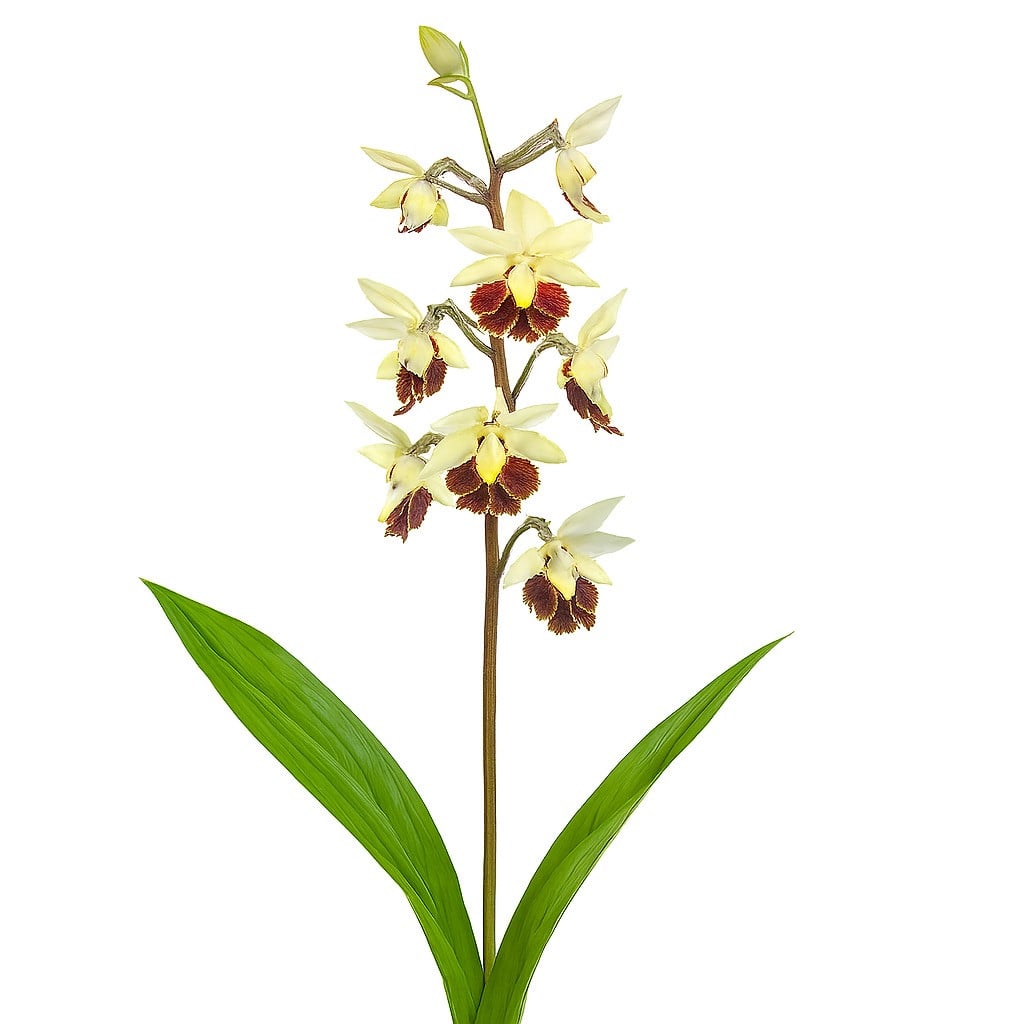
Orchids - Calanthe
Calanthe
Plant family
Orchid family (Orchidaceae)
Season Overview
Propagating
Planting
Harvest
Harvest
J
F
M
A
M
J
J
A
S
O
N
D
1ST YEAR
FOLLOWING YEARS
Details


Light requirement
Semi-shaded

Water requirement
Moist

Soil
Medium (loamy)

Nutrient requirement
Medium

Light germinator

Germination temperature
20 - 25 °C (Degrees Celsius)

Plant distance
30 cm

Row spacing
40 cm

Seeding depth
0.2 cm
Instructions
Description
Calanthe is a genus of the orchid family (Orchidaceae). It is widespread in the tropics of Asia, Africa and Central America. Most species grow terrestrially on the forest floor, some are epiphytes. It is also known as the beautiful orchid because of its beautiful flowers. The genus Calanthe can be divided into two subgenera. The subgenus Calanthe with the type species Calanthe veratrifolia comprises evergreen plants without pseudobulbs. In the subgenus Preptanthe, on the other hand, the plants have storage organs and survive a dry period deciduous. Description All species in this genus form closely spaced shoots, each with limited growth. The shoot axis can be long and cylindrical or compressed and thickened into pseudobulbs. These consist of several internodes and are covered with leaves along their entire length. The leaves are elongated-oval, thin and folded along the numerous protruding veins. The species with pseudobulbs are deciduous, those without a storage organ are evergreen. The erect inflorescence appears laterally from the stem axis or from its base. It is racemose and bears many resupinate flowers. These are usually strikingly pink, white or yellow in color. The bracts, ovary and also the petals can be hairy. The three sepals and the lateral petals are free and not bent together to form a tube. The labellum is two- or four-lobed, with a spur at the base. There is often a warty, fleshy callus or a callus consisting of several keels in the center of the labellum. The column is fused with the labellum at least at the base, but often along its entire length. The stamen is terminal and contains eight waxy pollinia. Distribution The species of the genus Calanthe have a pantropical distribution. The center of diversity is Southeast Asia, with several species also occurring in Africa and Madagascar. One species, Calanthe calanthoides, is widespread in Central America. Many species grow terrestrially in the shade of forests, often at higher altitudes up to 3200 meters. Culture Due to the relatively large, colorful flowers, some species can be found in cultivation. Different requirements are made depending on the origin of the species. For example, the evergreen species require watering all year round, while the deciduous species need a dry dormant period. Calanthe species are often attacked by spider mites, especially in dry, heated air. When the flowers freeze, they turn blue because indigo is produced.
Origin:
Southeast Asia, Africa, Madagascar, Central America
Growing tips
Location Light: Partial shade to shade, no direct midday sun. Soil: Rich in humus, loose, well-drained; special orchid soil or enriched with compost/bark mulch. Humidity: High, especially in summer; spray occasionally. Planting Time: Spring or fall, container plants possible all year round (except in frost or extreme heat). Depth: Plant rhizomes flat, root ball flush with soil surface. Pot culture: Pot with good drainage, at least 30-40 cm in diameter. Care Watering: Growth phase (spring-autumn): regular, keep soil slightly moist. Winter dormancy: water considerably less, but do not allow to dry out completely. Fertilization: During the growing season 2-3 times a week with orchid fertilizer at half the recommended dose. Do not fertilize in winter. Overwintering: Many species are hardy down to -10 to -15 °C. Protection from winter dampness with mulch or brushwood is more important than frost protection. Keep potted plants frost-free or protected. Special features Flowering time: spring to summer, depending on the species; flower panicles with many individual flowers. Deciduous or winter-green: some species retain leaves, others retract in winter. Propagation: Division of the rhizomes in spring or fall.

Companion Plants

Antagonistic Plants

Diseases
Root Rot
Powdery mildews

Pests
Aphids
Spider mites