patronbernard
04.08.2026, 15:04
...Today, a little bit of smart-aleck talk on the topic of #tomatoes and heat:
...Tomato plants—and most other plants, too—have what are called #stomata (pores) on the green parts of the plant, including the unripe fruits! These openings are very important for the plants; they serve to
▪︎absorb CO₂ for photosynthesis,
▪︎release oxygen,
▪︎evaporate water (transpiration), which also helps cool the plant.
The riper the tomato, the less it can cool itself (the stomata close!)—and the greater the risk of it literally “cooking on the vine” in extreme sunlight or heat buildup. 🌞🍅
⚠️ So pay attention! If your tomatoes 🍅 are exposed to direct sunlight in this current heat and you have no way to shade them, then don’t wait until they’re fully ripe to harvest them (they’ll ripen just fine afterward and still taste better than those water bombs from the Netherlands and Belgium) 🤷
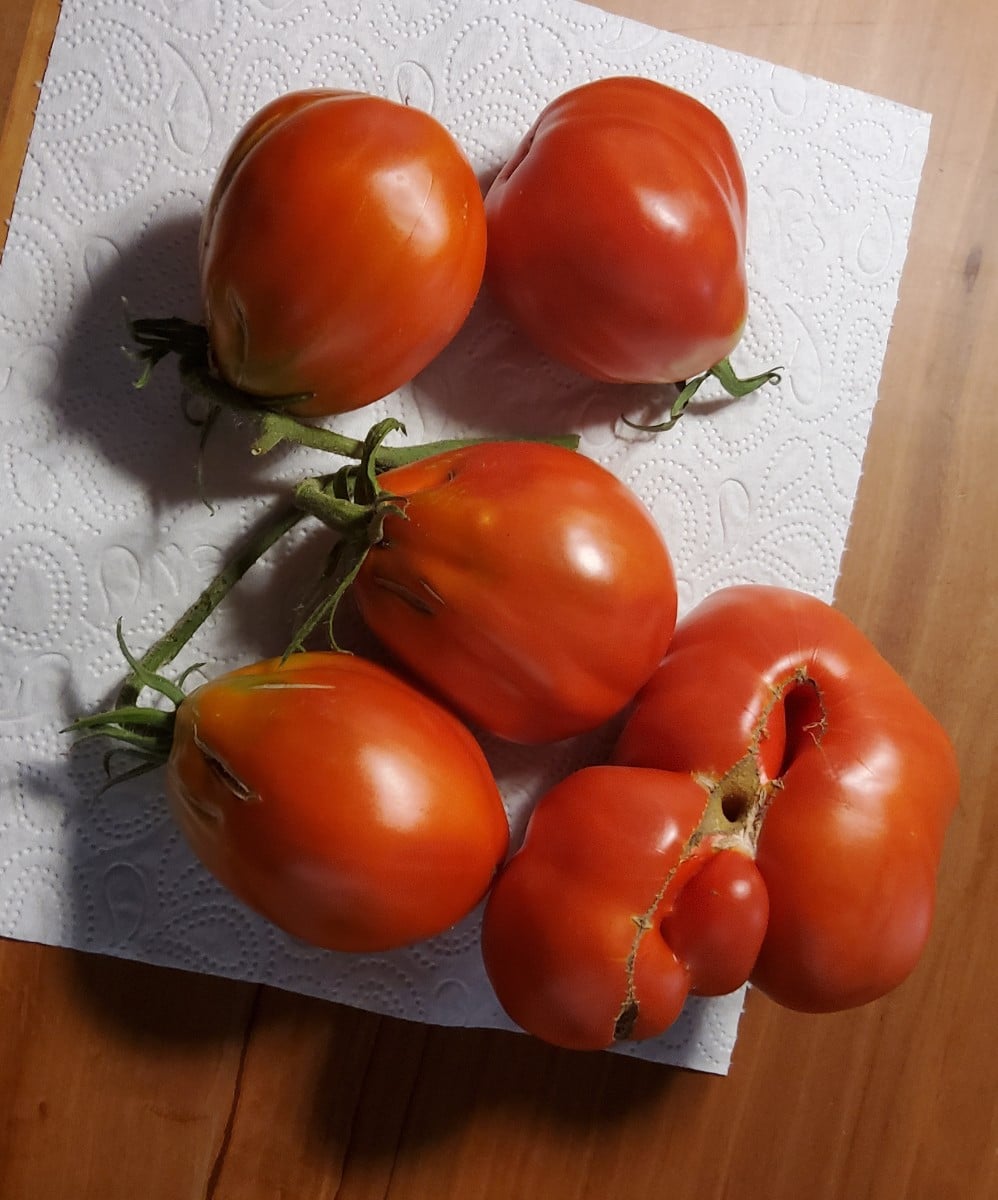
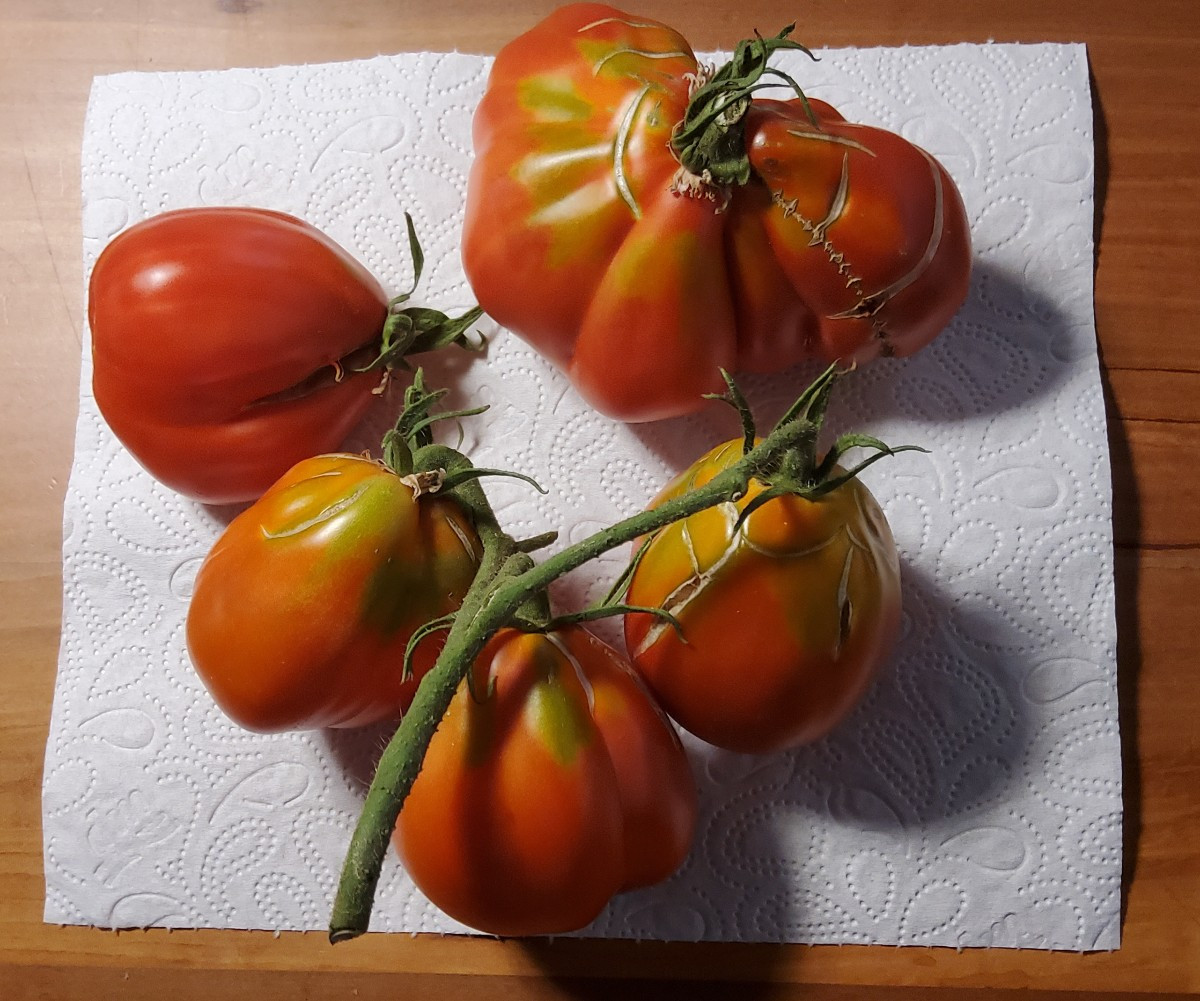
Interestingly, I’ve noticed heat damage on the “Yellow Russian” (they’re literally turning glassy! 🙄), but not on the “Pera Abruzzo” (photos), even though they’re right next to each other! 🤷
Spoiler: These very stomatal openings are also the entry points for harmful fungi, such as #brown rot. ...and the fungus doesn’t exactly say to the stomatode at the entrance: “Oh, you’re one of those that were fertilized with compost turned over during a full moon 🤔—well, I’d better move on 👋.” Nope, unfortunately, it doesn’t do that! 🙄...which means: whether it’s organic or not, the fungus couldn’t care less! 😳
17 Likes
16 Comments
Comments
Wow viele Infos. Wusste das tatsächlich nicht. Mir war nur aufgefallen, dass irgendwann an diesen stellen schimmrln anfängt. Jetzt weiß ich warum. Vielen Dank
Tolle tomaten
Vielleicht macht Bio aber gesündere Pflanzen, deren Abwehr (ja auch Pflanzen haben eine Art Imunsystem und brauchen auch mehr Stoffe, als nur die paar altbekannten.....) selbst gut funktioniert und dem Pilz länger was entgegenzusetzen hat?
...@Omagartengärtnerin, das Problem liegt im Prinzip woanders: ...der Erreger der Braunfäule kam Mitte des 19. Jhdts. nach Europa! (aus Nordamerika) unsere Kulturpflanzen wie z.B. Kartoffeln und Tomaten hatten also keinerlei Abwehrmechanismen gegen diesen neuartigen Pilz! ...und Stand heute, sind knapp 200 Jahre einfach zu kurz, um Resistenzen auszubilden...🤷
 Regloh
04.08.2026, 16:27
Regloh
04.08.2026, 16:27
Ich habe ein schattierungsnetz über mein Gewächshaus gelegt
Habe gut uffgebasst und was gelernt ☝🏻🤓 gern mehr „nerdiges“ Pflanzenwissen!
Bei uns sieht's grad aus, als wäre Christo hier gewesen. Auch an der hinteren Garagenwand, wo ich weitere Tomaten und Chilis habe, sieht es so aus. Denn letzte Woche gab's schon Kartoffelgulasch mit ca. 6 Paprikas, die ich wegen Sonnenbrand ernten musste. Und viele Tomatenblüten sind sofort vertrocknet. Nun hoffe ich, dass meine Verhüllung weitere Schäden verhindert..
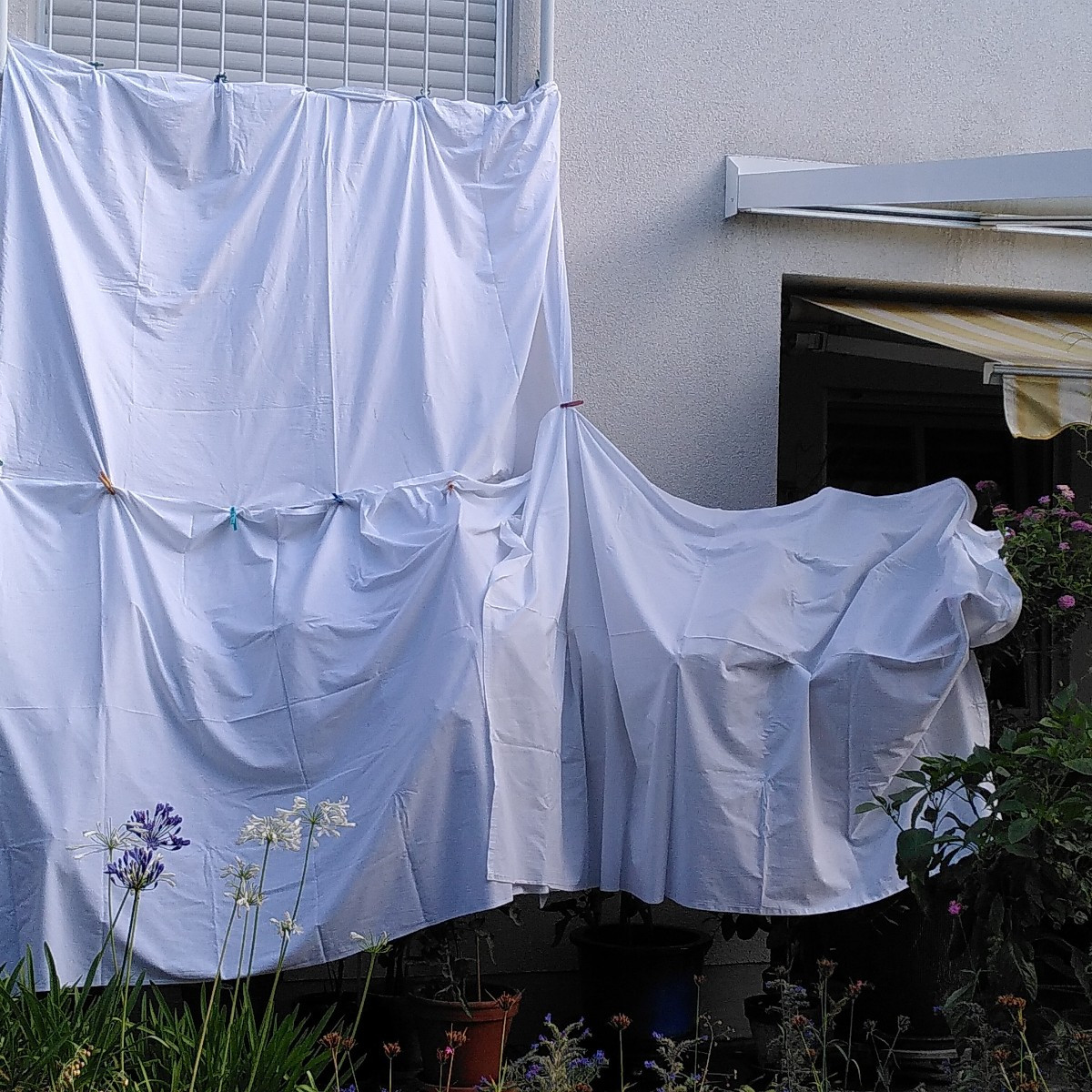
Mega, da kommen bei dir ja Garten und Kunst zusammen! 😄
...Christo und Jeanne-Claude lächeln bestimmt selig vom Himmel herab...☺️
Auf jeden Fall 😂
Das sich die anderen Gemüse nicht erschrecken 👻
Am Abend kommt die Kunst ja wieder weg, so dass sich keine Pflanze fürchten muss 😀
Jetzt weiß ich endlich, warum glasig!!! Hatte ich letztes Jahr bei der Sunviva und dieses Jahr im GH bei der garden peach, meine ich… sieht komisch aus. So stumpf.
Die eine Brombeere hat auch Sonnenbrand. Ich dachte, es sei ein Schädling… eine tolle YouTuberin hat mich aufgeklärt…
Kannat gern mehr klugscheissern 🤭
Danke für die vielen Infos. Habe vor ein paar Tagen genau zu dem Thema im Internet gesucht. Bei mir im Gewächshaus wird es sehr heiss. Die Heart of Gold ist tadellos und bei der Tschernij Prinz entstehen schnell Risse. Anscheinend hat das auch noch mit der Dicke der Schale zu tun. Dünnhäutige Tomaten neigen weniger zu Rissen.
 julezgardenz
06.08.2026, 08:41
julezgardenz
06.08.2026, 08:41
Was für eine Pracht! Und vielen Dank für den wertvollen Input. ☺️🤓👍🏼

