Bluetta

Variety
Bluetta
created by Ninchen28 at 28.01.2025
Features
Color
blue
Growth habit
growth habit: compact
growth habit: bushy
growth habit: upright
lifespan: perennial
root type: shallow-rooted
self-fruiting
leaves: Deciduous
Location
light: sunny to semi-shady
Soil: permeable soil
soil moisture: moist
Resistances
Winter hardy
Taste
raw edible
Edible
Season Overview
Planting
Harvest
Harvest
J
F
M
A
M
J
J
A
S
O
N
D
1ST YEAR
FOLLOWING YEARS
Description
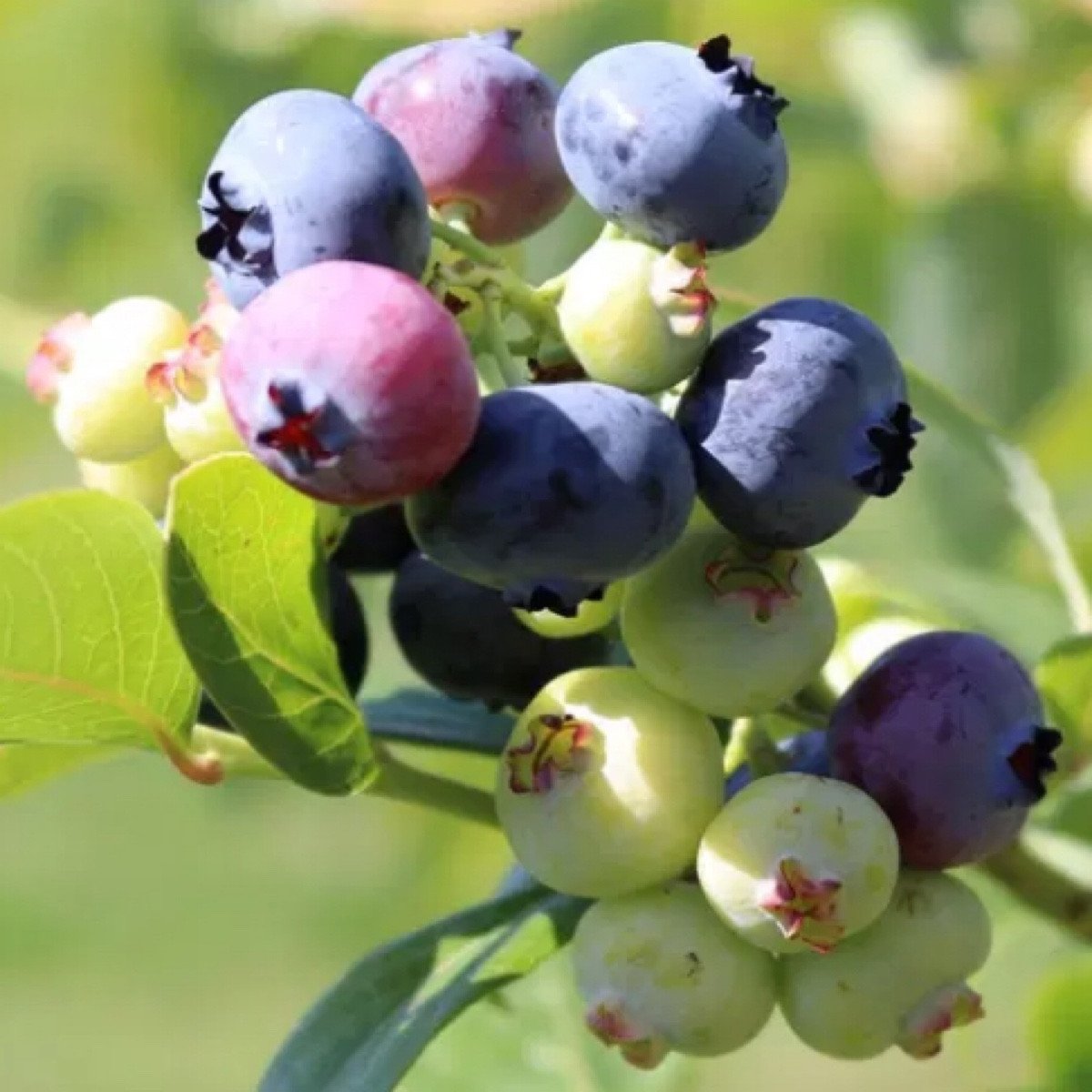
The blueberry 'Bluetta' produces aromatic and heavenly delicious fruit. Fortunately for all berry lovers, this beautiful shrub bears countless of them. This wonderful plant is undemanding and uncomplicated and is ideal for novice gardeners. The light blue blueberries can be eaten straight from the bush. They are wonderfully juicy and a real treat! Blueberry 'Bluetta' berries are delicious ingredients for cakes and muffins. Culinary enthusiasts can also conjure up fruity jams and jellies with the fruits of the (bot.) Vaccinium corymbosum 'Bluetta'. Juice, compote and smoothies made from the tempting berries taste fantastic. If required, they can be frozen and preserved for a long time. Vaccinium corymbosum 'Bluetta' has a beautiful presence as a single plant or in groups. It also makes a lovely partnership with other blueberry varieties. The semi-shrub looks surprising as a low hedge. Blueberry 'Bluetta' also looks good in a tub on the balcony or patio. This wonderful semi-shrub, which belongs to the American blueberry family, has a strongly branched growth habit and a bushy, broad appearance. The small shrub reaches a height of up to 80 centimetres and a width of around 70 centimetres. In optimal locations, the plant can reach up to two meters. It grows by 15 to 25 centimeters per year. The leaves are egg-shaped to lanceolate and fresh green in color. They turn a deep red in the fall. A beautiful sight that brightens up the transition to winter! The blueberry 'Bluetta' flowers in May to June. The small flowers are white-pink. Light blue, spherical fruits form, which gradually ripen in summer from July to August. The fruits are extremely burst-resistant. Everyone with a sweet tooth waits impatiently for the blueberries to turn from green to reddish-purple to light blue before they ripen. The ripe, aromatic blueberries taste sweet and sour. The plant is characterized by medium-high yields.
F1 Hybrid
Frostproof
Growing tips
The bog plant needs a nutrient-rich soil that is sufficiently moist. A rather acidic substrate consisting of a mixture of peat, sand and garden soil, for example, is ideal. Rhododendron soil is also recommended. The blueberry 'Bluetta' requires a sunny to semi-shady location. Vaccinium corymbosum 'Bluetta' is an undemanding plant. Regular watering is particularly important during the growth phase and when the fruit is ripening. Lime-free water from the rain barrel is ideal. A slow-release fertilizer that releases nutrients evenly and continuously is suitable for fertilizing the 'Bluetta' blueberry. The best time to plant the American blueberry is during the leafless period between October and March. If the gardener ensures a sufficient supply of water, the small shrub can be planted all year round without any problems. As a container plant, the shrub requires special attention. Plant pots with drainage holes are recommended so that the watering or rainwater drains off easily. Tub plants generally need winter protection. It is advisable to wrap the pot with bubble wrap, for example. Ideally, the plants should overwinter close to a wind-protected side of the house, where they are protected from severe frost.
Details


Light requirement
Semi-shaded

Water requirement
Moist

Soil
Light (sandy)

Nutrient requirement
Low

Light germinator

Plant distance
150 cm

Row spacing
150 cm

Seeding depth
0Not specified

Companion Plants

Antagonistic Plants
Abyssinian cabbage / Ethiopian mustard
Anemone
Aubergine / Eggplant
Blackberry / Brambles
Broccoli
Broccoli raab / Stem cabbage / Cima di rapa
Brussels sprouts
Brussels sprouts
Cabbage (Cabbage)
Cabbage (Pointed cabbage)
Cabbage (red cabbage)
Cabbage (Savoy cabbage)
Cauliflower
Chili
Chinese kale - Kai-lan / Chinese broccoli
Clematis
Collard greens
Collard greens (Kale)
Collard greens (Tuscan kale / Dinosaur kale / Palm tree kale)
Courgette / Zucchini
Cucumber (African horned cucumber / Kiwano)
Cucumber (Caigua)
Cucumber (Melothria)
Cucumber / Gherkin
Garden squash - Patisson / UFO squash
Grasses - feather-bristled grasses, lamp-cleaning grasses
Grasses - Fescue
Grasses - Pampas grass
Grasses - Reedgrass
Green lavender cotton
Hair cucumbers / snake gourds
Hazelnut
Hellebores
Horsetail
Ivy
Lavender
Lily of the valley
Maples
Mizuna / Japanese mustard greens
Napa cabbage / Chinese cabbage
Nightshades (Other)
Okra
Oregano
Ornamental pumpkin
Pak Choi
Pepper / Paprika
Phlox, flame flower
Potato
Pumpkin / Squash
Rapeseed
Rapeseed - Sheer cabbage / Siberian cabbage
Rapini / Broccoli rabe
Raspberry
Rose
Rosemary
Rutabaga / Swedish turnip
Sage
Sea coal
Sponge gourd / Egyptian cucumber / Vietnamese luffa
Stem herbs
Stinging nettle
Strawberry
Succulents
Sweet woodruff / Sweetscented bedstraw
Thyme
Tomato (Bush tomato)
Tomato (Cocktail bush tomato)
Tomato (Cocktail Stake Tomato)
Tomato (Stake tomato)
Turnip
Turnip greens - Choy Sum / Chinese flowering cabbage
Turnip greens - Mizuna
Turnip greens - Tatsoi
Turnips - Oilseed turnips
Turnips - Wild turnips
Vegetable cabbage - Forage cabbage
Vegetable cabbage - Ribbed cabbage / Portuguese cabbage
Vegetable cabbage - wild cabbage / ancient cabbage
Walnut family
Wild garlic
Willows
Yalta tomatoes

Diseases
Root Rot
Septoria
Grey mold

Pests
Common winter moth
Spotted wing drosophila
Gall midges
Caterpillars
Schildläuse
Spider mites
Aphids