Jersey

Variety
Jersey
created by Ninchen28 at 25.01.2025
Features
Color
blue
Taste
mild
sweet
raw edible
Edible
Growth habit
growth habit: compact
growth habit: bushy
growth habit: upright
lifespan: perennial
harvest: profitable
leaves: Deciduous
self-fruiting
root type: shallow-rooted
Location
planting: bed
planting: outdoor
planting: raised bed
light: sunny to semi-shady
Soil: permeable soil
soil moisture: no waterlogging
soil moisture: fresh to moist
Resistances
Winter hardy
Season Overview
Planting
Harvest
Harvest
J
F
M
A
M
J
J
A
S
O
N
D
1ST YEAR
FOLLOWING YEARS
Description
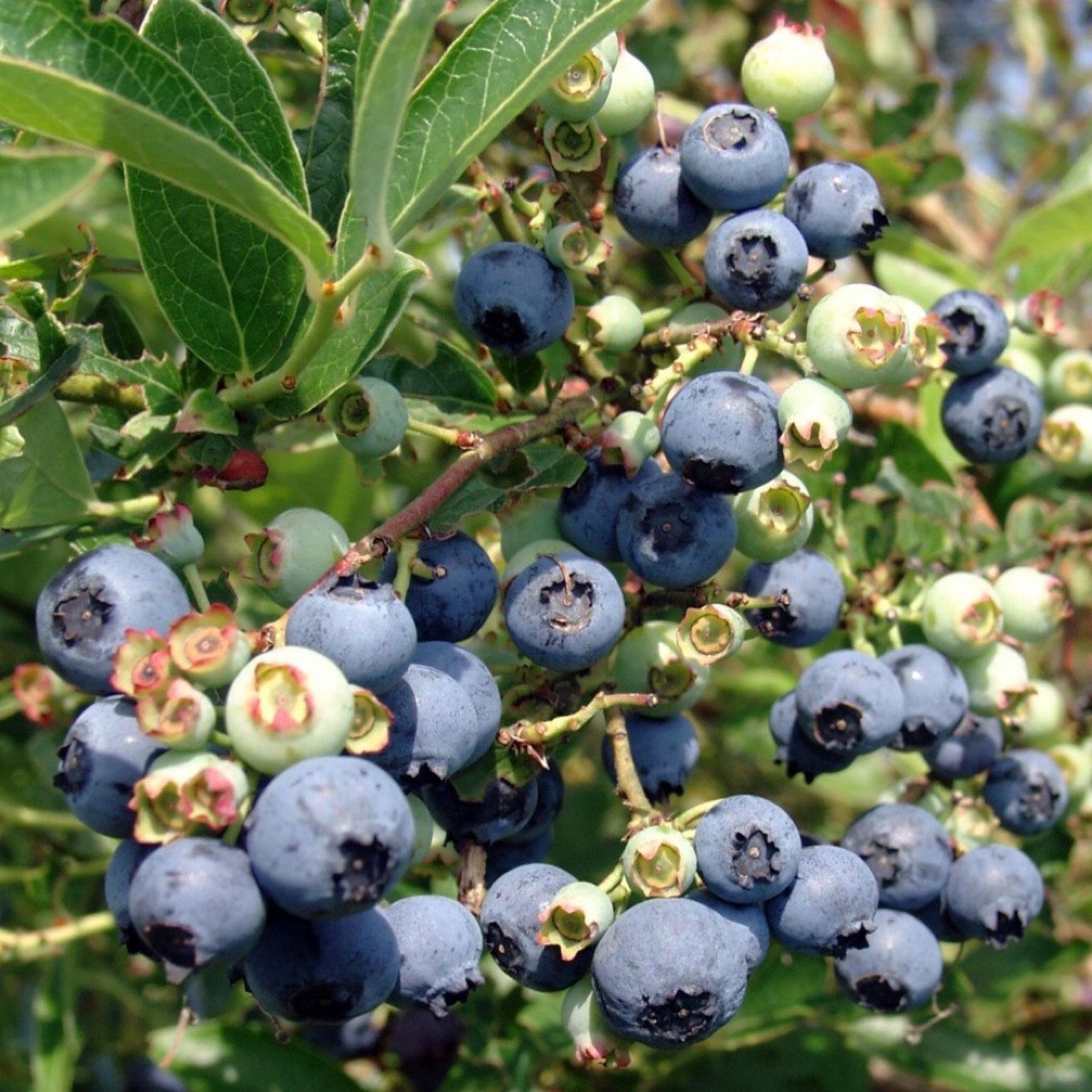
Harvesting fresh fruit from your own garden is a highlight of every gardening season. A healthy and delicious one of its kind is the blueberry 'Jersey'. The botanical name of the fruit plant is Vaccinium corymbosum 'Jersey'. The bright blue berries are a magnificent sight. This exclusive variety is a cultivated blueberry. It is particularly common in eastern North America. Blueberries are often found near damp swamps, in bogs or forests. The garden blueberry can be introduced into the garden in a variety of ways. The delicious and healthy fruits of Vaccinium corymbosum 'Jersey' are ideal for fresh consumption or processing. The blueberry 'Jersey' grows beautifully bushy in the garden. On average, it grows to a height of around 100 to 200 cm. It is considered to be quite vigorous and robust. The gardener need not worry about the plant in winter, as it is a hardy variety. The roots of the 'Jersey' blueberry develop close to the ground and do not go deep into the soil. A sunny to semi-shady spot in the home garden is ideal for the 'Jersey' blueberry. A fresh, moist and humus-rich garden soil is perfect for the blueberry. As a result, it finds in our gardens what it already prefers in its native habitat in eastern North America.
F1 Hybrid
Frostproof
Growing tips
Strong and healthy growth is guaranteed with this variety if it finds the right growing conditions in the home garden. The foliage of the blueberry is a highlight in the fall. They turn a bright orange-red and adorn the entire garden. Jersey' can be used in a variety of ways. Its advantages are shown to their best advantage in a solitary position, but even better in a group. It is ideal for planting in a container as it does not develop a deep root system. The volume of the container should be sufficient and the soil quality should be humus-rich, fresh to moist. Waterlogging should be prevented and excess water should be able to drain away. The foliage of the blueberry is fresh green and strong. In spring, the variety produces small white to pink flowers. The valuable 'Jersey' berries are ready to eat in August and can be harvested. Whether for delicious jam or for fresh consumption, the vitamin C-rich berries are a sweet treat.
Details


Light requirement
Semi-shaded

Water requirement
Moist

Soil
Light (sandy)

Nutrient requirement
Low

Light germinator

Plant distance
150 cm

Row spacing
150 cm

Seeding depth
0Not specified

Companion Plants

Antagonistic Plants
Abyssinian cabbage / Ethiopian mustard
Anemone
Aubergine / Eggplant
Blackberry / Brambles
Broccoli
Broccoli raab / Stem cabbage / Cima di rapa
Brussels sprouts
Brussels sprouts
Cabbage (Cabbage)
Cabbage (Pointed cabbage)
Cabbage (red cabbage)
Cabbage (Savoy cabbage)
Cauliflower
Chili
Chinese kale - Kai-lan / Chinese broccoli
Clematis
Collard greens
Collard greens (Kale)
Collard greens (Tuscan kale / Dinosaur kale / Palm tree kale)
Courgette / Zucchini
Cucumber (African horned cucumber / Kiwano)
Cucumber (Caigua)
Cucumber (Melothria)
Cucumber / Gherkin
Garden squash - Patisson / UFO squash
Grasses - feather-bristled grasses, lamp-cleaning grasses
Grasses - Fescue
Grasses - Pampas grass
Grasses - Reedgrass
Green lavender cotton
Hair cucumbers / snake gourds
Hazelnut
Hellebores
Horsetail
Ivy
Lavender
Lily of the valley
Maples
Mizuna / Japanese mustard greens
Napa cabbage / Chinese cabbage
Nightshades (Other)
Okra
Oregano
Ornamental pumpkin
Pak Choi
Pepper / Paprika
Phlox, flame flower
Potato
Pumpkin / Squash
Rapeseed
Rapeseed - Sheer cabbage / Siberian cabbage
Rapini / Broccoli rabe
Raspberry
Rose
Rosemary
Rutabaga / Swedish turnip
Sage
Sea coal
Sponge gourd / Egyptian cucumber / Vietnamese luffa
Stem herbs
Stinging nettle
Strawberry
Succulents
Sweet woodruff / Sweetscented bedstraw
Thyme
Tomato (Bush tomato)
Tomato (Cocktail bush tomato)
Tomato (Cocktail Stake Tomato)
Tomato (Stake tomato)
Turnip
Turnip greens - Choy Sum / Chinese flowering cabbage
Turnip greens - Mizuna
Turnip greens - Tatsoi
Turnips - Oilseed turnips
Turnips - Wild turnips
Vegetable cabbage - Forage cabbage
Vegetable cabbage - Ribbed cabbage / Portuguese cabbage
Vegetable cabbage - wild cabbage / ancient cabbage
Walnut family
Wild garlic
Willows
Yalta tomatoes

Diseases
Root Rot
Septoria
Grey mold

Pests
Common winter moth
Spotted wing drosophila
Gall midges
Caterpillars
Schildläuse
Spider mites
Aphids