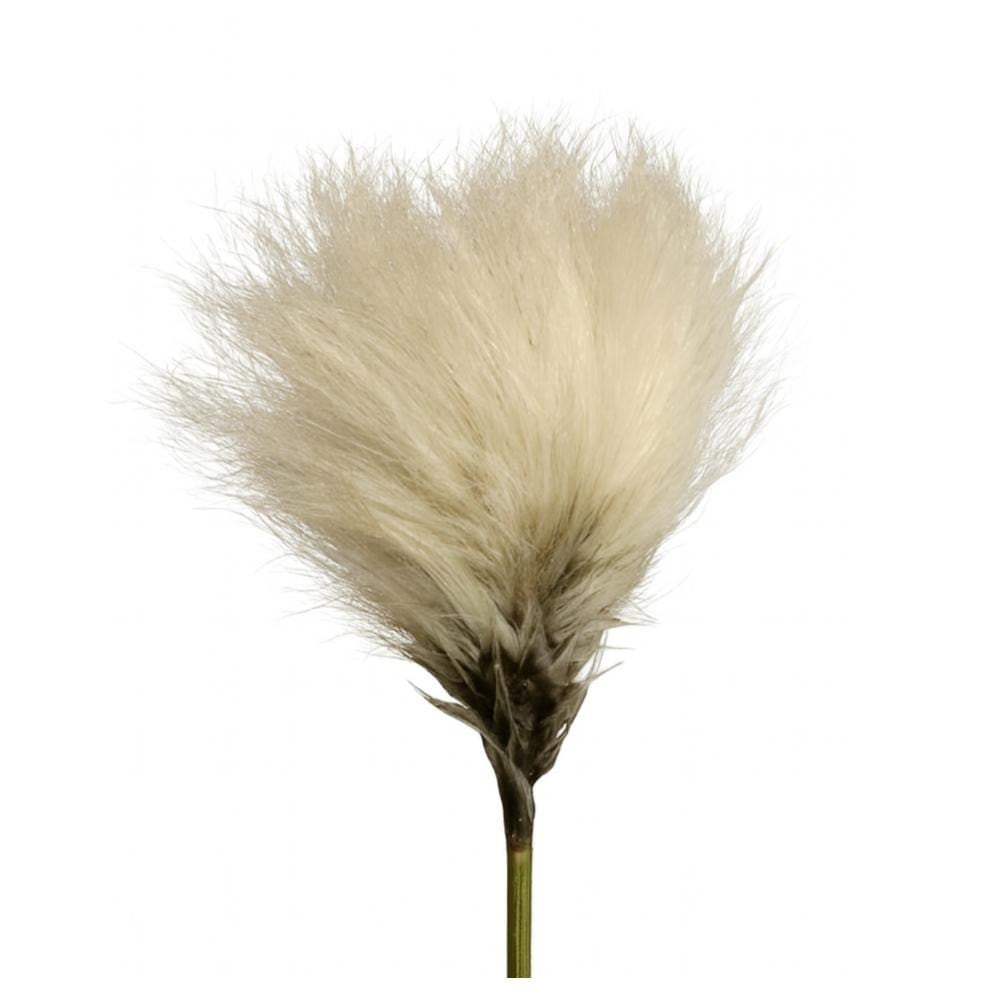
Scheiden-Wollgras / Scheidiges Wollgras (Wildform)

Variety
Scheiden-Wollgras / Scheidiges Wollgras (Wildform)
Approved Data
created by Alex&Sempi at 24.02.2026
Features
Color
white
grey-green
black
Blattrippen: weiß
Blüte: dunkelbraun
Blüte: gelbbraun/braungelb
Stem, trunk: greenish-grey
Oberfläche: schimmernd
Wurzel: gelb
Wurzel: braun
Samen: braun
Growth habit
lifespan: perennial
Game Variety
growth habit: upright leaf position
growth habit: horst-forming
Cold germination
strong leaves
normal growth
early flowering
growth habit: upright slender
ornamental plant
self-seeding
root type: rhizome
growth habit: bushy clump-forming
height: 50 - 60 cm
wide: 30 - 40 cm
height: 40 - 50 cm
height: 30 - 40 cm
height: 60 - 80 cm
hermaphroditic
growth habit: upright flower stems
grass-like leaves
entire leaves
small flowers
spicate flowers
non-woody
slow growth
no lateral shoot development
propagation by seeds
propagation by division
leaves slim
wind pollination
leaves: leathery, tough
Blätter: zugespitzt
Geschlechtertyp: einhäusig
Keimung: Lichtkeimer
Leaves: linear
Blätter: einfach
Schnitt: nicht erforderlich
Blätter: länglich
Vermehrung: samenfest
Stamm, Stiel: kantig
Stamm, Stiel: fleischig
Pflanzentyp: Gras
Blätter: wintergrün
Stamm, Stiel: kahl
Blätter: rinnenförmig
Blütenform: schuppenförmig
Resistances
resistant
robust
Little susceptible
fully hardy
hardy down to -30°C
nässetolerant
Sauerstoffmangel-tolerant
Nährstoffarmut-tolerant
säuretolerant
Location
planting: outdoor
light: sunny to semi-shady
Soil moisture: water-retentive
Fertilization: nutrient-poor
fertilization: humus-enriched
light: light shade.
biotope: forest
pH value: acidic soil (4-6)
Soil: light
Soil: gravelly to sandy
Water: regularly
planting: heat protected
soil moisture: consistently moist
Wind: windverträglich
fertilization: lime-free
Soil: loosened
water: no tap water
fertilization: peat-based
Water: generously
Soil moisture: moist to wet
Planting: pond / pond's edge
biotope: swamp / moor
Heat requirement: cool
Licht: vor Mittagssonne geschützt
Good companions: moisture-loving
Nachbarn schlecht: trockenheitsliebend
Nachbarn schlechte: kalkliebend
Nachbarn schlechte: stark wuchernd
Nachbarn schlechte: hoher nährstoffbedarf
Nachbarn gute: mit niedrigen Nährstoffbedarf
Nachbarn gute: hochwachsend
Nachbarn gute: niedrigwachsend
Gartenstil: Naturgarten
Herkunft: einheimisch, indigen
Boden: flachgründig (0-30)
Boden: karg
Pflanzung: Moorbeet
Pflanzung: Waldbeet
Biotop: Feuchtwiese
Düngung: nicht erforderlich
Gartenstil: Waldgarten
Fruit shape
triangular
inconspicuous
hairy
Type: Closing fruit - caryopsis
Size: very small
Oberfläche: trocken
Taste
not edible
Toxizität: ungiftig
Season Overview
Sowing
Harvest
Harvest
J
F
M
A
M
J
J
A
S
O
N
D
1ST YEAR
FOLLOWING YEARS
Description
Wool grasses (bot. Eriophorum) are a genus of plants belonging to the sedge family (Cyperaceae). The name of the genus has its origins in Greek. Here, the term érion means wool. The word phoréein means to carry. The Eriophorum genus includes around 18 plant species worldwide. These species are divided into many subspecies and subgenera. Eriophorum species are mainly native to damp moorland areas. The characteristic woolly tuft on the plants is formed by the long threads on the perianth. The small tuft sits on the stems and is white to orange in color. The woolly tufts are not flowers. Rather, the woolly forms develop during fruiting. The plant genus of cotton grass is known by countless common names in German-speaking countries. In southern Bavaria, around Augsburg, the plants are called cotton grass, wild cotton, Bensenseide, or Bettfedern. In Switzerland, plants of the Eriophorum genus are known by the common names Bäuseli or Riedgras. In northern Germany, species of the cotton grass genus are known by the common name Püskegras. The Silesians refer to the plants as alte Mägde, Wiesenflachs or Quispelbinsen, among other names. Distribution Plants of the Eriophorum genus are widespread in temperate to subarctic regions of the northern hemisphere. Cotton grass species are found throughout Europe. Their range extends as far as Greenland. Eriophorum species also grow in arctic and temperate parts of Asia and North America. The plants thrive at altitudes of up to 1,960 meters above sea level. Growth Cotton grass species are perennial plants. They are herbaceous and robust. Depending on the species, the plants grow to heights of between 10 and 60 cm. Some species of the genus reach heights of up to 90 cm. Species or subspecies rarely grow taller than this. Some species of the plant genus grow loosely. They then form long runners and rhizomes. Other species grow in dense and loose clumps. They do not form runners, but stand close together in a dense lawn. The stems of the plants grow upright and are round in cross-section and angular at the top. Leaves The leaves of plants in the Eriophorum genus differ from species to species. They are usually long and pointed in shape. The leaf sheaths appear somewhat inflated. The width of the sheaths ranges from 1-6 mm. In cross-section, the leaf blades are triangular and grooved. The leaves range in color from dark green to a dull gray-green. In some species, the color of the leaves changes to a copper-red tone in late summer. The leaves of Eriophorum species become narrower towards the tip. Depending on the species, they grow up to one meter in length and hang down in an arched shape. Flower Eriophorum species bloom between March and May. Some of the plant species produce a second bloom in late summer. The inflorescence of the plant species of this genus often has two leaf-like bracts. It consists of three to five spikelets. Sometimes up to eight of these spike-shaped flower structures appear. In some species, the spikelets sit on the stem, while in others they have smooth stems and hang slightly. The spikelets of Eriophorum species reach a length of between 10 and 22 mm. The numerous bracts on the perianth grow to a length of up to 5 cm after flowering. Later, they detach together with the fruits, forming the woolly tuft typical of cotton grass species. Fruit Plants of the Eriophorum species form nut-like indehiscent fruits. These are characteristic and typical of grasses. In botany, they are referred to as caryopses, cariopses, grains, or cereals. The caryopsis of cotton grass species is triangular and has a short tip. Depending on the plant genus, the fruits grow up to four millimeters long. They are reddish brown to black. Use Cotton grass species are useful in the renaturation of raised bogs. Here, they take on the role of first colonizers of vegetation-free areas, such as those created by peat extraction.
Non hybrid
Frostproof
Growing tips
🌞 Location & soil - Semi-shady to sunny, cool location - Pond shore, shallow water zone, swamp areas, wet meadow, bog bed - Wind-tolerant - Humic, loose, gravelly, peaty (bog soil) - Nutrient-poor soil - Acidic to moderately acidic, low in lime - always moist 🌱 Sowing & planting - Direct sowing: fall (cold germinator) - Substrate: constantly moist, boggy soil & sand - Germination temperature: 15-20 °C / 0-5°C - Germination period: germination from April/May - Sowing depth: 0.2 cm (light germinator) - Planting distance: 30-40 cm - Propagation: Division in spring or fall 💧 Care - Watering: keep evenly moist, no tap water (in the morning or evening) - Fertilization: not necessary - Do not remove plant debris in the fall, build up humus - For self-sowing, allow a few seed heads to mature 🌿 Good neighbors - marsh marigold, marsh forget-me-not, feverfew, marsh fritillary - Water iris, sphagnum moss, marsh hair-grass, cranberry, ferns, reeds - Dactylorhiza, orchid (Dactylorhiza), carnivorous plants 🚫 Bad neighbors - Oregano, thyme, sage, savory, lemon balm, dill, coriander, wormwood - Lavender, rosemary, limb herbs, olive herb, sedum - Rhododendron, roses, hydrangea, lady's slipper - Ivy, goutweed, mint, comfrey, woodruff - Chinese reed, lamplighter grass, fescue, sedge - Phlox, delphinium, coneflower - Funkia, bamboo, begonia, hellebore, purple bellflower - hazel, elder, privet, forsythia - Walnut, maple, birch, willow, chestnut, weigelie, alder - Strawberries, raspberries, blueberries, gooseberries 🍂 Diseases - Gray mold - Leaf spot diseases - Root rot 🐌 Pests - Aphids - Cicadas - Caterpillars - snails
Details

Light requirement
Semi-shaded

Water requirement
Wet

Soil
Light (sandy)
Nutrient requirement
Low

Light germinator

Germination temperature
15 - 20 °C (Degrees Celsius)

Plant distance
30 cm

Row spacing
40 cm

Seeding depth
0.2 cm

Companion Plants

Antagonistic Plants
Alder trees
Begonias
Blueberry
Comfrey
Common mugwort
Coneflower (Echinacea)
Coriander / Cilantro
Dill
Elderberry
Forsythia
Funk
Gooseberry
Grasses - Bamboos
Grasses - feather-bristled grasses, lamp-cleaning grasses
Grasses - Fescue
Grasses - Sedges
Green lavender cotton
Hazelnut
heather family
Hellebores
horse chestnut
Hydrangea / Hortensia
Ivy
Larkspur
Lavender
Maples
Melissa
Mint
Orchids - Lady's Slippers
Oregano
Phlox, flame flower
Privet
Purple bellflower, silver bellflower
Raspberry
Rhododendron
Rose
Rosemary
Sage
Savory
Stem herbs
Strawberry
Succulents
Succulents - Saxifragaceae
Sweet woodruff / Sweetscented bedstraw
Thyme
Walnut family
Weigela
Willows
Diseases
Root Rot
Septoria
Grey mold
Angular leaf spot of cucumber
Pests
Cicadas
Land snails
Caterpillars
Aphids