Orchids - Stendelworts

Orchids - Stendelworts
Epipactis
Plant family
Orchid family (Orchidaceae)
Season Overview
Propagating
Planting
Harvest
Harvest
J
F
M
A
M
J
J
A
S
O
N
D
1ST YEAR
FOLLOWING YEARS
Details


Light requirement
Semi-shaded

Water requirement
Wet

Soil
Medium (loamy)
Nutrient requirement
Medium

Light germinator

Germination temperature
20 - 25 °C (Degrees Celsius)

Plant distance
30 cm

Row spacing
40 cm

Seeding depth
0.2 cm
Instructions
Description
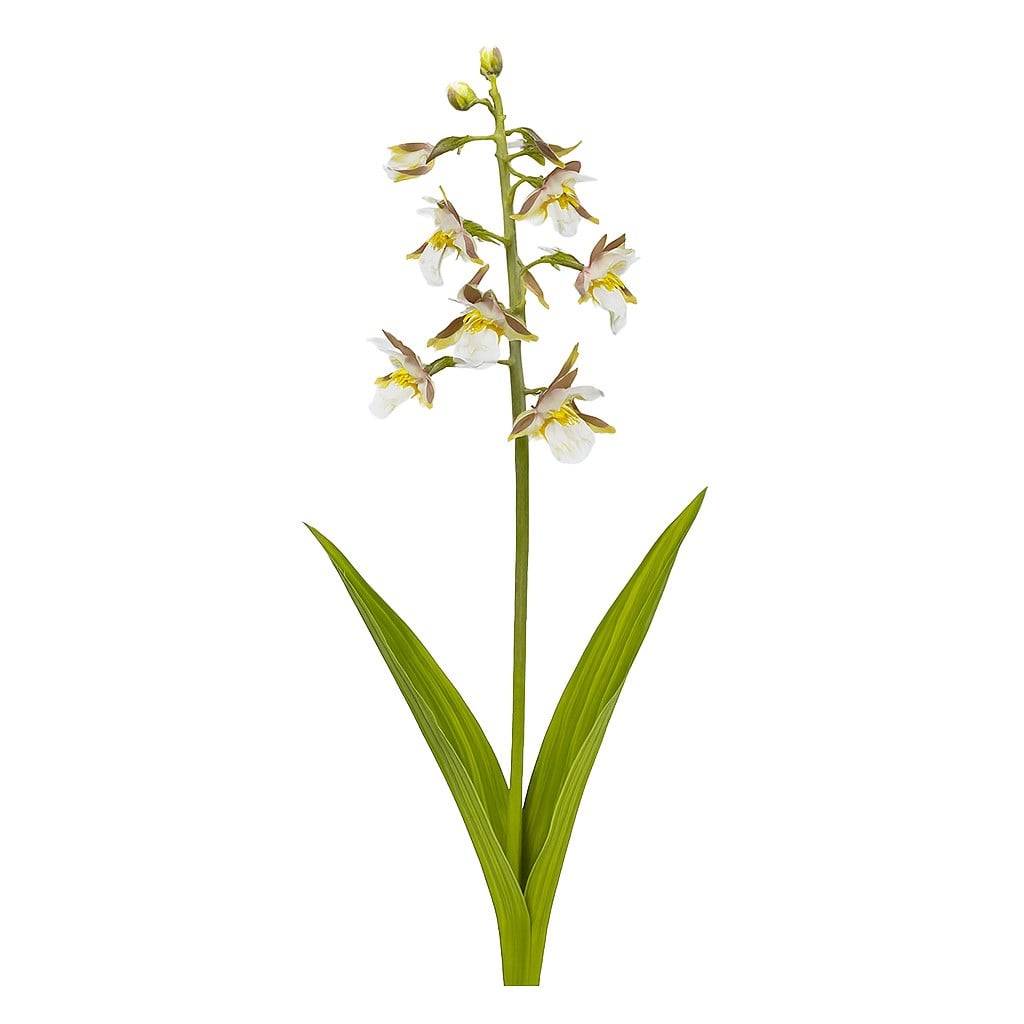
Epipactis (bot. Epipactis) is a plant genus within the orchid family (Orchidaceae). The number of species belonging to this genus varies from 25 to 90. Their inconspicuous, small flowers only attract attention on closer inspection. As orchids, all wild species are protected. These beauties follow special life strategies. They live in constant symbiosis with a fungal network that spreads through the substrate. Without this symbiosis, Stendel roots have no chance of survival, as they obtain important nutrients from the fungus. The reproductive strategy of these plants is no less impressive. Their flower shape mimics the appearance of bees and bumblebees, which are attracted by the colorful flowers. If you manage to establish these beautiful plants in your garden, you will have a real natural paradise. Leaf As Stendelworts are monocotyledonous plants, they develop leaves with parallel veins. The veins are visible on the upper side. They are clearly visible on the underside of the leaf. The leaves do not have a petiole. The leaf blade sits on the stem axis, while the leaf base surrounds the stem. The leaf blade is elongated lanceolate or somewhat broader. They follow an alternate or spiral arrangement. Flower Stendelroots bear typical orchid flowers. They are developed in a wide variety of colors. The three-petaled flowers are hermaphrodite. The flower consists of an outer and an inner bract circle. The outer circle represents the three sepals, which botanists call sepals. The inner circle of bracts is made up of three petals. The sepals are fused together in the lower part. The petals are largely free, with the lower petal forming a lip. The lip is shaped differently depending on the species. Some Stendelwurzen have small bump-like outgrowths on the lip. There are species that form a pattern on the labellum or whose labellum is colored differently from the other petals. The flowers are lateral on the stem. Some species develop flower axes with single flowers on one side. Other species have all-round flowers that are distributed around the flower axis. The color spectrum ranges from whitish-green to yellow, purple and brownish. The flowers are not monotonously colored. They have several colors and color gradients. The flowering period extends from June to August. Fruit The species develop capsule fruits in the fall, which contain numerous seeds. One fruit bears up to 10,000 seeds. The tiny seeds are light in weight. This feature is used for dispersal by the wind. The capsules open in dry weather so that they do not fall to the ground but fly away with the wind. They contain no nutritive tissue, as the plant invests its energy in developing large quantities of seeds. To germinate, the seeds need a fungus to supply them with nutrients. The high seed production ensures that the plants can reproduce. This increases the chance that some seeds will find the required fungus. Growth The plants grow as perennial herbaceous plants. They form an underground rhizome, which serves to survive. In the fall, the above-ground parts of the plant die off. The plant withdraws into the tuber and overwinters protected in the substrate. The next spring, the rhizome sprouts again and develops an upright shoot. The stem is hairy or bare. Many species form long stolons in the substrate, which they use to spread underground. In nature, the species tend to interbreed. Location Each species is a specialist when it comes to its location. This genus is characterized by species with different requirements in terms of temperature and soil. The majority of species prefer a semi-shady or shady location. They love moist, humus-rich or poor soil. In the garden, they grow on a fen substrate. Other species have specialized in dry locations. They grow in sunny locations with a stony substrate and thrive in calcareous conditions. Distribution Stendel roots are found from central Siberia via Iran to western Russia. Their distribution area extends from the Near East to Central Europe. Some species have established themselves in southern Scandinavia and spread to the northern Mediterranean region. Another area is in North America. They colonize bogs and swamps as well as forests and bushes. Stendelwort can be found in parks and extensively used wet meadows. Some species thrive on gravel slopes. Utilization The species of the genus Epipactis are ideal companions for the near-natural garden. If you have a large garden with damp and shady areas, you can offer the plants optimal conditions. They develop splendidly in wet meadows that are mown once or twice a year at most. Stendel roots are ideal for woodland beds. They cut a fine figure in arrangements with other bog plants. Riparian strips and damp water edges are visually enhanced with these species. Numerous cultivated forms and mixtures combine the characteristics of different species in terms of growth height, site requirements and flower coloration.
Origin:
Middle East, Central Europe, Central Siberia, Iran, Scandinavia, Northern Mediterranean, North America
Growing tips
Location Light: Sunny to semi-shady, no extreme midday heat. Soil: Evenly moist to marshy, humusy, sandy-loamy or loosened with pumice gravel. Suitable for: Bog beds, pond banks, moist flower beds, sometimes also container cultivation. Planting Time: Spring or fall. Rhizomes: Set flat, they spread underground and form colonies. Spacing: 20-30 cm, as they can multiply rapidly. Care Watering: Keep the soil moist at all times, waterlogging is not a problem - more desirable. Avoid drought. Fertilization: No regular fertilization necessary as they prefer nutrient-poor soil. Winter hardiness: Many species are frost-hardy down to -20 °C. Propagation: Vegetatively by rhizomes (clump formation). Can also be propagated by seed, but more slowly. Special features Flowering time: June to August, brings late color to the garden year. Height: 30-80 cm, depending on the species. Species diversity: More than 70 species worldwide, including native species such as Epipactis palustris (marsh orchid). Colony formation: A dense population can develop from one plant after a few years. Care/pruning Crested hellebores are specialists that do not require extensive care. They are dependent on the fungi living in the soil. The fungi react sensitively to a disturbance of the soil balance. This endangers the plants as they lose their source of nutrients. It is advisable to protect the sites so as not to impair the biocoenosis. During the vegetation period, the plants are sensitive to pruning. The plant parts are pruned in late fall when the plant has completely retracted into the bulb and the leaves have withered completely. Depending on the species, the location should be watered regularly as soon as it tends to dry out. Many species are hardy and can survive temperatures down to -20 °C without being damaged. Fertilizing is not necessary. Diseases/pests Stendel roots are considered robust plants. No diseases or pests have been described that affect the vitality of the plant. Growth disorders can be attributed to incorrect site conditions or incorrect care measures. Weakened parts of the plant are a favorite food for snails. If Stendelwurzen grow in the direct vicinity of fast-growing species, there is a risk of being crowded out by the competition.


Antagonistic Plants
Bean (Dwarf bean)
Cucumber / Gherkin
Dahlia
Grasses - Bamboos
Grasses - feather-bristled grasses, lamp-cleaning grasses
Grasses - Pampas grass
Ivy
Kohlrabi / German turnip / Turnip cabbage
Larkspur
Lavender
Maples
Pepper / Paprika
Sage
Succulents
Succulents - Agave family
Succulents - Cacti
Sunflower
Thyme
Tomato (Bush tomato)
Diseases
Grey mold
Powdery mildews
Pests
Thrips
Spider mites
Land snails
Nematodes
Aphids