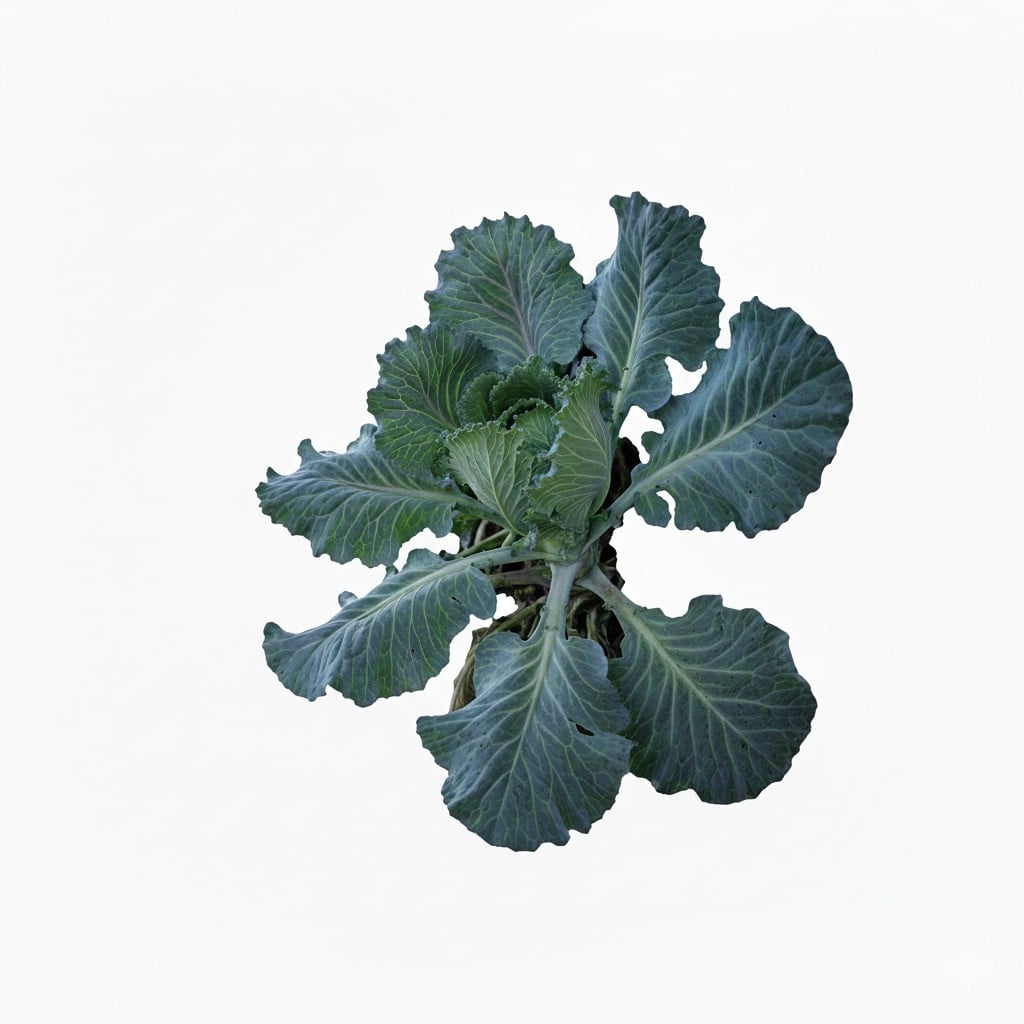
Helgoländer Wildkohl, Klippenkohl

Variety
Helgoländer Wildkohl, Klippenkohl
created by Alex&Sempi at 11.11.2025
Features
Location
planting: greenhouse
planting: bed
planting: outdoor
planting: raised bed
light: sunny to semi-shady
Soil: permeable soil
soil moisture: no waterlogging
Fertilization: single dose of compost
fertilization: humus-enriched
planting: suitable for year-round cultivation
soil moisture: fresh to moist
planting: polytunnel / under protective covers
Fertilization: moderately nutrient-rich
light: Full sun
soil moisture: well-drained
Water: regularly
Soil: light to medium-heavy
Soil: sandy to loamy
Light: Semi-Shade
Wind: windverträglich
Soil: rocky, stony
fertilization: potassium-rich
Water: Adequate
pH value: neutral to alkaline (7-8)
Light: Sun
Fertilization: nitrogen-rich
Fertilization: low in phosphate
Fertilization: organic
biotope: beach / coastline
Heat requirement: moderate
Boden: kalkhaltig
Düngemittel: Pflanzenjauche
Pflanzung: Bauerngarten
Düngemittel: Hornspäne
Düngemittel: Kalk
Nachbarn schlecht: feuchtigkeitsliebend
Nachbarn schlechte: Schattenpflanzen
Good companions: calcium-loving
Good companions: sun-loving
Nachbarn schlechte: stark wuchernd
Nachbarn schlechte: hoher nährstoffbedarf
Nachbarn gute: mit niedrigen Nährstoffbedarf
Gartenstil: Naturgarten
Pflanztechnik: Mulchen
Herkunft: einheimisch, indigen
Pflanzung: Hügelbeet
Pflanzung: Gewächshaus
Boden: karg
Biotop: Felsen, Mauer
Düngung: NPK 8/5/6
Düngung: NPK 10/5/8
Soil: deep
Taste
mild
aromatic
tangy
Slightly bitter
intensive
raw edible
Edible
delicious, pleasant taste
tender
Essbarkeit: Blüten
cabbage flavor
Essbarkeit: Blätter
Essbarkeit: Frucht
Toxizität: ungiftig
Fruit shape
elongated
pod
Resistances
cold tolerant
resistant
robust
Winter hardy
hardy down to -15°C
Growth habit
growth habit: non rank
Game Variety
harvest: profitable
harvest: continuously pickable
growth habit: herbaceous
flower: flowering
broadleaf
root type: taproot
strong leaves
growth habit: broad
warm germination
growth habit: rosette-shaped
Nutzungsart: Ur-/Alte Sorte
cross-pollination
lifespan: short-lived
self-seeding
root type: deep-rooted
growth habit: Trailing
medium to strong growth
panicle-shaped flower
heigth: 100 - 120 cm
leaves: leafy
growth habit: becoming woody
height: 120 - 140 cm
hermaphroditic
growth habit: upright overhanging
growth habit: upright flower stems
simple flower
small flowers
large leaves
propagation by seeds
perennial
insect pollination
leaves: slightly wavy
Geschlechtertyp: einhäusig
Keimung: Dunkelkeimer
Blüte: duftend schwach
Wuchs: nicht invasiv
Blätter: einfach
Blütenform: kreuzförmig
Color
brown
light green / pale green
medium green
Black seeded
brown-red
Flower yellow
Stamm, Stiel: purpur
Blätter: dunkelgrün
Blätter: violett
Blätter: blaugrün
Frucht: braungrün/grünbraun
Blüte: hellgelb
Stamm, Stiel: braun
Stamm, Stiel: grün
Stamm, Stiel: violett
Oberfläche: wachsig
Wurzel: cremeweiß
Wurzel: gelb
Blattrippen: grün
Blattrippen: rosa
Samen: braun
Wurzel: beige
Cultivation Break
4 Years
Season Overview
Propagating
Planting
Harvest
Harvest
J
F
M
A
M
J
J
A
S
O
N
D
1ST YEAR
FOLLOWING YEARS
Description
The wild cabbage is actually a rather inconspicuous plant, native to the rocky coastal areas from northern Spain to southern England. But there are also a few different wild forms in Greece and Italy, all of which are very closely related to each other and can be interbred. In Germany, it can only be found in its original form as a wild plant on the island of Heligoland, where it is also known as cliff cabbage because it still thrives there, protected from humans and sheep. Cauliflower, kohlrabi, Brussels sprouts and kale are perceived by many people as independent, natural vegetable species that do not appear to have much in common due to their different appearance. However, these species do not occur in nature at all, they have all been shaped by humans over the centuries through breeding and selection and are descended from one plant, the wild cabbage. In the various geographical areas of distribution, a distinction is made between four other wild cabbage species, although it is not clear whether they are not just breeds of one species: B. cretica, B. rupestris-incana, B. insularis, B. montana. It is no longer possible to determine exactly when Europeans began cultivating wild cabbage. In Greece, its cultivation is documented from the 3rd century BC and in Germany it is first mentioned in the herbal books of the 16th century, but some cultivated forms were probably already known in the Middle Ages. The many different forms that arose as a result of human cultivation are astonishing. Farmers and gardeners always took seeds from the plants they liked best. For some, these were the plants with the strongest stems, for others those with the largest leaves and some also propagated the plants with the most distinctive inflorescence. In this way, over time they created the many types of vegetable cabbage we know today. Growth form: The biennial or perennial shrub dies back after flowering and fruiting. If flowering is prevented, it can live for many years. The woody stem at the base often branches out into several branches. The plant grows to a height of 0.5 to 1.5 meters. Fruits: Like all members of the cruciferous family, fertilized flowers produce fruits, which are known as pods. Propagation: Cross-pollination
Non hybrid
Frostproof
Growing tips
Location & floor
Details

Light requirement
Sunny

Water requirement
Moist

Soil
Medium (loamy)
Nutrient requirement
Medium

Dark germinator

Germination temperature
15 - 18 °C (Degrees Celsius)

Plant distance
50 cm

Row spacing
60 cm

Seeding depth
0.5 cm

Companion Plants
Bean (Dwarf bean)
Bean (Runner bean)
Celery (Celeriac / Celery root)
Celery (Celery)
Celery (Leaf celery / Chinese celery)
Chamomile
Chives
Dill
Garlic
Leeks
Lettuce (Common chicory)
Lettuce (Endive / Escarole / Erisée)
Lettuce (Lamb's lettuce)
Lettuce (Lettuce)
Lettuce (Oriental greens / Brown mustard)
Lettuce (Puntarelle / Cicoria di catalogna / Cicoria asparago)
Lettuce (Radicchio / Italian chicory)
Lettuce (Sugar loaf)
Onion
Onion (Spring onion)
Pea
Potato
Spinach (Summer)
Spinach (Winter)

Antagonistic Plants
Aubergine / Eggplant
Beetroot
Broccoli
Broccoli raab / Stem cabbage / Cima di rapa
Brussels sprouts
Brussels sprouts
Cabbage (Cabbage)
Cabbage (Pointed cabbage)
Cabbage (red cabbage)
Cabbage (Savoy cabbage)
Cauliflower
Chinese kale - Kai-lan / Chinese broccoli
Collard greens
Collard greens (Kale)
Collard greens (Tuscan kale / Dinosaur kale / Palm tree kale)
Cucumber / Gherkin
Kohlrabi / German turnip / Turnip cabbage
Mustard
Napa cabbage / Chinese cabbage
Oil radish / Fodder radish
Okra
Pepper / Paprika
Radish
Radishes
Rutabaga / Swedish turnip
Strawberry
Tomato (Bush tomato)
Tomato (Cocktail bush tomato)
Tomato (Cocktail Stake Tomato)
Tomato (Stake tomato)
Turnip
Turnip-rooted chervil
Diseases
Black spot of roses
Club root of cabbage
Grey mold
Powdery mildews
Pests
Land snails
Cabbage white
Cabbage fly
Cabbage heart midge
Flea beetles
Aphids