Turmeric / Curcuma

Turmeric / Curcuma
Curcuma
Plant family
Ginger family (Zingiberaceae)
Cultivation Break
3 Years
Season Overview
Propagating
Planting
Harvest
Harvest
J
F
M
A
M
J
J
A
S
O
N
D
1ST YEAR
FOLLOWING YEARS
Details


Light requirement
Sunny

Water requirement
Moist

Soil
Medium (loamy)
Nutrient requirement
High

Dark germinator

Germination temperature
20 - 25 °C (Degrees Celsius)

Plant distance
30 cm

Row spacing
40 cm

Seeding depth
6 cm
Instructions
Description
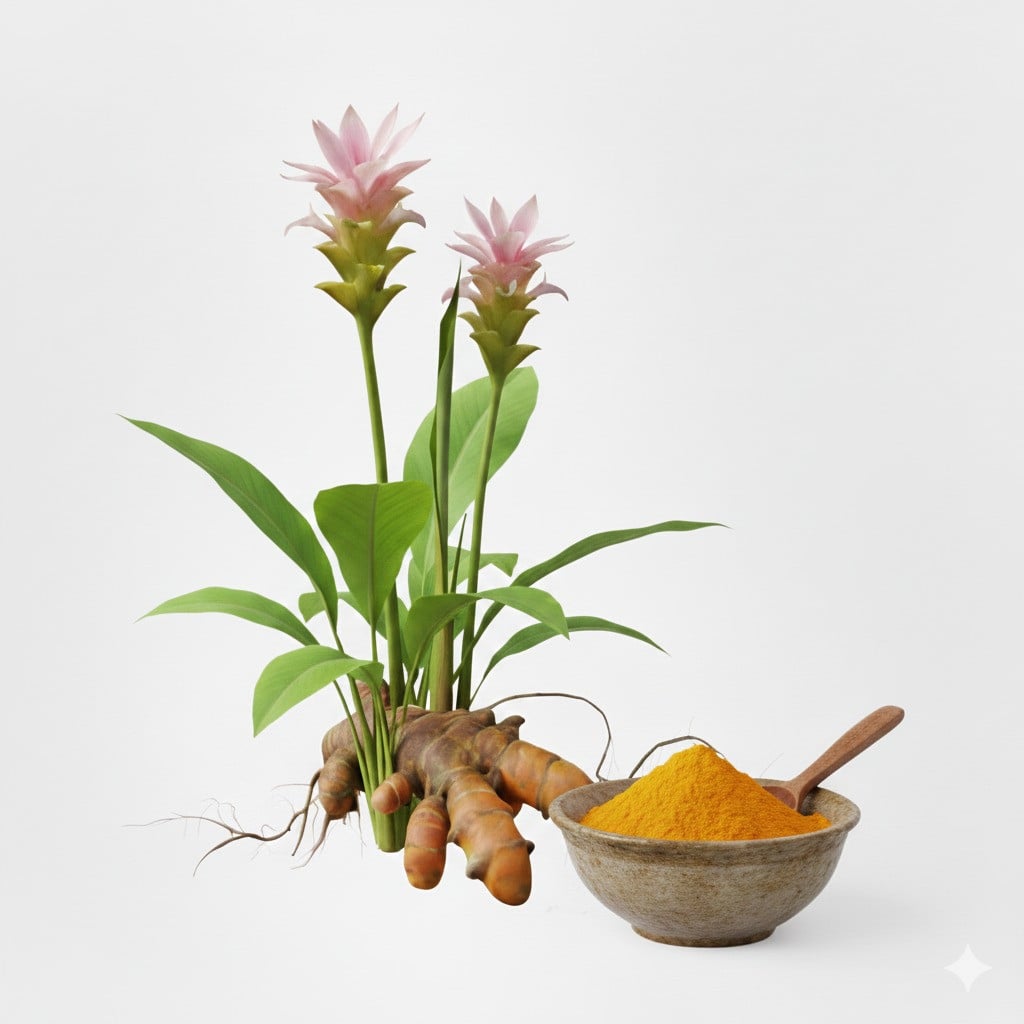
Turmeric is a prominent member of the ginger family (Zingiberaceae). Within the genus Curcuma, the species Curcuma longa is the most important commercially. Although the term "turmeric" is usually used in the trade, a distinction is made in practice between different commercial types (varieties), which differ in curcumin content and aroma: - 'Madras': The classic; light yellow flesh, mild aroma, ideal for curry blends. - 'Alleppey': The premium variety; deep orange, high curcumin content, very intense and earthy. - 'Lakadong': A rarity with an extremely high active ingredient content The plant grows perennially herbaceous and reaches a height of 60 to 100 cm. It does not form woody stems, but sprouts directly from the underground rhizome. The leaves are large, lanceolate and smooth-edged. They sit on long stems and can grow up to 45 cm long. Their rich light green color ensures a high leaf mass. Due to the spreading leaves, a radius of approx. 30-40 cm should be planned for each plant.
Origin:
Turmeric originally comes from South Asia, most likely from South India or Southeast Asia.
Growing tips
It is best to plant the tuber in a larger pot, approx. 20 to 30 liters of moist soil. Cultivate outdoors throughout the year and bring indoors before the first frost. Harvest the bulb in the fall. Replant a piece in soil for next year's harvest. Turmeric is extremely resistant to most domestic pests and diseases, which means that no pesticides are needed for cultivation. The leaves are non-toxic and can be used in small quantities as an anti-inflammatory feed supplement for small animals (e.g. guinea pigs).

Companion Plants

Antagonistic Plants

Diseases
Fusarium
Pests
Land snails
Spider mites