The Grass Stars

The Grass Stars
Rhodohypoxis
Plant family
African potato family (Hypoxidaceae)
Season Overview
Sowing
Harvest
Harvest
J
F
M
A
M
J
J
A
S
O
N
D
1ST YEAR
FOLLOWING YEARS
Details


Light requirement
Sunny

Water requirement
Moist

Soil
Light (sandy)

Nutrient requirement
Low

Dark germinator

Germination temperature
16 – 20 °C (Degrees Celsius)

Plant distance
15 cm

Row spacing
15 cm

Seeding depth
3 cm
Instructions
Description
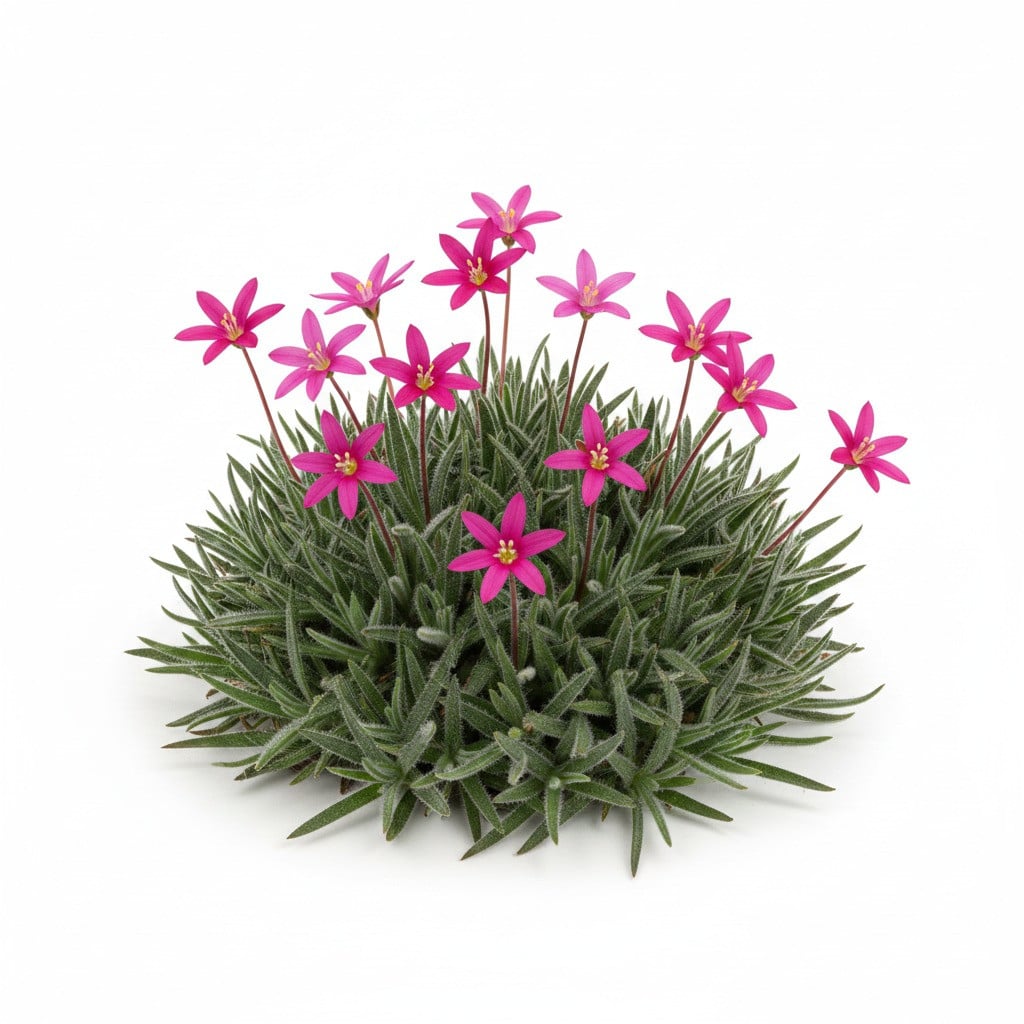
Origin Rhodohypoxis, also known as grass star or grass starlet, originates from the Drakensberg Mountains in South Africa. These plants thrive at altitudes of up to 3000 meters in South Africa as well as in Lesotho and Swaziland. Typical habitats include wet grasslands, bogs and rocky slopes that provide ample water in summer and dry conditions in winter. These characteristics are ideal for preventing rot and promoting hardy development. Growth Rhodohypoxis grows as a cushion-like perennial, reaching a height of about 10 cm. The plant produces fleshy tubers and small bulbs or rhizomes that provide a long-lasting nutrient reservoir. In spring, narrow, grass-like leaves emerge from the tubers, followed by delicate flower stems. Rhodohypoxis grows compactly and tends to form dense, carpet-like stands, making it particularly attractive as a ground cover. Leaves The narrow, grass-like leaves of Rhodohypoxis vary in length from 2 to 11 cm. Depending on the species, they can range in color from dark green to grey-green and can be either smooth or hairy. The hairs provide some protection against the cold, which means that hairy leaves can withstand light frosts. Smooth leaves are more frost-resistant and can withstand colder temperatures. As a deciduous plant, Rhodohypoxis sprouts in the spring and retreats in the fall. Flowering The star-shaped flowers of Rhodohypoxis appear between June and August and fascinate with their variety of colors, ranging from white to pink and purple to dark red. Each flower has six petals and a diameter of about 2 cm. After pollination, seed pods are formed for propagation. The long flowering period and large number of flowers make Rhodohypoxis a popular eye-catcher in the garden and a valuable nectar plant for insects.
Origin:
South African Drakensberg, South Africa, Lesotho, Swaziland
Growing tips
Location Rhodohypoxis prefers a full sun, warm and sheltered location. Good drainage is essential to avoid waterlogging, while heavy and clayey soils are unsuitable. The soil should be well-drained, low in nutrients and slightly acidic to neutral. This plant feels particularly at home in rock gardens, on the top of walls or even in pots. Soil A well-drained, nutrient-poor and humus-rich soil is ideal for Rhodohypoxis. The pH value should be slightly acidic to neutral. In summer, the plant needs moist conditions, while the soil should be kept dry in winter to prevent rotting. A mixture of sand and potting soil is ideal for planting. Care Rhodohypoxis is easy to care for, but requires regular watering without waterlogging during the growth phase. Use lime-free water for irrigation to maintain soil acidity. A full sun, warm location is ideal. Fertilize the plant several times in spring and summer to encourage flowering. Withered flowers should be removed regularly to encourage renewed flowering. Planting The best time to plant Rhodohypoxis is between March and August. Make sure to plant the tubers about 10 cm deep to prevent rotting. A loose soil mixture of sand and light potting soil is advantageous. Plant Rhodohypoxis in groups to form attractive, carpet-like stands. Pruning Extensive pruning is not necessary. However, regularly remove wilted inflorescences and dead leaves. In spring, the plant can be thinned out slightly to promote air circulation and prevent disease. Propagation Rhodohypoxis can be easily propagated by division. Dig up the plant in spring or fall and divide the tubers. Replant the divided tubers and ensure good drainage and sufficient watering. Diseases & pests Rhodohypoxis can be attacked by gray mold, snails, rodents and aphids. A good choice of location and careful care can prevent many problems. Biological control methods are recommended for pest infestations. Use This plant is ideal for rock gardens, wall crowns, borders and as a pot plant on balconies and terraces. Its dense growth makes it an attractive ground cover that is also valuable as a nectar plant for insects. Winter protection Rhodohypoxis is only partially hardy and needs protection. In mild regions, you can overwinter the plants outdoors by covering them with a thick layer of leaves or brushwood. It is safer to dig up the tubers in the fall and store them in a cool, dry place. Pots should be placed in a cool room in late fall and watering should be stopped completely.

Companion Plants

Antagonistic Plants

Diseases
Root Rot
Pests
Land snails
Voles