Edelweiss

Edelweiss
Leontopodium
Plant family
Daisy family (Asteraceae)
Season Overview
Propagating
Planting
Harvest
J
F
M
A
M
J
J
A
S
O
N
D
1ST YEAR
FOLLOWING YEARS
Details


Light requirement
Sunny

Water requirement
Dry

Soil
Light (sandy)
Nutrient requirement
Low

Light germinator

Germination temperature
15 – 20 °C (Degrees Celsius)

Plant distance
20 cm

Row spacing
20 cm

Seeding depth
0.2 cm
Instructions
Description
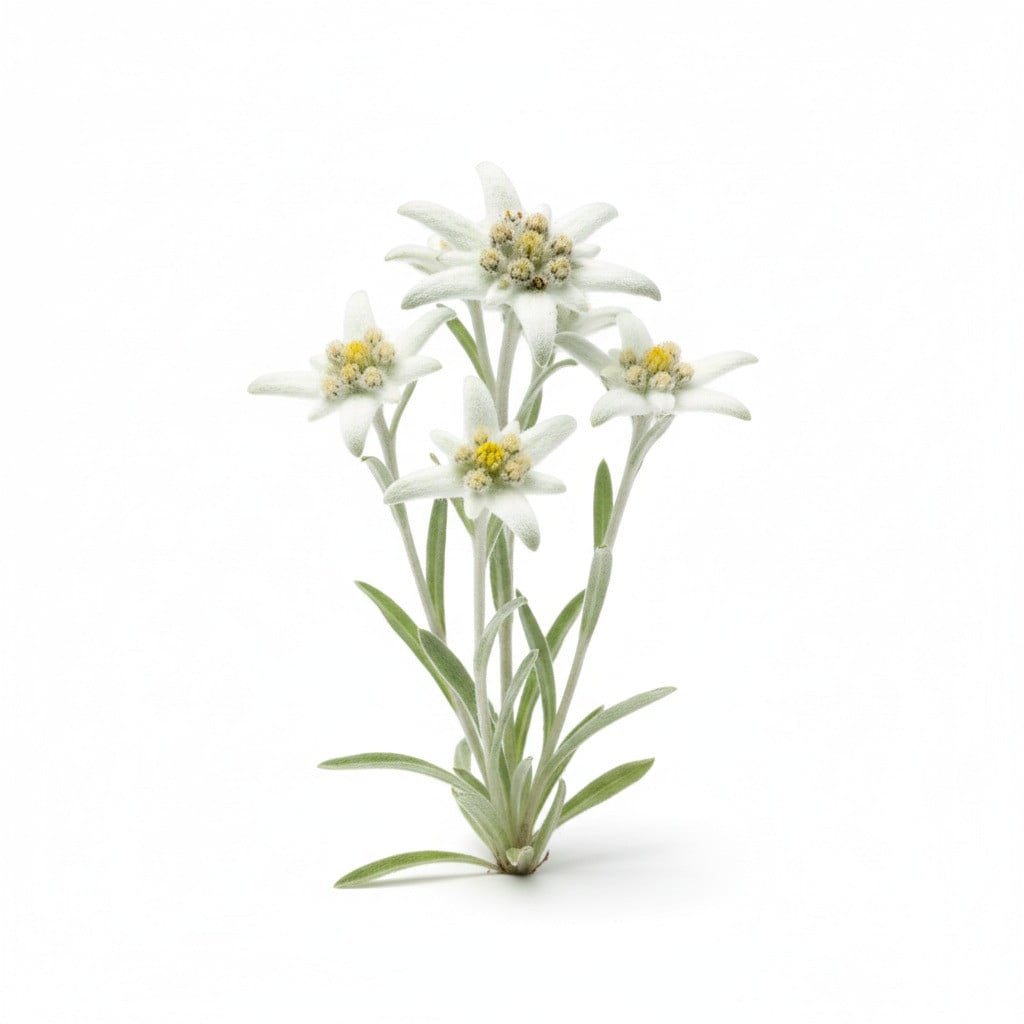
The genus Edelweiss (Leontopodium) belongs to the Asteraceae family. There are around 40 known species of edelweiss in Asia and in the mountains of Europe. Known as a plant symbol from the high mountains, edelweiss species have many admirers. Many appreciate the special beauty of this plant. The myths and legends surrounding the Leontopodium are also well known. The best-known legend describes a young man who only wins the heart of his beloved if he picks an edelweiss from the highest peak. Many plant lovers dream of planting this little plant in their own garden. Leaf Star-shaped petals surround the center of the flower. As with the flower, the leaves are covered with fine white hairs. The botanical name Leontopodium means lion's foot, which is due to the felt-like appearance of the leaves. The fluffy leaf hair protects and absorbs the plant from the strong UV radiation and cold temperatures in the mountains. Flower The bright white and downy flowers are the trademark of all edelweiss species. A hairy star with numerous bracts surrounds the inconspicuous tubular flowers, which are located on the inside. The silvery sheen of the flower is particularly striking. This special impression is created by the reflection of many tiny air bubbles on the bracts. The shiny sheen attracts nectar-seeking flies and beetles for pollination. The regular flowering period is from June to September. Edelweiss flowers are extremely durable and hard-wearing. Fruit The small, single-seeded fruits are sparsely hairy. The crown of hairs consists of a row of connected bristles. Growth Leontopodium grow as compact, herbaceous perennials. They reach around 20 centimetres in height and width and bear flower heads up to eight centimetres in size on their stems. Location At an altitude of almost 3,000 meters, the plant genus normally grows on rocky ground. Over the course of time, the plant has been pushed more and more into remote rocky slopes and crevices. Edelweiss is an intensive sun worshipper. In sandy-loamy, lean and calcareous soil, the plant provides convincing proof of its name. A noble plant with radiant white star-shaped flowers. It is ideal for planting in containers. Lean cactus soil is the ideal substrate.
Origin:
Asia, Europe, Himalayas, Carpathians, Pyrenees, Alps, Northern Apennines
Growing tips
Utilization Edelweiss species have a medicinal effect. The plant is used for dermatological changes due to its antiseptic, antibacterial and vasoconstrictive effects. Leontopodium is used preventively for respiratory diseases. In Chinese medicine, filled pillows help to improve oxygen exchange. A few years ago, research produced leoligin from the plant roots. This active ingredient is used to treat vascular diseases. The medicine proved to be effective against thickening of blood vessels. Care/pruning The edelweiss genus does not require pruning throughout the year. To prevent self-seeding, the hobby gardener removes the flower heads in the fall before seed formation. The cut is made about a hand's breadth above the ground. This prevents a second flowering and the plant grows back strong and compact after this cut. Diseases/pests This robust plant species has no particular enemies. Only waterlogging leads to root rot.

Companion Plants


Diseases
Powdery mildews
Root Rot
Pests
Land snails
Thrips