Fire King

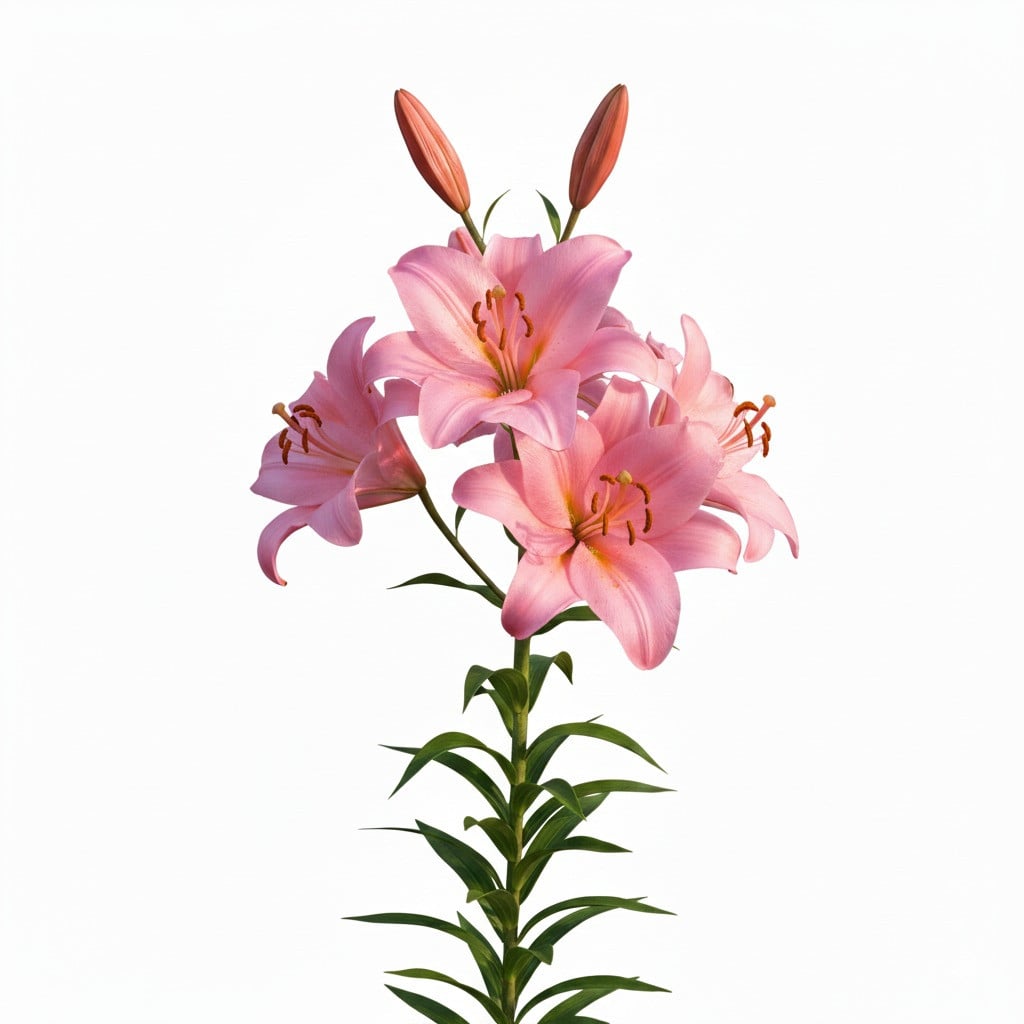
Variety
Fire King
created by Möwe at 23.02.2026
Seed packet
Features
Growth habit
lifespan: perennial
growth habit: half-high
growth habit: upright
height: 80 - 100 cm
Fragrant flowers
Resistances
resistant
Winter hardy
Location
planting: bed
planting: outdoor
light: sunny to semi-shady
Soil: permeable soil
soil moisture: no waterlogging
Season Overview
Sowing
Harvest
Harvest
J
F
M
A
M
J
J
A
S
O
N
D
1ST YEAR
FOLLOWING YEARS
Description
The lily (Lilium) is a genus in the lily family (Liliaceae). There are around 110 species and a large number of hybrids that have been created by crossing different species. Currently, there are estimated to be around 2,000 hybrids, which are grouped into eight groups – for example, there are the so-called Asian and Oriental hybrids. The pure species are found almost exclusively in the northern temperate and subtropical zones, especially in areas with high rainfall. One exception is the Madonna lily (Lilium candidum), which prefers the dry climate of the eastern Mediterranean region. The Turk's cap lily (Lilium martagon) is a native species found in the southern Black Forest and the Allgäu Alps, for example. It thrives in herb-rich deciduous or coniferous forests on limestone and primary rock soils in semi-shaded, cool locations. In mountainous regions, it also grows above the montane forest in meadows and pastures. Particularly impressive is the large and richly flowering royal lily (Lilium regale) from China with its trumpet-shaped flowers. Lilies are among the oldest cultivated plants. The Madonna lily was already being planted in gardens in the middle of the second millennium BC. The Romans introduced it to their provinces north of the Alps. In the Middle Ages, the bright white lily became an important symbol of Mary, as evidenced by many paintings from this period. Appearance and growth Lilies are perennial, herbaceous plants with a scaly bulb as a survival organ. The fleshy scales, which overlap like roof tiles, are, botanically speaking, modified leaves and serve as nutrient stores. Unlike other bulbous plants, this bulb is not surrounded by a protective outer skin and is therefore referred to as "naked." A special feature are the so-called pull roots, which develop at the base of the bulb and can pull the bulb deeper into the ground. In addition, most lilies form roots in the underground stem area, where small daughter bulbs can also develop. Most species do not form basal leaves. Instead, these are mostly sessile and alternate, but often also stand in whorls on the flower stem. Depending on the species, the plants grow to between 30 and 240 centimeters in height. The giant lily (Cardiocrinum giganteum) can even grow up to three meters tall. One or more flowers form at the end of the stem, which then grow together in a cluster or umbel. There are three different flower shapes: trumpet-shaped, cup-shaped, and the flowers of the aforementioned Turk's cap lilies. In the latter, the petals are curled far back so that their tips meet again at the stem. The flower thus resembles a turban. The flowering period of the various species is between May and September, and with the exception of blue, almost all colors are represented. After fertilization, three-chambered brown capsule fruits ripen, containing numerous flat seeds. The above-ground parts, i.e., stems and leaves, die off after the seeds have ripened. The stems, leaves, and flower buds for the next year develop in the perennial bulb.
Non hybrid
Frostproof
Growing tips
The location and soil required by lilies varies slightly from group to group. It is therefore best to find out about the exact requirements of your lily when you buy it. The Asiatic wild species, for example the saffron lily (Lilium bulbiferum ssp. croceum) or the tiger lily (Lilium lancifolium), the Easter lily (Lilium longiflorum) and their hybrids prefer a sunny to semi-shady location with a fresh, humus-rich, nutrient-rich and well-drained soil. The Turk's cap lily and its numerous hybrids have similar requirements to the Asiatic wild species, but a semi-shady location is preferred to a sunny one - just like the Oriental wild species. The substrate can also be calcareous. The Madonna lily also likes a slightly chalky substrate, but prefers a sunny spot with fresh, loose soil. American wild species such as the panther lily (Lilium pardalinum) and its hybrids, on the other hand, prefer lime-free soil. They can also cope with slightly damp soil. All lily species thrive best in a slightly acidic substrate. It should be noted that although most lilies require a sunny location, the soil around the plant should be shaded. This can be achieved with a low companion planting. Alternatively, a mulch layer of compost or bark humus can be used.
Details


Light requirement
Sunny

Water requirement
Moist

Soil
Medium (loamy)

Nutrient requirement
Medium

Plant distance
20 cm

Row spacing
20 cm

Seeding depth
0.5 cm

Companion Plants

Antagonistic Plants

Diseases
Dry rot of crucifers
Septoria
Grey mold
Fusarium

Pests
Land snails
Aphids
Voles