Toskanischer-Krokus 'Zwanenburg'

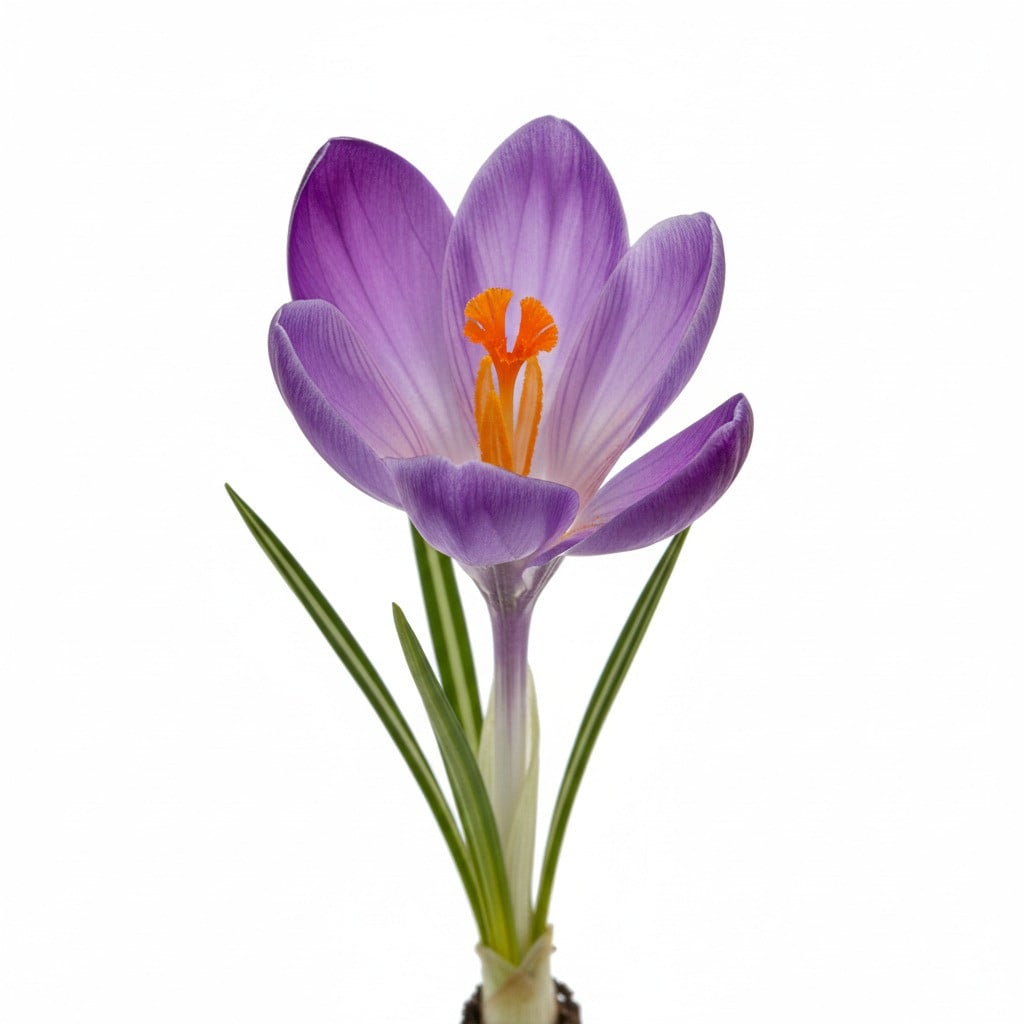
Variety
Toskanischer-Krokus 'Zwanenburg'
created by Möwe at 23.02.2026
Seed packet
Features
Growth habit
lifespan: perennial
growth habit: Trailing
growth habit: upright
Color
Blüte: violettblau
Resistances
Winter hardy
Location
planting: outdoor
Soil: permeable soil
light: sunny to semi-shady
Season Overview
Sowing
Harvest
Harvest
J
F
M
A
M
J
J
A
S
O
N
D
1ST YEAR
FOLLOWING YEARS
Description
What a sight when the Tuscan crocus 'Zwanenburg' produces its magnificent purple flowers from February onwards! The flowers stand out particularly well against the dark green leaves. Crocus etruscus 'Zwanenburg' thrives when planted in a sunny to semi-shaded location with well-drained, loose, nutrient-rich, sandy soil. It grows upright and reaches heights of 10 cm to 15 cm with a width of 5 cm to 8 cm. The Tuscan crocus 'Zwanenburg' is also very decorative in pots or boxes.
Non hybrid
Frostproof
Growing tips
Location and soil Early-flowering botanical crocuses thrive best in sunny spots in the garden, while the autumn-flowering crocuses also do well in semi-shady spots. The large-flowered hybrids, i.e. the classic garden crocuses, prefer a sunny to semi-shady location. However, it is important to know that the longer the location is shaded during the day, the sparser the flowering will be. What they all have in common is their preference for well-drained soil, as waterlogging causes the tubers to rot. While the spring-flowering species also thrive in sandy or stony soils, the autumn crocuses prefer a good garden soil with a clay content. For early bloomers, on the other hand, you should improve heavy soil with a little sand. Planting The best time to plant spring-flowering crocuses is from October to November, while the species that flower in the fall are preferably planted in August. The planting depth for spring-flowering crocuses is six to ten centimetres, as is the distance between the bulbs. Autumn-flowering crocuses are planted a little deeper because of the larger bulbs. As crocuses use their traction roots to access nutrients and moisture from deeper soil layers over time, it is not a problem if the tubers are planted relatively shallowly. Always place about ten bulbs next to each other, as the small flowers are best displayed in groups. If you want to turn your lawn into a crocus meadow, a loose, random distribution is recommended. The golden crocus (Crocus flavus), spring crocus, small crocus and elfin crocus are particularly suitable for growing wild. They form dense clumps that should be divided after a few years. Care tips Crocuses do not require any special care once planted. It is important not to cut off the leaves immediately after flowering. They should only be removed when they wilt, otherwise the plants will be weakened and die more quickly. Therefore, if you have planted crocuses in the lawn, you should wait until the leaves have yellowed before cutting them back. If necessary, fertilize in early spring as soon as the leaves sprout. An organic liquid fertilizer that is applied with the irrigation water is suitable.
Details


Light requirement
Sunny

Water requirement
Moist

Soil
Medium (loamy)

Nutrient requirement
Medium

Plant distance
5 cm

Row spacing
5 cm

Seeding depth
5 cm

Companion Plants

Antagonistic Plants
No antagonistic plants

Diseases
Root Rot
Septoria
Grey mold
Angular leaf spot of cucumber

Pests
Voles