Dogwood

Dogwood
Cornus
Plant family
- others -
Season Overview
Planting
Harvest
Harvest
J
F
M
A
M
J
J
A
S
O
N
D
1ST YEAR
FOLLOWING YEARS
Details


Light requirement
Sunny

Water requirement
Moist

Soil
Medium (loamy)
Nutrient requirement
Medium

Light germinator

Germination temperature
15 - 20 °C (Degrees Celsius)

Plant distance
100 cm

Row spacing
150 cm

Seeding depth
1.5 cm
Instructions
Description
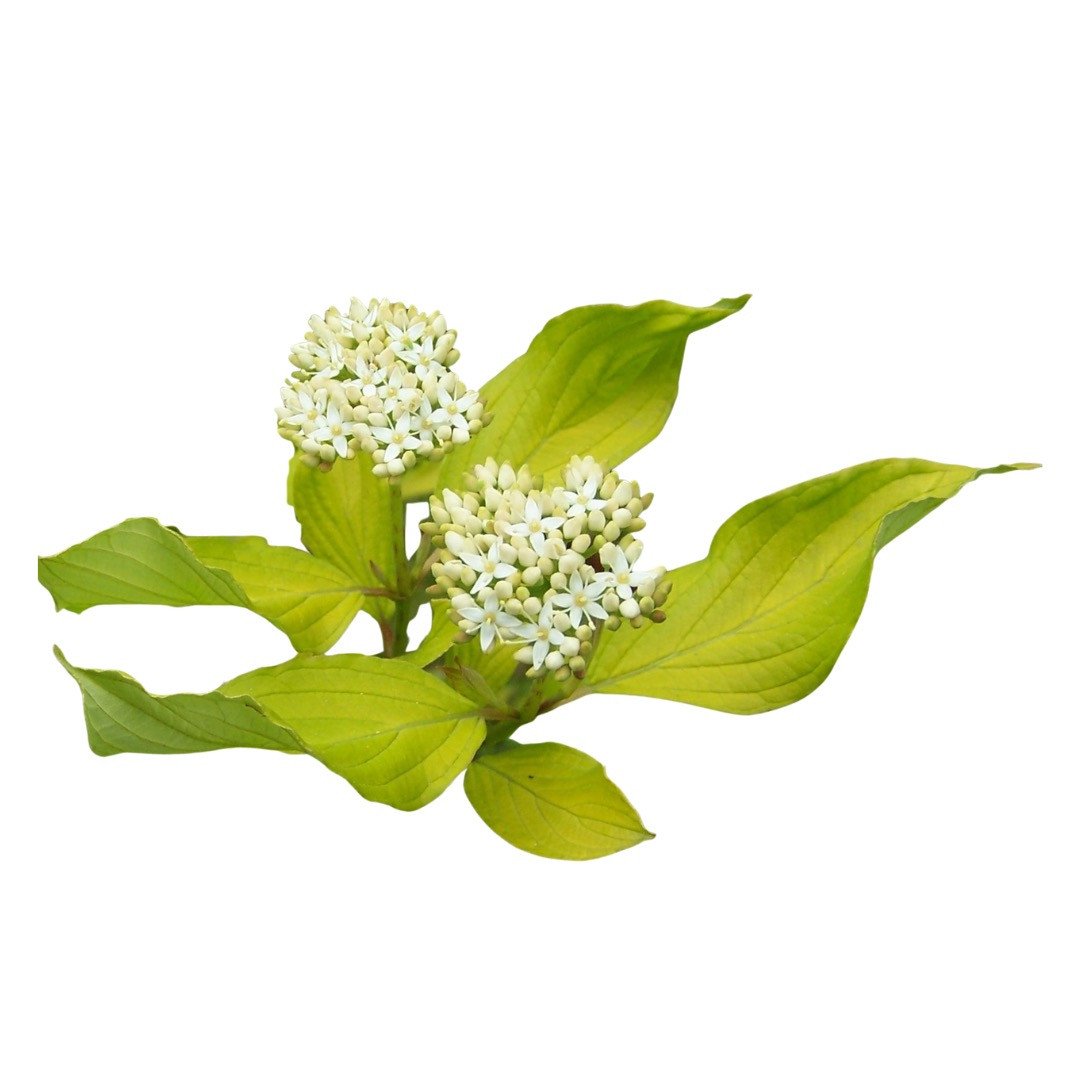
The dogwood (bot. Cornus), known locally as dogwood, is a genus in the dogwood family (Cornaceae). This genus includes around 55 different species that stand out due to their intense color or striking flowers. Bright autumn colors and the decorative bark of some species have made this genus increasingly popular and one of the most important woody plants in garden design. Dogwoods mainly grow in the form of shrubs or smaller trees. Some rare species occur as perennial herbaceous plants and are suitable as attractive ground cover. Well-known representatives of dogwoods are the cornelian cherry and the red dogwood. Leaves Dogwoods can be easily recognized by their leaves. These are undivided and smooth-edged, often opposite and stalked. The leaf veins are usually curved towards the tip of the leaf. There are no stipules. The majority of dogwoods are deciduous. Many varieties have a decorative red, wine-red or orange-yellow color in autumn and are an attractive eye-catcher in the garden. Flowering Dogwoods mainly produce white, hermaphrodite flowers. In most species, the flowers are arranged in umbels, panicles or heads at the ends of the branches. Four sepals fused with the ovary and the often white-colored petals form the flower. The early-flowering cornelian cherry, which is widespread in Germany, has a yellow flower. The Swedish dogwood (bot. Cornus suecica) is rarely found in Germany and is a striking garden attraction with its dark purple flowers. In our latitudes, most dogwood species bloom in spring, between May and June. Fruit Dogwoods produce distinctive stone fruits, some of which are edible but not tasty for humans. The variety of fruits ranges from pea-sized specimens to decorative raspberry or strawberry-like shapes. The native species are an important source of food for birds in winter. In Germany, the red dogwood serves as valuable winter food for more than 24 bird species. Growth The dogwood family is rich in varieties. Their growth is diverse, ranging from creeping ground cover to shrubby bushes and smaller trees. Some species, such as the Tartarian dogwood (bot. Cornus alba), can grow to an impressive size of up to six meters, but are the exception. As a low-maintenance addition to the garden, the dogwood is self-sufficient and, given the right site conditions, will obtain all the necessary plant nutrients from the soil. Depending on the species, regular pruning can promote or restrict growth. Utilization Dogwoods are used in a variety of ways in landscaping and horticulture due to their striking flowers, intensely colored branches and ornamental fruits. They are used for the varied planting of ornamental gardens. Dogwoods are an alternative to classic hedge plants, as they are highly competitive.
Origin:
temperate climate zone of the northern hemisphere mainly East Asia, eastern North America, Central Europe
Growing tips
Location Dogwoods are frugal when it comes to choosing a site. They prefer slightly acidic to neutral, loose, slightly moist soils. Waterlogging and prolonged dry periods have a detrimental effect on the development of the plants. To make it easier for the dogwood to grow, it is advisable to add sufficient humus when planting. Regular thinning out of the branches in spring also stimulates growth in some varieties. The various species can be planted in both sunny and semi-shady areas. In the shade, planting the carpet dogwood (bot. Cornus canadensis), for example, makes for an attractive and flowering addition to the garden. Care/pruning As a low-maintenance plant, the dogwood is an asset to any garden with little effort. Regular pruning ensures that branches and twigs do not lose their color intensity despite increasing age and keeps the size of the plants in check. Depending on the growth characteristics and species, pruning varies for the groups with shrub-like growth, the flowering dogwoods as well as the flowering dogwood and cornelian cherry. To ensure that the vibrant color of the shrub-shaped dogwoods is maintained for a long time, they are pruned hard in spring to encourage new growth. If the shape of the shrub is important, it should be regularly pruned or thinned out every two to three years. If the plant is pruned hard, it will lose most of its flowers. If the flowering is in the foreground, light, regular thinning is sufficient. The situation is different with the group of flowering dogwoods, which are less capable of regeneration. Ideally, they should not be pruned. If light pruning is necessary, it is important to choose a pruning time that allows the flowers to form in the previous year. The flowering dogwoods and cornelian cherry, which are frequently found in Germany, require training pruning in the first few years. If a tree-like growth habit is desired for cornelian cherries, a main shoot and a few side shoots should be left when pruning. Subsequent annual shortening by a third of the growth height can be used to form a crown. For the shrub-like growth of dogwoods and cornelian cherries, prune back vigorously each spring for the first two years after planting. The strong pruning ensures good branching. Shoots close to the ground should be removed regularly. Diseases/pests If white-grey spots appear on the underside of the leaves, this may be a fungal attack by mildew. This does not usually cause any major damage to a healthy plant. The affected leaves and shoots should be removed so that the plant can regenerate on its own. Occasionally an infestation with brown spots occurs, the so-called leaf scald. This is an aggressive fungal disease that starts at the tip of the leaf and attacks all twigs and branches, causing the plant to die. The North American flowering dogwood (bot. Cornus florida) is more susceptible to this destructive fungus. Mealybugs are observed more frequently. The infestation is indicated by a yellowing of the leaves and the death of the shoot tips. A simple spraying with rapeseed oil helps to control them.

Companion Plants

Antagonistic Plants
Grasses - Bamboos
Grasses - Feather grasses
Grasses - feather-bristled grasses, lamp-cleaning grasses
Grasses - Fescue
Grasses - Pampas grass
horse chestnut
Lavender
Rosemary
Succulents
Succulents - Agave family
Succulents - Cacti
Succulents - Crassulaceae
Succulents - Euphorbiaceae
Succulents - Saxifragaceae
Thyme
Walnut family
Diseases
Septoria
Angular leaf spot of cucumber
Powdery mildews
Pests
Gall midges
Aphids
Mealybugs