Ungarischer Elefantenknoblauch

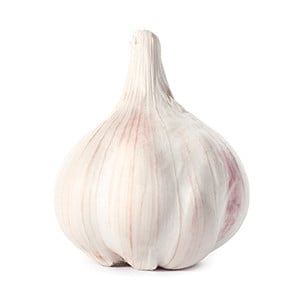
Variety
Ungarischer Elefantenknoblauch
created by JensGe at 08.10.2026
Season Overview
Sowing
Harvest
J
F
M
A
M
J
J
A
S
O
N
D
Description
Garlic is a perennial, frost-hardy bulbous plant that is grown as an annual or biennial. There are two distinct subspecies. “Hardneck” (Allium sativum var. ophioscorodon) refers to garlic that forms a very hard stem in the center, with the cloves arranged around the outside. This is also the “original garlic” from which today’s various varieties were bred. It is also sometimes known as winter garlic because it is very cold-tolerant and is planted in the fall. It also requires a cold stimulus to enter the pseudoflowering stage. At the end of the flower stalk, it forms a bud in which no seeds develop, but small bulbils do. Its shelf life is shorter—about 4 to 6 months—but hardneck garlic is particularly aromatic and offers a wide variety of flavors. Softneck garlic (Allium sativum L. var. sativum), on the other hand, produces only foliage and therefore has no hard stem in the center. It is planted in the spring and is more commonly grown in warmer regions. Softneck garlic has a slightly milder flavor and can be stored for about 10 to 12 months.
Non hybrid
Frostproof
Growing tips
Garlic prefers loose, humus-rich soil that does not become waterlogged, in a sunny, open location. It thrives best in mild temperatures (12–24°C); bulb formation is inhibited at temperatures above 30°C. Individual cloves or bulbils are planted. Plant the bulbils only about 2 cm deep in the soil. For hardneck varieties, you can also cut off the flower spikes on some plants so that they direct all their energy into their bulbs. And let just a few plants produce bulbils to replant them in the fall. Depending on the variety, these bulbils will form fully developed garlic bulbs—or so-called “round bulbs”—by the following year. These can also be used or simply replanted the following year, at which point they will also develop the typical bulb. Harvesting takes place in July, as soon as about two-thirds of the foliage has turned brownish. - Plant cloves individually in October and November (very good winter hardiness). - Similar to garlic, green shoots form as early as winter (and occasionally in spring). - Do not fertilize the plants in fall/winter! - In late February or early March, the plants need a nitrogen-rich fertilizer (preferably liquid). - Keep the area weed-free until harvest in summer. Tips for very large bulbs and cloves 1. Growing in a plastic tunnel or greenhouse has produced even larger cloves. 2. Removing the flower stalk allows the plant to direct more energy into the cloves.
Details


Plant distance
10 cm

Row spacing
25 cm

Seeding depth
4 cm

Companion Plants

Antagonistic Plants
Artichoke
Asparagus
Bean (Broad bean / Faba bean / Field bean)
Bean (Dwarf bean)
Bean (Runner bean)
Broccoli
Brussels sprouts
Cabbage (Cabbage)
Cauliflower
Collard greens (Kale)
Collard greens (Tuscan kale / Dinosaur kale / Palm tree kale)
Jerusalem artichoke / Topinambur
Kohlrabi / German turnip / Turnip cabbage
Napa cabbage / Chinese cabbage
Pak Choi
Parsley
Pea

Diseases
Angular leaf spot of cucumber
Black spot of roses
Red spot disease
Grey mold
Downy mildew
Garlic latent virus
Yellow stripe virus
Pests
Stem borers
Onion fly