Real hops (Humulus lupulus)

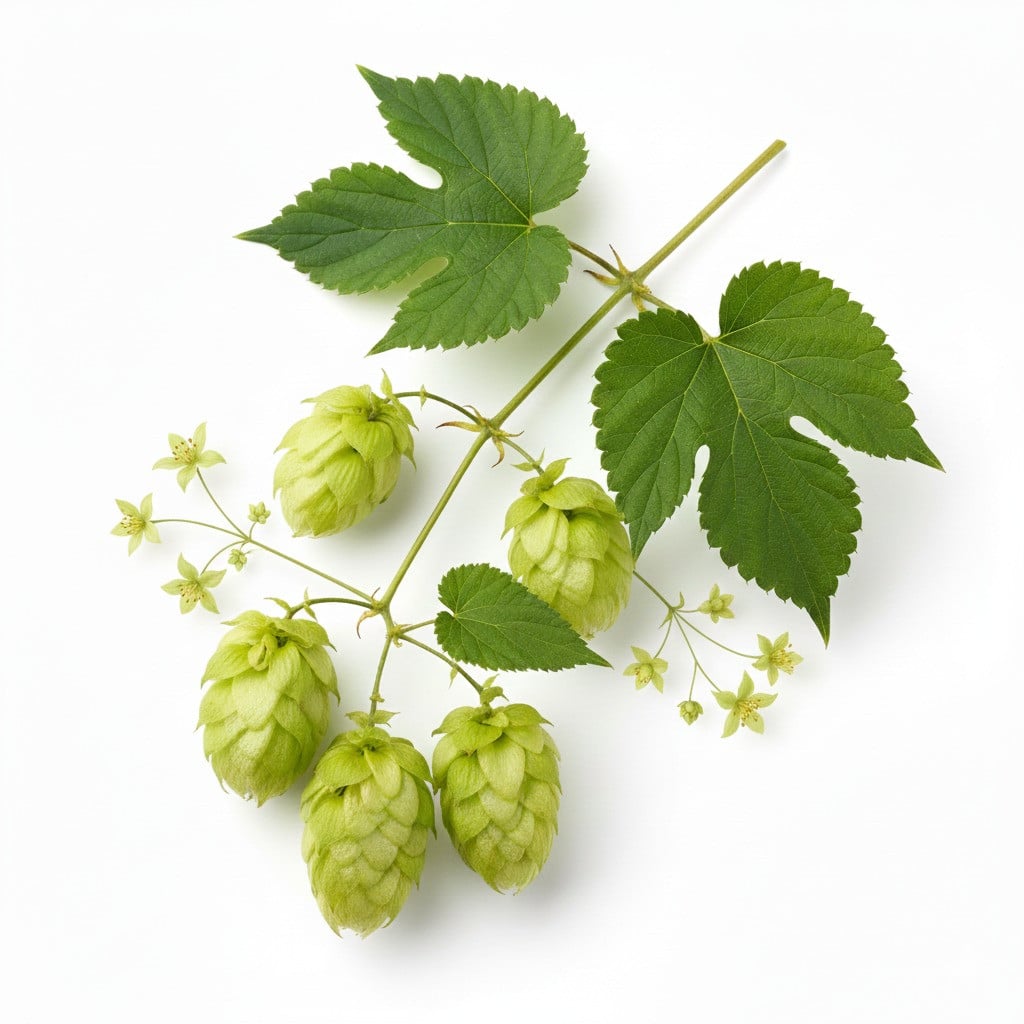
Real hops (Humulus lupulus)
Humulus lupulus
Pflanzenfamilie
Hemp family (Cannabaceae)
Saisonübersicht
Voranzucht
Pflanzung
Ernte
Ernte
J
F
M
A
M
J
J
A
S
O
N
D
1. JAHR
FOLGEJAHRE
Details


Keimtemperatur
20 °C (Grad Celsius)

Pflanzabstand
150 cm

Reihenabstand
300 cm

Saattiefe
1 cm
Anleitungen
Beschreibung
The common hop (Humulus lupulus) is a plant species of the hop genus within the hemp family (Cannabaceae). The true hop is a perennial, vigorous, right-twining herbaceous climbing plant (climbing perennial) with climbing shoots. The square, hollow stems are 1 to 3 cm thick and have anchor-like or hook-like "climbing hairs". On average, hops grow between 6 and 8 m tall and up to 2 m wide. The above-ground shoots of the plant are annual and die back after the seeds have ripened. In spring, the deciduous hops sprout again from the perennial thick rootstock (rhizome). The hop is a dioecious plant. The male flower is an inconspicuous greenish-yellow panicle, the small female flower is a light green cone-like spike. The flowering period usually begins in June. After wind pollination, the small nut-like fruits develop. All parts of the plant are edible.
Anbautipps
Hops are best planted in the fall or early spring. Hops like well-drained, deep, nitrogen- and nutrient-rich soil. However, as the plant is very adaptable, it can cope with any soil. In spring, hops should be fed with compost and horn meal. The climbing perennial must be watered regularly so that the soil remains moist and does not dry out. A warm, partially shaded location is ideal. However, the plant also thrives in sunny or shady locations. In late winter, cut off the dead parts of the plant. After sprouting, the hops need climbing support. Hops are usually propagated by cuttings or by dividing the rhizome. Hops are very hardy.

Gute Nachbarn
Keine guten Nachbarn vorhanden

Schlechte Nachbarn
Keine schlechten Nachbarn vorhanden

Krankheiten
Grey mold
Downy mildew
Powdery mildews
Schädlinge
Flea beetles
Spider mites
Aphids