Grains (cereals)

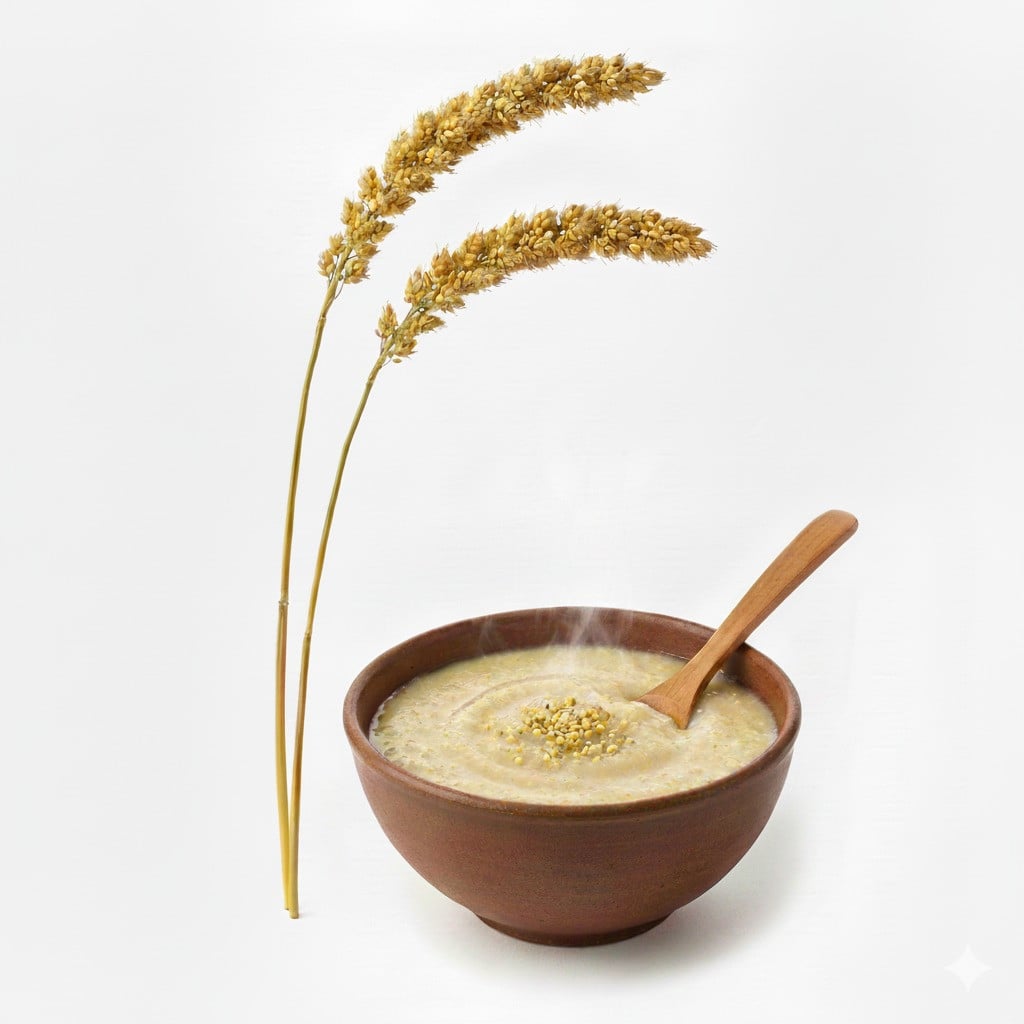
Grains (cereals)
mehrere Arten z.B. Panicum miliaceum (Rispenhirse), Sorghum bicolor (Sorghumhirse)
Plant family
Grass family (Poaceae)
Cultivation Break
2 Years
Season Overview
Sowing
Harvest
J
F
M
A
M
J
J
A
S
O
N
D
Details


Light requirement
Sunny

Water requirement
Dry

Soil
Light (sandy)

Nutrient requirement
Low

Dark germinator

Germination temperature
10 - 14 °C (Degrees Celsius)

Plant distance
35 cm

Row spacing
35 cm

Seeding depth
3 cm
Instructions
Description
Millet is a collective term for various small-fruited spelt cereals in the Poaceae plant family (sweet grasses). The most important genera include sorghum millet (Sorghum) and panicum millet (Panicum), which in turn have numerous varieties and cultivars. Depending on the species and variety, height and growth vary greatly: some varieties grow up to 1 m high, others several meters. They grow upright and in bushy clumps. The space required also depends a little on the variety. The leaves are typically grass-like and narrow. The inflorescences are panicles or dense spike panicles. This is where the small spelt grains grow. The size of the grains also varies depending on the species and variety. Many varieties of edible millet are usually yellow-gold, but there are also reddish-brown or black millet varieties such as blood millet (Eleusine digitaria sanguinalis). Many types of millet are annuals and have a very short growing season. Many panicle millet varieties are ready for harvest after just 100 - 120 days. Millet is a crop that has been used for a long time in human history. It is a gluten-free grain and is also often used as fodder and silage. Millet is also a great option in crop rotation, as this plant family does not include any vegetable plants. So you can add variety. A super undemanding and drought-tolerant catch crop, great for warm and dry locations.
Origin:
Millets have been domesticated in several regions independently of each other, mainly in Africa (sorghum, pearl millet) and in East Asia (panicled millet).
Growing tips
Millet is usually sown directly outdoors. However, the young plants in particular are not very competitive against weeds, which is why you should weed regularly. Diseases and pests are virtually no problem in millet cultivation - but bird damage is possible. During the growth phase, the plants need a steady supply of water, otherwise there will be no harvest. Otherwise, the plant is quite drought-tolerant and is a good catch crop in dry conditions - but then the harvest will be small. A layer of mulch can help to suppress weeds and retain water in the soil. Additional fertilization is usually not necessary. On the contrary: if too much nitrogen is applied, the stalks become soft and the storage capacity diminishes. You can either grow millet as a catch crop without harvesting, or harvest the grains. If you harvest the plant, the grains should be hard and evenly ripened. This is where the difficulty often lies: the panicles often ripen at different speeds. You can harvest when the grains can no longer be pressed in. Then cut off the panicles and hang them up to dry in an airy place. You can then thresh the grains. After harvesting millet, you can usually sow a subsequent crop with a short cultivation period, such as lettuce or radishes.

Companion Plants
No companion plants

Antagonistic Plants
No antagonistic plants

Diseases
No diseases

Pests
No pests