sugar cane

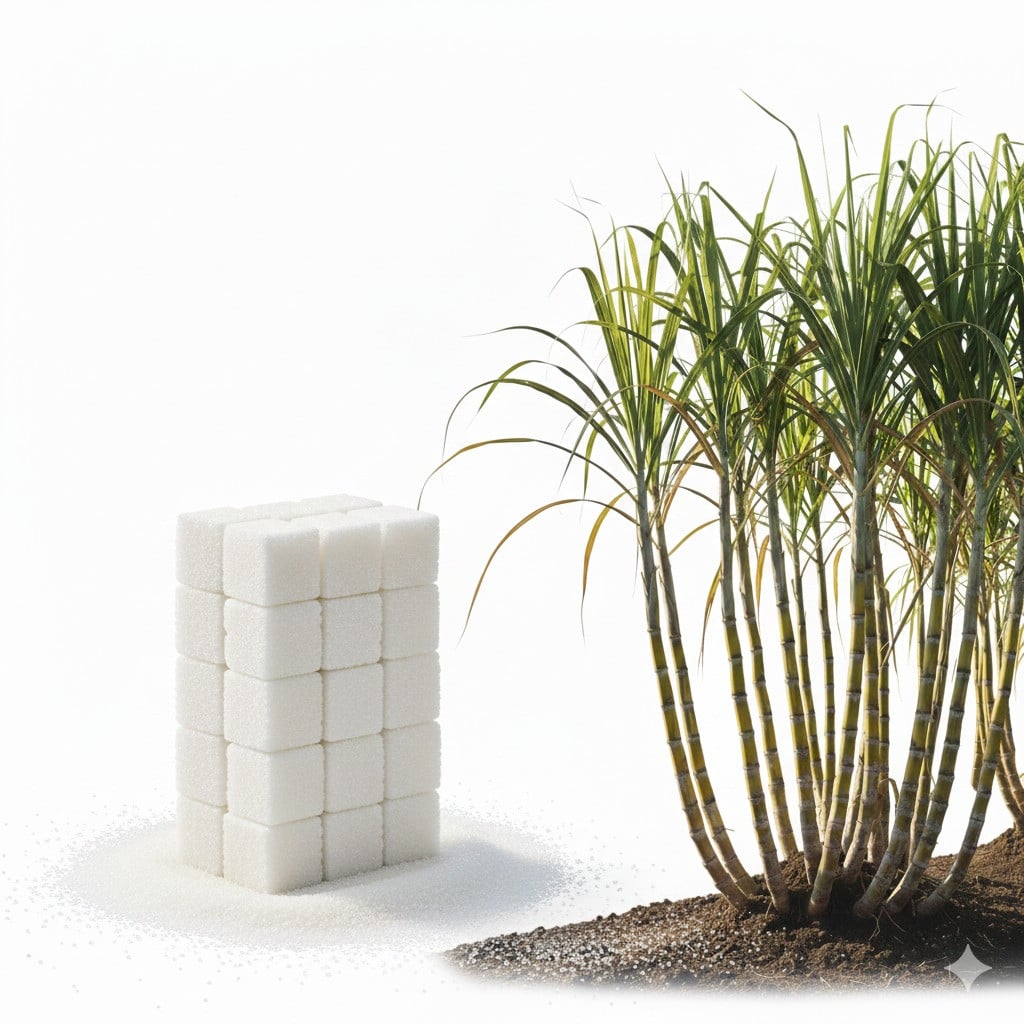
sugar cane
Saccharum
Plant family
Grass family (Poaceae)
Cultivation Break
2 Years
Season Overview
Propagating
Planting
Harvest
Harvest
J
F
M
A
M
J
J
A
S
O
N
D
1ST YEAR
FOLLOWING YEARS
Details


Light requirement
Sunny

Water requirement
Moist

Soil
Medium (loamy)

Nutrient requirement
High

Dark germinator

Germination temperature
20 - 30 °C (Degrees Celsius)

Plant distance
10 cm

Row spacing
30 cm

Seeding depth
1.5 cm
Instructions
Description
The genus sugar cane (bot. Saccharum) belongs to the sweet grass family (Poaceae). The genus includes 36 species. Of economic importance is the common sugar cane (Saccharum officinarum). They are known as the sweetest plants in the plant world. Sugar cane plants provide the basis for numerous foods and drinks. But the plants have more to offer than just the sweet food. These exotic gems impress with their magnificent appearance. Their thick stems are reminiscent of a jungle of bamboo plants that rise up out of the ground like matchsticks. The widely overhanging leaves are reminiscent of the sprawling foliage of reed plants. Sugar cane impresses with its versatility in use and cultivation. Sugar cane plants can be grown in your own garden, taking into account their special requirements. Leaf The plants develop typical sweet grass leaves. The leaf blade is linear. A leaf sheath surrounds the stem at the base. A clearly protruding midrib is visible on the upper side of the leaf. Flower The species of the genus Saccharum have dense inflorescences consisting of numerous small spikelets. The inflorescences reach lengths of between 40 and 60 centimeters. The small spikelets are strung on a shaft like a string of pearls. They are hermaphrodite and wind-pollinated. They therefore do not need sepals and petals, as the plants do not attract animals for pollination. There are swellings at the base of the three stamens. They spread the flower open and release the pollen. When the spikelets open and bend outwards at flowering time, the entire inflorescence resembles a soft feathery tail. The reddish-brown coloration of the inflorescences provides a striking and decorative aspect. Fruit After flowering, numerous small fruits form in the fall. The grains are around 1.5 millimeters long. They serve as food for birds, which ensure the further dispersal of the seeds. Growth Sugar cane species grow as grass-like and monocotyledonous plants. They are perennial and develop a thick stalk with a diameter of between 20 and 50 millimetres. The sweet grasses impress with their mighty growth height. They grow to a height of between 150 and 300 centimeters. As shallow-rooted plants, they develop an underground rhizome. It is thick and lies horizontally in the substrate. The plant reproduces underground with the help of this organ. They are not frost-hardy. Their temperature minimum is between 3.0 and 5.0 °C. A sugar cane plant reaches a maximum age of 20 years.
Origin:
tropical and subtropical regions (Brazil, India, Thailand, Cuba, Canary Islands) worldwide (Africa, Europe, Asia, Australia, America)
Growing tips
Location The plants require high humidity. They prefer loamy soil that provides sufficient soil moisture. The rhizomes do not tolerate waterlogging. Enriching the substrate with sand, polystyrene flakes or lava granules improves permeability. Normal garden soil is ideal as a planting substrate. At a temperature between 25 and 28 °C, the sweet grasses grow luxuriantly. At cooler temperatures, their growth is restricted. If the temperature is below 15°C, the sweet grasses will stop growing completely. They prefer a full sun location. Semi-shady conditions do not cause the plants any problems. Growth is lower in a darker location. As fast-growing plants, their nutrient consumption is extremely high. Utilization Sugar cane plants provide a decorative aspect in the garden. As they are not hardy, the sweet grasses are not suitable for permanent planting in beds. It is advisable to keep them in containers so that the plants can be moved around in winter. A tub with handles is perfectly suited to being sunk into the ground. This gives the impression that the sugar cane plants are growing in the garden. By digging out the sunken pots, the tubs come to the surface in the fall. In this way, sugar cane plants exude an Asian character. They look good in Chinese and Japanese arrangements. Due to their impressive height, the grasses are ideal as a privacy screen. A group of several individuals creates an oasis of relaxation. Plants with similar habitat requirements prove to be ideal neighbors. Such arrangements create the impression of a natural habitat as found in Asia. Between reeds (Phragmites) and bamboo (Bambusa), the sugar cane species create an exotic picture. Good planting partners for sugar cane: Legumes (e.g. beans, peas): They bind nitrogen in the soil, which promotes the growth of sugar cane. Help to improve soil fertility. Herbs such as basil or coriander: These can ward off pests and stabilize the ecosystem in the soil. Corn or other cereals: These plants have similar heat and sun requirements and can be rotated in a crop rotation. Poor planting partners for sugar cane: Plants with high water requirements (e.g. rice): These can compete for resources such as water and nutrients. Nightshade plants (e.g. tomatoes, potatoes): These can attract similar pests and diseases as sugarcane. Bulbous plants (e.g. onions, garlic): They often prefer different soil conditions and can inhibit the growth of sugarcane. Care/pruning The most important aspect of care is a balanced water and nutrient balance. Regular watering is necessary. Collected rainwater or decalcified tap water is suitable for this. The water requirement also increases in sunny locations. Due to the high biomass, evaporation is much higher in direct sunlight. The daily thumb test provides certainty about the moisture level in the substrate. Between June and September, the plants will appreciate weekly fertilization. A liquid fertilizer, guano sticks or fertilizer cones are suitable. These variants provide sufficient nutrients to support biomass formation. The addition of slow-release mineral fertilizers is also possible if the plants are used for decoration. Four months after planting, the stalks are ready for harvesting. Individual stalks are cut off close to the ground. If the plants are purely decorative, no pruning is necessary. The stalks remain on the plant throughout the winter. Old plants are rejuvenated by taking cuttings from healthy culms. This ensures timely propagation before the plant loses its beauty. Overwintering takes place in a warm and bright place where the temperature does not fall below 15° Celsius. Diseases/pests Sugar cane plants are a popular food source for some insect pests. One of the most dangerous pests is the butterfly caterpillar. It eats through the sugary pulp. A heavy infestation impairs the growth of the plants. They die off over time. Putting out bird food attracts birds, which will not miss out on a caterpillar as a tasty treat. Alternatively, it is advisable to collect and relocate individual caterpillars so that their development into beautiful butterflies is not interrupted. Diseases Anthracnose: A fungal disease that causes black pustules and dark, water-soaked lesions on the stems. Rust: Leads to orange-brown spots on the leaves and can cause leaf loss if heavily infested. Brown streak: A bacterial disease that causes shortened internodes and shiny, golden-bronze foliage. Mosaic disease: Causes mottling or spots on the leaves and yellow or pale green areas. Charcoal disease: Forms shiny black or orange pustules on the internodes. Pests Stem borers: These insects bore into the stems and weaken the plant. Aphids: They suck plant juices and can transmit viruses. Whiteflies: Cause damage by sucking plant sap and transmitting diseases. Termites: Can attack the roots and stems, especially in dry regions. Prevention and control Crop rotation: Reduces the risk of diseases and pests. Resistant varieties: Choose varieties that are less susceptible to certain diseases. Biological control: Use natural enemies such as parasitic wasps or nematodes. Plant protection products: Targeted applications can help with heavy infestations, but should be used sparingly and in an environmentally conscious manner.

Companion Plants
No companion plants

Antagonistic Plants
No antagonistic plants

Diseases
No diseases

Pests
No pests