Cycads

Cycads
Cycadales
Plant family
- others -
Season Overview
Propagating
Planting
Harvest
J
F
M
A
M
J
J
A
S
O
N
D
1ST YEAR
FROM YEAR 6
Details


Light requirement
Semi-shaded

Water requirement
Moist

Soil
Light (sandy)

Nutrient requirement
Medium

Light germinator

Germination temperature
25 – 30 °C (Degrees Celsius)

Plant distance
60 cm

Row spacing
150 cm

Seeding depth
2 cm
Instructions
Description
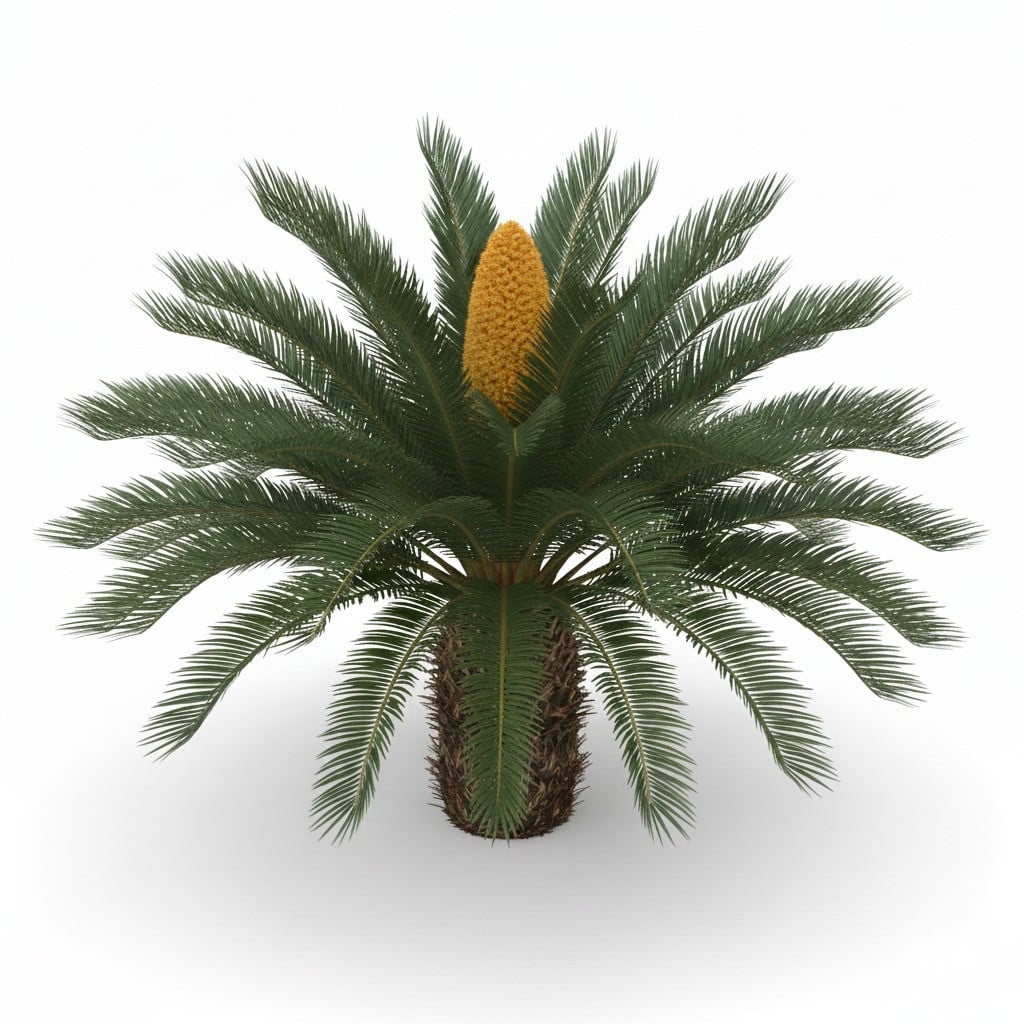
Appearance and growth The name "palm fern" is derived from the appearance of the Cycadales. As the name suggests, the plants are not true palms, but stem-forming ferns. Palm ferns form two types of shoot axes: crested trees, which are characterized by a palm-like, straight trunk (such as Cycas and Encephalartos), or underground rhizomes (for example Bowenia, Zamia or Strangeria). The leaves are exclusively evergreen and usually simply pinnate. The only exceptions are the two species Cycas debaoensis and Cycas multipinnanta and the genus Bowenia, which all have double-pinnate leaves. Palm ferns are seed plants and, like ginkgo and conifers, belong to the gymnosperms. This means that their ovules are not enclosed in carpels. All palm ferns are dioecious, i.e. have separate sexes: male palm ferns form bulbous to cone-like, male spore stalks, which represent a transitional form between true spore plants such as ferns and flowering plants. Female palm ferns have their reproductive organs on or under the leaves like real ferns. Sago palm ferns have feathery fronds that look very similar to the leaves of other ferns. The largest species, Cycas angulata, can reach a height of 12 meters and a trunk diameter of 40 centimeters. All species grow very slowly - it can take three years for a new whorl of leaves to form.
Origin:
tropical and subtropical areas, America, Colombia, Cuba, Australia, Africa
Growing tips
Location and care Palm ferns need a very well-drained, humus-poor substrate. Conventional tub plant soil should therefore be mixed with plenty of sand, clay granules or lava chippings so that the soil is well drained and aerated. We strongly advise against pruning the plants too much - the plants sprout very poorly from the bare trunk and then look somewhat disfigured. Only the lowest, dead leaves should be removed regularly. Always water your palm ferns thoroughly and then allow the root ball to dry out completely. It is important to provide even lighting from all sides, as otherwise the crowns will be very one-sided towards the light source. If the roots can be seen in the bottom openings of the pot or are pushing through the substrate, the palm ferns need to be repotted. However, as they tend to grow slowly, repotting should only be necessary every three to four years. February or March is the ideal time to move palm ferns to a new home. Start by carefully potting out the plant and shake off as much of the old soil as possible. Check the roots of the palm fern for dead areas, which can then be carefully cut out with a disinfected and sharp knife. The palm fern can then be potted up in the pot provided. Please note that palm ferns need around two to three weeks after repotting to acclimatize to their new home and cannot tolerate direct sunlight during this time. In addition to the Japanese palm fern, species of the genera Encephalartos, also known as the bread palm fern, and Zamia are also offered as houseplants. However, some of these are rather difficult to obtain or only available in the trade at horrendous prices. Bread palm ferns are actually native to Africa. There are almost 65 species there, all of which are unfortunately endangered and are protected species. The shoots of bread palm ferns can be either underground or above ground. Tree-shaped trunks can grow up to 15 meters high in their natural habitat. The zamia (Zamia furfuracea) - not to be confused with the zamia (Zamioculcas zamiifolia) - is actually native to the American continent. It usually forms underground tubers without a distinct, woody stem. However, there are also species that can form above-ground stems and grow to a height of more than four meters. Uses In this country, palm ferns are mainly kept as houseplants or potted plants in conservatories or in semi-shady locations on patios. Because of their spreading fronds, the plants require sufficient space. In a wine-growing climate and in a very sheltered location, for example in an inner courtyard, you can try cultivating the somewhat more robust, subtropical species outdoors - but only with good winter protection. In their native country, palm ferns are mainly used for edible purposes. The seeds (e.g. from Dioon) and the stem pith (from Cycas circinalis, Cycas revoluta and the Kaffir bread palm fern, Encephalartos caffer, among others) have a high starch content. As cycadales form toxic substances, certain preparations are always necessary before consumption. Winter protection and overwintering The subtropical species can tolerate short-term frosts of up to five degrees Celsius. They can therefore only survive outdoors in protected locations in very mild regions. Good winter protection is also essential here. The first night frost can occur from the end of September, which is why palm ferns should be moved indoors at this time. Palm ferns spend the winter best in slightly heated conservatories or in a cold house with a room temperature between five and ten degrees Celsius. Palm ferns should not be fertilized during the winter and should only be watered sparingly. The only palm fern species that survive frost and longer cold periods well are Encephalartos ghellinckii, Ecephalartos cycadifolius and Macrozamia occuidua. These grow naturally at altitudes of up to 2,500 meters and are accustomed to regular frost and snowfall. Diseases and pests Palm ferns are hardly susceptible to disease. As tub and house plants, they are occasionally attacked by mealybugs, scale insects, aphids, mealybugs or spider mites. If the leaflets of palm ferns turn brown from the tip, this may be caused by excessively dry air. Spray the leaflets repeatedly with lime-free water. Excessively dry soil is also a possible cause. Water the palm fern until the water runs out of the soil. If the tips of the leaves constantly come up against an obstacle at the location, they will also turn brown. A change of location should suffice here. If the leaves of the palm ferns turn yellow, there may be several reasons for this. Firstly, the substrate may be too moist. On the other hand, over-fertilization, lack of nutrients or incorrect wintering may be the cause. If the palm fern is watered exclusively with calcareous water, this will also lead to yellow leaflets. In this case, water with rainwater or decalcified tap water so that the palm fern can recover.

Companion Plants

Antagonistic Plants

Diseases
Septoria
Angular leaf spot of cucumber
Root Rot

Pests
Spider mites
Mealybugs
Schildläuse
Aphids