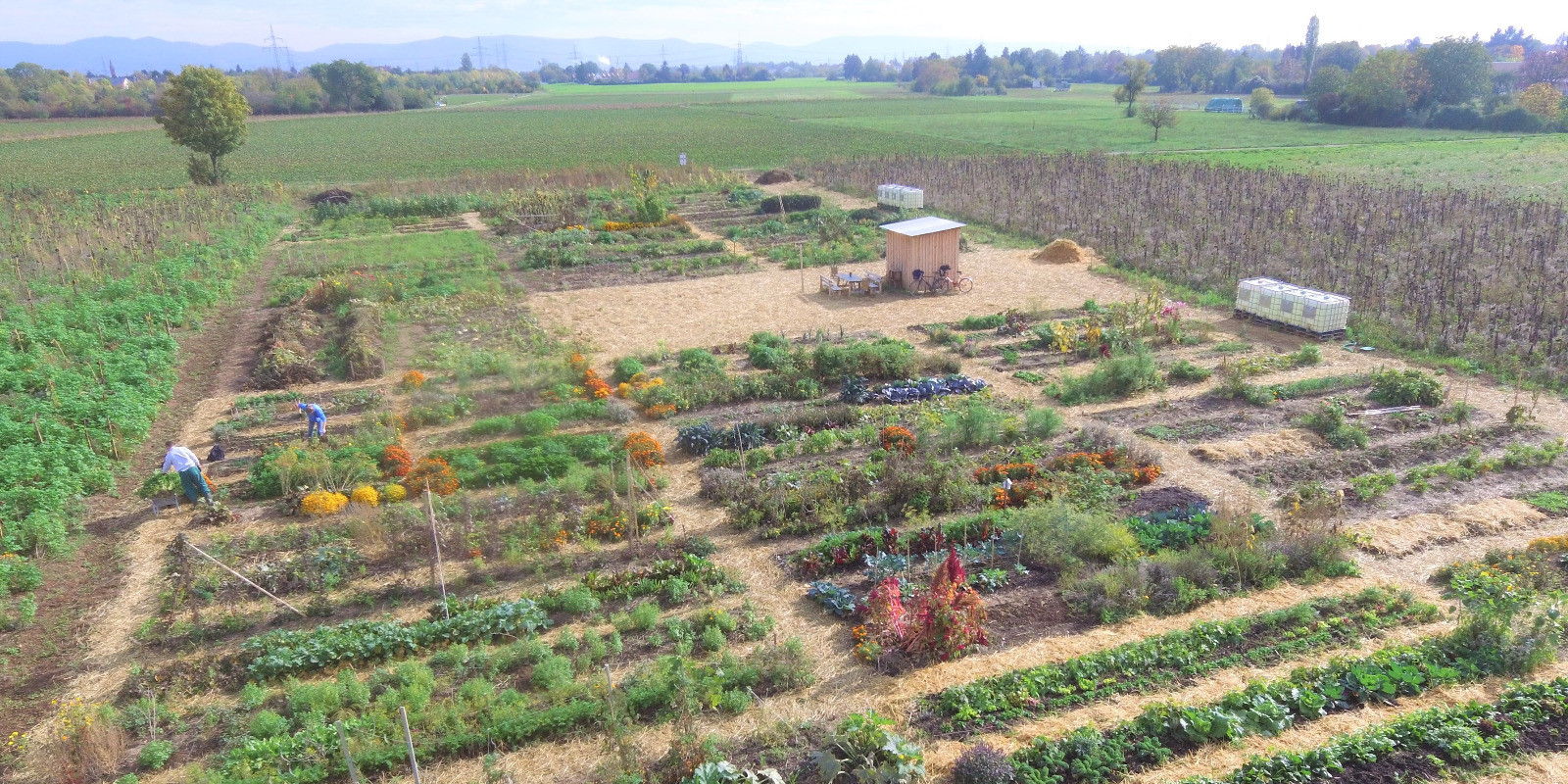
36 m²
42 species
Main Season
Single-Year

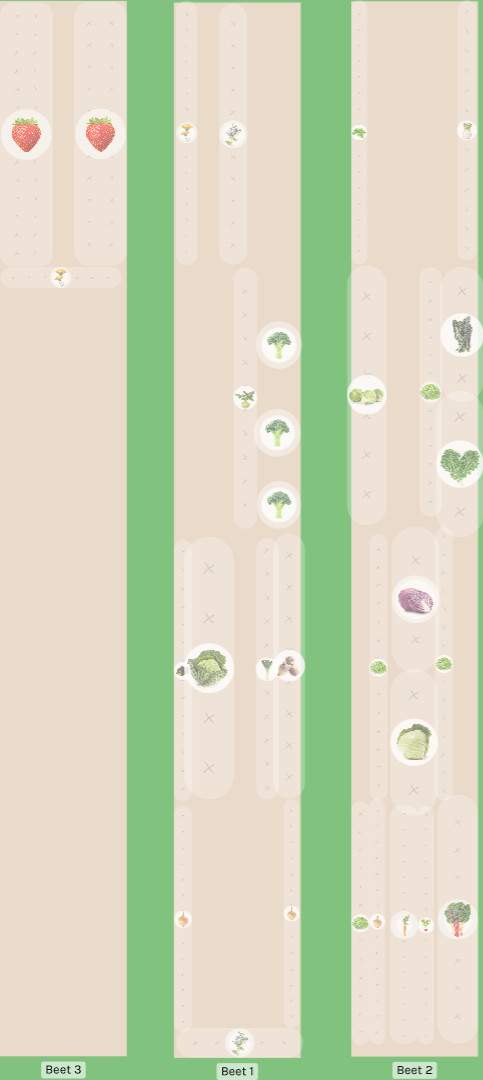
Micro-agriculture bed plan
The layout of our bed plan allows easy rotation for crop rotation and the right mixed crops are together. With crop rotation and mixed cultivation, you ensure that the soil is not stressed on one side and that the plants support each other. Due to different growth heights and root depths, larger areas of light and soil are used and the plants complement each other. of the soil and the plants complement each other with their different nutrient requirements. The integration of flowers looks beautiful and attracts insects as pollinators to your bed. You benefit from a rich harvest and the insects benefit from the fact that there is always something in bloom. Rotating the mixed crops also creates a balanced crop rotation, as each mixed crop is only planted on the same bed every six years.
(Automatically translated)
Show original
74 times used
Recommended by Fryd
13
55
3
Preview
Plants included


Erdbeere

Knoblauch

Tomate (Stabtomate)

Tomate (Cocktail Stabtomate)

Basilikum

Ringelblume

Mais

Bohne (Feuerbohne)

Bohne (Stangenbohne)

Kürbis

Thymian

Borretsch

Dill

Tagetes

Erbse

Rote Bete

Kohlrabi

Blumenkohl

Brokkoli

Salat (Gartensalat)

Kopfkohl (Wirsing)

Sellerie (Stangensellerie)

Lauch

Steckrübe

Zwiebel

Zucchini

Aubergine

Petersilie

Fenchel

Gurke

Paprika

Rosenkohl

Sellerie (Knollensellerie)

Blattkohl (Palmkohl)

Blattkohl (Grünkohl)

Bohne (Buschbohne)

Kopfkohl (Rotkohl)

Kopfkohl (Weißkohl)

Möhren

Radieschen

Mangold

Bohnenkraut
Erdbeere
Fragaria vesca
Knoblauch
Allium sativum
Tomate (Stabtomate)
Solanum lycopersicum
Tomate (Cocktail Stabtomate)
Lycopersicon esculentum
Basilikum
Ocimum basilicum
Ringelblume
Calendula officinalis
Mais
Zea mays
Bohne (Feuerbohne)
Phaseolus coccineus
Bohne (Stangenbohne)
Phaseolus vulgaris
Kürbis
Cucurbita maxima
Thymian
Thymus spec.
Borretsch
Borago officinalis
Dill
Anethum graveolens
Tagetes
Tagetes
Erbse
Pisum sativum
Rote Bete
Beta vulgaris
Kohlrabi
Brassica oleracea var. gongylodes
Blumenkohl
Brassica oleracea var. botrytis
Brokkoli
Brassica oleracea var. italica
Salat (Gartensalat)
Lactuca sativa var. crispa
Kopfkohl (Wirsing)
Brassica oleracea convar. capitata var. sabauda L.
Sellerie (Stangensellerie)
Apium graveolens var. dulce
Lauch
Allium porrum
Steckrübe
Brassica napus ssp. Napobrassica
Zwiebel
Allium cepa
Zucchini
Cucurbita pepo var. cylindrica
Aubergine
Solanum melongena
Petersilie
Petroselinum crispum
Fenchel
Foeniculum vulgare
Gurke
Cucumis sativus
Paprika
Capsicum annuum
Rosenkohl
Brassica oleracea var. gemmifera
Sellerie (Knollensellerie)
Apium graveolens var. rapaceum
Blattkohl (Palmkohl)
Brassica oleracea var. palmifolia
Blattkohl (Grünkohl)
Brassica oleracea var. sabellica
Bohne (Buschbohne)
Phaseolus vulgaris var. nanus
Kopfkohl (Rotkohl)
Brassica oleracea convar. capitata var. rubra
Kopfkohl (Weißkohl)
Brassica oleracea var. capitata
Möhren
Daucus carota ssp. sativus
Radieschen
Raphanus sativus var. sativus
Mangold
Beta vulgaris subsp. vulgaris
Bohnenkraut
Satureja hortensis

Mikrolandwirtschaft
Mikro Landwirtschaft - gemeinschaftlicher Gemüseanbau e.V. ist ein gemeinnütziger Verein aus Mannheim. Mit eigenen Gemeinschaftsäckern in Mannheim und Heidelberg ermöglicht er Städtern direkt in der Nachbarschaft ohne großen organisatorischen oder finanziellen Aufwand, digital unterstützt, gemeinschaftlich ihr eigenes Gemüse zur Selbstversorgung anzubauen. Der Verein will durch die Plattform eine Brücke zwischen Städtern und Landwirtschaft bauen.


