Rosa Maiglöckchen

Variety
Rosa Maiglöckchen
Approved Data
created by MarieLu at 19.01.2026
Season Overview
Sowing
Harvest
Harvest
J
F
M
A
M
J
J
A
S
O
N
D
1ST YEAR
FOLLOWING YEARS
Description
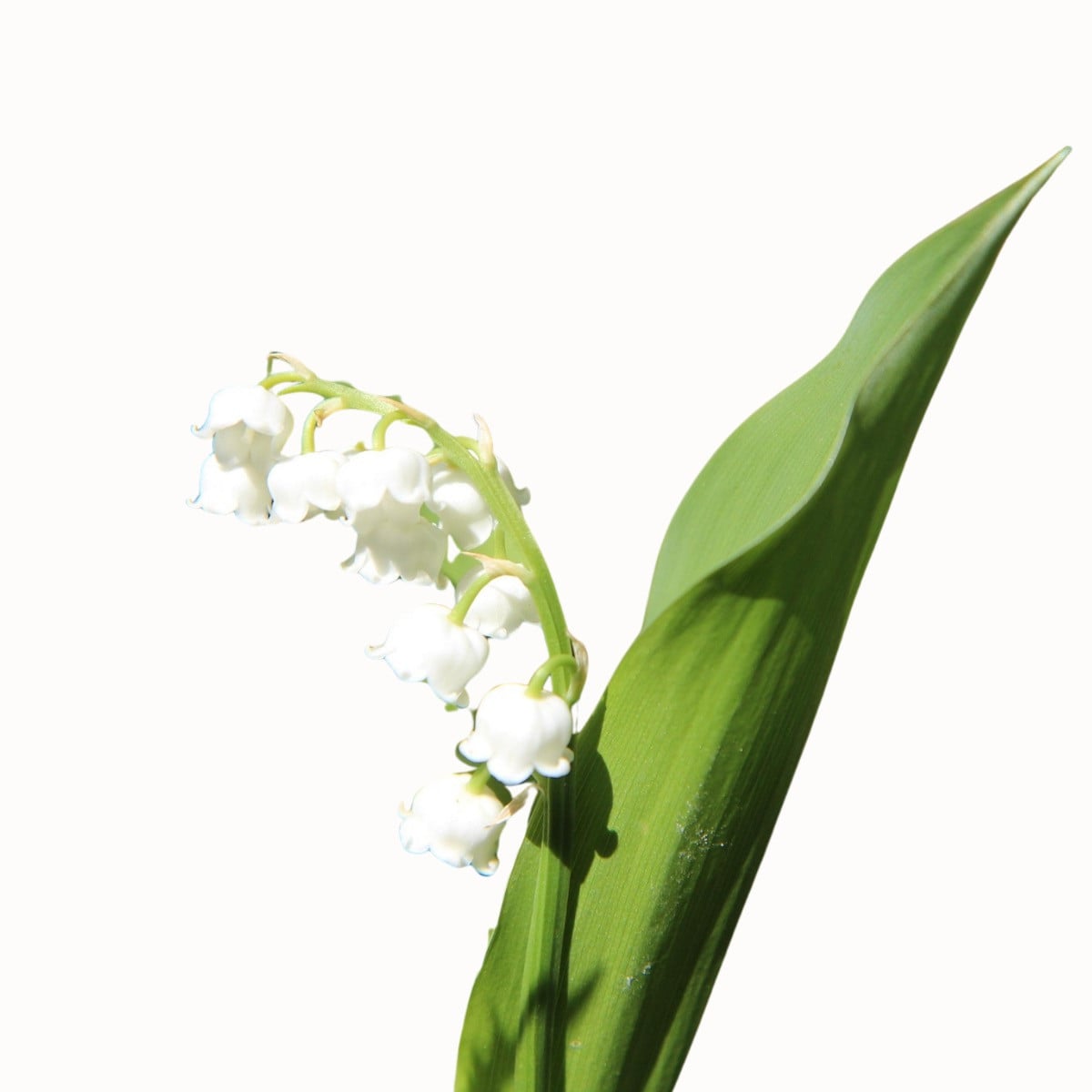
Taxonomy & classification The lily of the valley belongs to the asparagus family (Asparagaceae) in the order Asparagales. The genus Convallaria has few species, and Convallaria majalis is the best-known representative of this genus. Botanically, there are variants within the species such as Convallaria majalis var. majalis and Convallaria majalis var. transcaucasica, but these are mostly considered natural forms and not cultivated varieties. In horticulture, there are also cultivars with special characteristics such as a higher number of flowers or modified leaf shape. Growth form & appearance The lily of the valley is a perennial, herbaceous plant that typically grows to a height of 10 to 30 cm. It has an underground, creeping rhizome that helps the plant to form dense stands. The plant usually forms two to three leaves, which are broad-lanceolate and shiny dark green and emerge directly from the rhizome. In late spring, the lily of the valley develops a raceme with several white, bell-shaped, strongly scented flowers that hang down characteristically. This scent attracts insects such as bees in particular. After flowering, bright red berries containing the seeds ripen. These fruits are striking, but like all other parts of the plant, they are highly poisonous. Benefits in the garden and for animals Although lily of the valley is poisonous to humans and many animals, it has several positive aspects in the garden and in the ecosystem: - Lily of the valley is a popular ornamental plant, especially in semi-shaded borders, groups of trees or under trees and shrubs, where it acts as ground cover. - The plant spreads vegetatively through its rhizome and can thus cover larger, uniform areas. - It is also used as a cut flower and in pot culture. For animals and the ecosystem: - The strongly scented flowers attract pollinators such as bees and provide pollen. - The red berries are eaten by some birds, which can thus contribute to seed dispersal. - In natural forest communities, Convallaria majalis is a characteristic species of wooded habitats, especially beech and oak forests in Europe.
Non hybrid
Growing tips
Lily of the valley is practically never sown. Propagation is almost always via rhizomes (pieces of root) or by dividing existing plants. -> Best method: Planting rhizomes -> Main planting time: fall (October to November) Alternative: early spring
Details


Light requirement
Semi-shaded

Water requirement
Moist

Soil
Medium (loamy)
Nutrient requirement
Low

Dark germinator

Plant distance
15 cm

Row spacing
15 cm

Seeding depth
4 cm

Companion Plants
No companion plants

Antagonistic Plants
No antagonistic plants

Diseases
No diseases
Pests
No pests