Knotweeds

Knotweeds
Polygonum/Persicaria/Bistorta/Fallopia
Plant family
Knotweed family (Polygonaceae)
Cultivation Break
3 Years
Season Overview
Sowing
Harvest
Harvest
J
F
M
A
M
J
J
A
S
O
N
D
1ST YEAR
FOLLOWING YEARS
Details


Light requirement
Semi-shaded

Water requirement
Moist

Soil
Medium (loamy)
Nutrient requirement
Medium

Germination temperature
2 – 30 °C (Degrees Celsius)

Plant distance
100 cm

Row spacing
200 cm

Seeding depth
1 cm
Instructions
Description
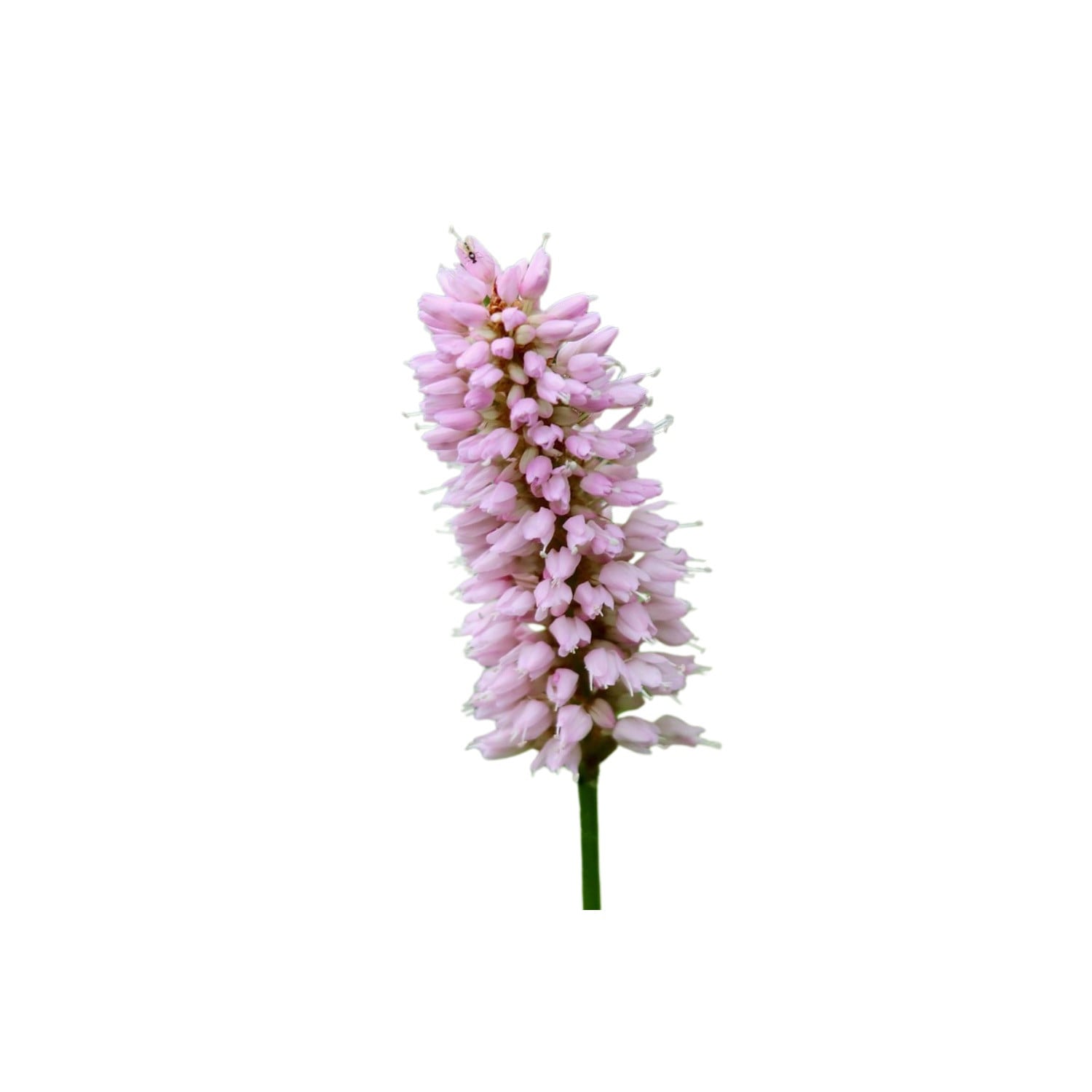
Knöteriche gehören zur Familie der Knöterichgewächse (Polygonaceae). Unter dem deutschen Sammelbegriff "Knöterich" fallen mehrere Gattungen, vor allem Polygonum, Persicaria und Fallopia. Die Gruppe umfasst zahlreiche Arten, von niedrig wachsenden, bodendeckenden Wildkräutern wie Persicaria maculosa bis zu imposanten Stauden wie dem Kerzen-Knöterich (Bistorta amplexicaulis) oder starkwüchsigen Arten wie dem Japanischen Staudenknöterich (Fallopia japonica). Auch innerhalb der Gartenkultur existiert eine große Sortenvielfalt, insbesondere bei den Blüten- und Farbtypen der Zierknöteriche (Bistorta/Persicaria). Knöteriche sind je nach Art krautig ein- oder mehrjährig, seltener verholzende Kletterpflanzen. Die Wuchshöhe variiert stark - von 10-40 cm bei niedrigen Wildarten bis zu 1,5-2 m bei robusten Staudenknöterichen. Kletternde Arten wie Fallopia baldschuanica können sogar 10 m und mehr erreichen. Typisch sind wechselständige, oft lanzettliche bis herzförmige Blätter, häufig mit rötlicher Spreitenzeichnung oder deutlicher Blattscheide (Ochrea). Die Blüten erscheinen je nach Art in ähren- oder rispenartigen Blütenständen und reichen farblich von Weiß über Rosa bis Rot. Viele Zierknöteriche blühen sehr lange, oft bis in den Herbst. Die Früchte sind kleine, nussartige Achänen, die für viele Insekten und Vögel interessant sind. Zierknöteriche wie Bistorta amplexicaulis sind wertvolle Struktur- und Blühpflanzen für Staudenbeete. Sie gelten als pflegeleicht, kommen mit unterschiedlichsten Bodenarten zurecht und liefern über Wochen bis Monate Nektar und Pollen. Damit unterstützen sie Bienen, Schwebfliegen und zahlreiche weitere Insekten. Niedrige Arten wie Persicaria dienen als Bodendecker, stabilisieren Böden und fördern durch ihre Wurzelstrukturen die Bodenfauna. Die Samen und jungen Triebe werden von verschiedenen Vogelarten genutzt. Einige Knöteriche - darunter allerdings auch problematische Arten wie Fallopia japonica - zeigen eine enorme Wüchsigkeit. Während sie ökologisch Nahrung bieten, können sie in sensiblen Lebensräumen invasiv wirken und heimische Arten verdrängen. In Gärten sollten solche Arten bewusst und kontrolliert eingesetzt werden. Viele essbare oder traditionell genutzte Arten (z. B. Wasserpfeffer, Persicaria hydropiper) fanden zudem in Küche und Heilkunde Verwendung, spielen heute aber eher eine untergeordnete Rolle.
Origin:
Ursprung je nach Art zwischen Europa, West- und Ostasien, teils auch Nordamerika
Growing tips
Knotweeds form a very heterogeneous group of plants, ranging from annual wild species to robust perennials and vigorously growing large plants. Accordingly, the needs of the individual species differ considerably in some cases. While ornamental knotweeds of the Bistorta/Persicaria genus prefer nutrient-rich, moist locations, many annual Polygonum species can also cope with poor soils. It is therefore worth considering the species in question when selecting and cultivating plants. Annual knotweeds such as Polygonum aviculare or Persicaria maculosa can be sown directly. Sow shallowly, about 0.5-1 cm deep, in well-loosened soil. For more sensitive species or for earlier flowering, pre-growing in pots can be useful. After the first true leaves appear, the seedlings should be separated so that they have enough space to grow. Ornamental knotweed in perennial form, on the other hand, is usually not sown but propagated by division or purchased young plants. After planting out, it is advisable to briefly harden off to changing temperatures and light conditions, especially if the plants come from a greenhouse. Care varies depending on the species, but some principles are universal: Knotweed grows vigorously and benefits from a consistently moist water supply, especially in the first few weeks after planting. An application of mulch helps to retain soil moisture and suppress weeds. Perennial knotweeds develop a stable framework over the years and hardly need any pruning; in the case of annual species, light pruning or the removal of excessively dense shoots can improve growth. Fertilizing with compost or organic slow-release fertilizer in spring covers the medium to high nutrient requirements of many species. Particularly vigorous species such as Fallopia japonica should only be planted in the garden with caution, as they have a strong tendency to spread. Annual knotweeds usually complete their life cycle within 8-12 weeks, depending on the species and location. Leaves, young shoots or seeds can be harvested, whereby the leaves are more aromatic and milder while they are still tender and green. Ripe seeds are hard and dark in color. The shelf life is short; fresh material should be used promptly. Perennial knotweed is not harvested in the ornamental garden, but is used as a long-term structural plant. It is advisable to divide older clumps every 3-5 years to keep the plant vital and to obtain new seedlings. Almost all vegetables that have medium to low nutrient requirements are suitable for subsequent cultivation with annual species. After very fast-growing species or dense perennials, it makes sense to loosen the soil and incorporate organic matter before replanting.

Companion Plants

Antagonistic Plants
No antagonistic plants

Diseases
No diseases
Pests
No pests