Steppe Asters

Steppe Asters
Galatella
Plant family
Daisy family (Asteraceae)
Season Overview
Propagating
Planting
Harvest
Harvest
J
F
M
A
M
J
J
A
S
O
N
D
1ST YEAR
FOLLOWING YEARS
Details


Light requirement
Sunny

Water requirement
Dry

Soil
Light (sandy)

Nutrient requirement
Low

Light germinator

Germination temperature
15 - 20 °C (Degrees Celsius)

Plant distance
30 cm

Row spacing
30 cm

Seeding depth
0.5 cm
Instructions
Description
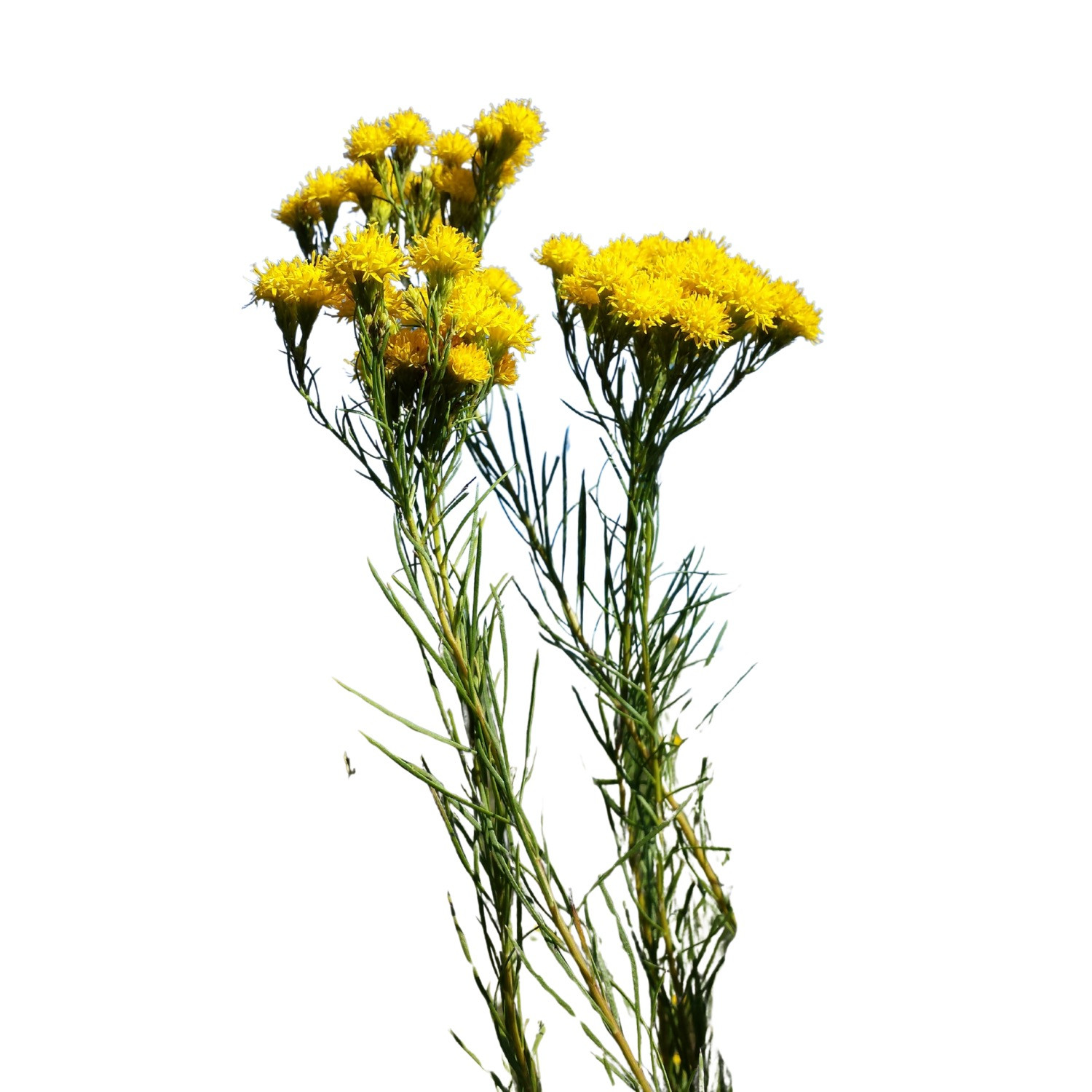
The goldilocks aster delights every garden enthusiast with its yellow flowers. Galatella linosyris is a garden gem that adorns itself with many yellow, umbel-like flower heads from late July through October. These grow in dense clusters on straight stems. The individual flowers have no ray florets — the yellow tubular florets sit tightly together. It occurs wild from Europe to North Africa and has established itself as a popular ornamental perennial for our gardens. With its striking appearance, it enhances any garden bed. The goldilocks aster grows upright and clump-forming. It reaches an average height of around 60 centimetres and a width of 30 centimetres. The easy-care plant requires a suitable location to display its full potential. The goldilocks aster loves sunny positions. With its floral display, it forms a highlight in summer and late-summer borders. The Aster linosyris bears elongated green leaves on long stems. Because the goldilocks aster produces abundant nectar, it offers butterflies, bees and bumblebees a valuable food source in late summer. In warm sunlight it is a magical sight to see colourful butterflies hovering and settling on the small yellow flower heads. Even after flowering, the perennial remains a decorative eye-catcher with its silvery-white seed heads.
Origin:
Mittel-, Süd- und Südosteuropas, Marokko, Algerien und Westasien, Steppenregionen
Growing tips
The easy-care golden aster prefers a sunny spot in the garden bed. It thrives best in a well-drained, pH-neutral garden soil. The perennial adorns beds and open spaces and is a fantastic eye-catcher with its bright yellow flowers. This wonderful aster is easy to care for and uncomplicated. The golden-haired aster can be planted in any garden and is versatile. This beautiful perennial tolerates dry days and directs its leaves towards the sun. During longer dry periods, the leaves may curl up. This does not harm the golden-haired aster. It will recover with the next rain. It looks best when planted in a group. There is room for ten to twelve specimens per square meter. The gardener should ensure a planting distance of around 30 centimetres. In late fall, the golden-haired aster retreats into its roots. The gardener cuts the dried shoots back to ground level. Some people leave them standing through the winter because of the silvery-white fruit clusters and enjoy the attractive sight. In spring, the aster sprouts again. The plant does not need any special winter protection. Over the course of time, the plant's crown will grow larger. The golden-haired aster is a fantastic sight in the garden. The aster beautifies flower beds, open spaces or rock gardens. With its yellow flowers, it shines from afar and is a fascinating eye-catcher.

Companion Plants

Antagonistic Plants

Diseases
Root Rot
Powdery mildews
Pests
Aphids
Land snails