Wallflowers

Wallflowers
Erysimum
Plant family
Crucifers (Brassicaceae)
Season Overview
Propagating
Planting
Harvest
J
F
M
A
M
J
J
A
S
O
N
D
1ST YEAR
FOLLOWING YEARS
Details


Light requirement
Sunny

Water requirement
Moist

Soil
Light (sandy)

Nutrient requirement
Medium

Light germinator

Germination temperature
15 – 20 °C (Degrees Celsius)

Plant distance
30 cm

Row spacing
30 cm

Seeding depth
0.5 cm
Instructions
Description
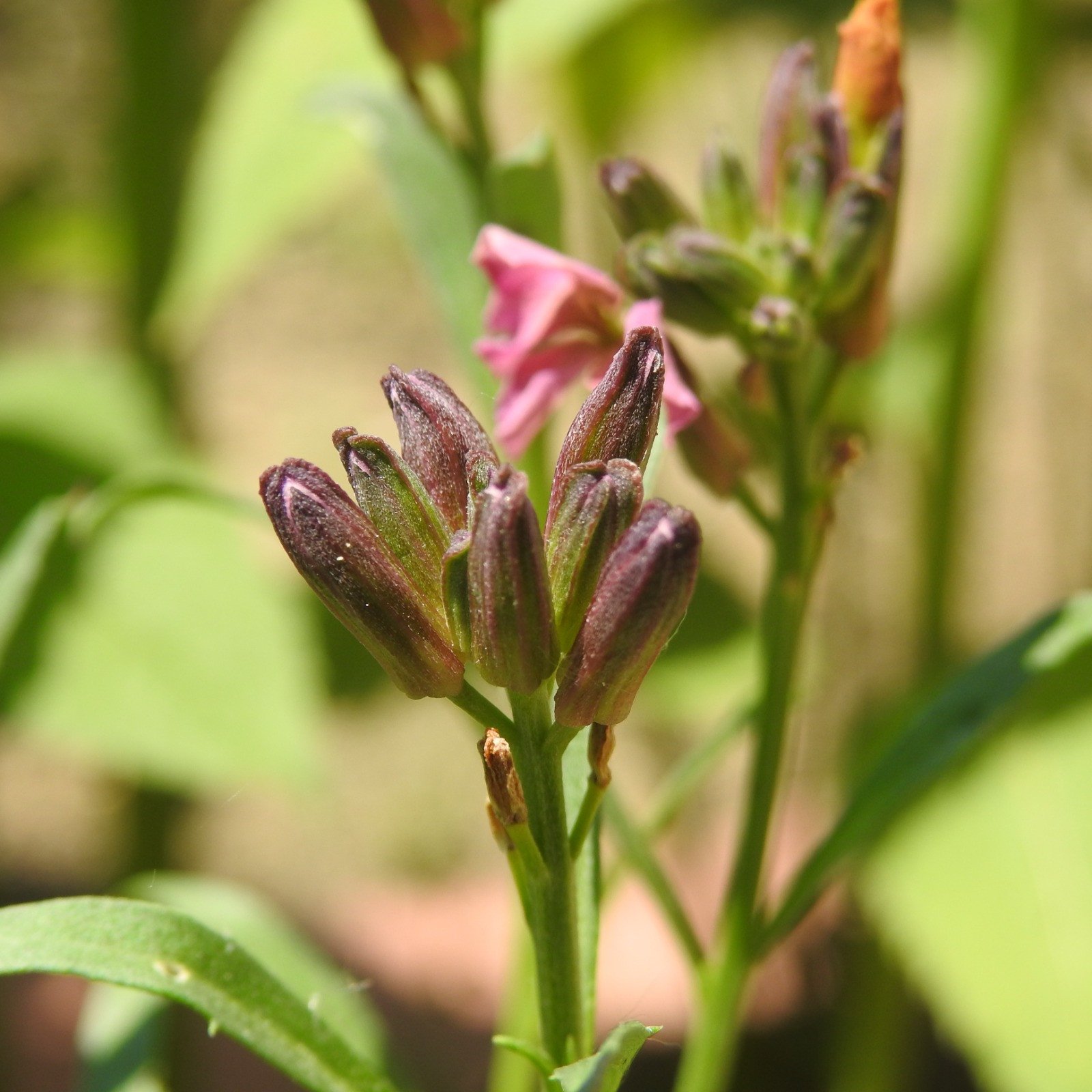
Origin Wallflower (Erysimum) belongs to the cabbage family (Brassicaceae). Around 150 species are widely distributed across the Northern Hemisphere, especially in Eurasia. They grow as annual, biennial or perennial herbaceous plants, and more rarely as subshrubs or shrubs. Some species can reach a height of 1.20 m, though wallflowers are generally smaller. The botanical name Erysimum derives from ancient Greek and refers to the medicinal properties of certain species used as medicinal plants. Some species, however, are considered agricultural weeds. Appearance and growth The aerial plant parts are hairy, with upright stems that are simple or branched at the base. The dark green leaves grow in basal rosettes or alternately along the stem, sometimes stalked and lance-shaped, very rarely toothed. In northern Europe, wallflowers bloom mainly from May to June; in warmer regions the flowering period can extend from April to October. The flowers initially form umbel-like inflorescences that later become racemes. The individual flowers have four petals coloured white, yellow, red or brown. The seeds develop in pods. These are usually 5 to 12 centimetres long, about 2 millimetres thick and held upright. The pods open when ripe. They contain many elongated or nearly spherical seeds.
Origin:
Nordhalbkugel (USA, Gran Canaria, Westasien, östl. Türkei, Iran, Irak, Russland, Nepal, Buthan, Mitteleuropa)
Growing tips
Location Celandine prefers full sun to partial shade and rather poor soil, which can also be sandy, loamy or stony. In any case, the soil should be well-drained, as celandine does not tolerate waterlogging. Field celandine (Erysimum cheiranthoides) grows as an annual and reaches a height of between 15 and 60 cm. It is poisonous and at first glance resembles other yellow-flowering cruciferous plants such as field mustard. Only a handful of species are used as ornamental plants, including the golden varnish (Erysimum cheiri) and the cushion golden varnish (Erysimum pulchellum). Use The mostly short-lived golden violet (Erysimum cheiri) is available in numerous varieties from light yellow to orange to dark red, also with multi-colored inflorescences. Particularly surprising cultivars are 'Winter Moon' in white or 'Bowles Mauve' in red-purple. Due to its early flowering period from March to June, gold lacquer is often planted with tulips, daffodils and forget-me-nots in flower beds or balcony boxes. Gold lacquer also thrives permanently in the border. It is particularly popular in rock gardens. It grows best in full sun locations. This is where its honey-sweet fragrance develops most strongly and attracts insects such as bumblebees and bees. Cushion goldenseal (Erysimum pulchellum) has similar requirements. It forms winter-green cushions 10 to 15 centimetres high and is ideal for rock gardens. Planting Gold lacquer is offered at low prices in many garden centers in spring. If it is to be planted in containers or tubs, it is best to use normal potting soil with a drainage layer of clay shards and clay granules or gravel. In the bed, the plants need well-drained, lean, dry soil; soil that is too acidic should be enriched with a little garden lime. Soil that is too rich can be thinned out with grit and sand. Gold lacquer does not tolerate waterlogged sites at all. Care tips Gold lacquer is very tolerant of pruning. If faded flowers are cut out regularly, the flowering period can be significantly extended. In a container or pot, it should be fed weekly with liquid fertilizer; in a bed, one fertilizer application per season is sufficient if the soil is rich in nutrients. Propagating gold lacquer Especially varieties for enthusiasts, which can be found from specialist suppliers, should be sown by yourself. As gold laurel is a biennial plant, it only forms a rosette of leaves in the first year. The flowers appear in the second year. Gold lac is sown outdoors from May to June. In August, the young plants are separated and placed in their final position at a distance of around 30 centimetres. In winter, the rosettes of leaves should be protected from severe frost with brushwood. In the greenhouse, gold lac can be sown as early as March. It will then flower the same year in July or August. Goldenseal also spreads itself in the garden by seed. If you want to determine the location yourself, harvest the pods in good time before they burst open and remove the seeds. If you have a particularly beautiful variety with a special flower color, you can propagate it by cuttings. The cuttings are cut from half-ripe, non-flowering shoots in early summer. Diseases and pests Gold lacquer is very hardy. However, if the soil is too moist, it is occasionally attacked by wilt diseases that cause the plants to die.


Antagonistic Plants
Bean (Broad bean / Faba bean / Field bean)
Bean (Dwarf bean)
Bean (Runner bean)
Broccoli raab / Stem cabbage / Cima di rapa
Brussels sprouts
Cabbage (Cabbage)
Cabbage (Pointed cabbage)
Cabbage (red cabbage)
Cabbage (Savoy cabbage)
Cauliflower
Collard greens (Kale)
Collard greens (Tuscan kale / Dinosaur kale / Palm tree kale)
Common vetch
Kohlrabi / German turnip / Turnip cabbage
Napa cabbage / Chinese cabbage
Pea
Rose

Diseases
Powdery mildews
Pests
Pea leaf weevil
Aphids