Mango, mango tree

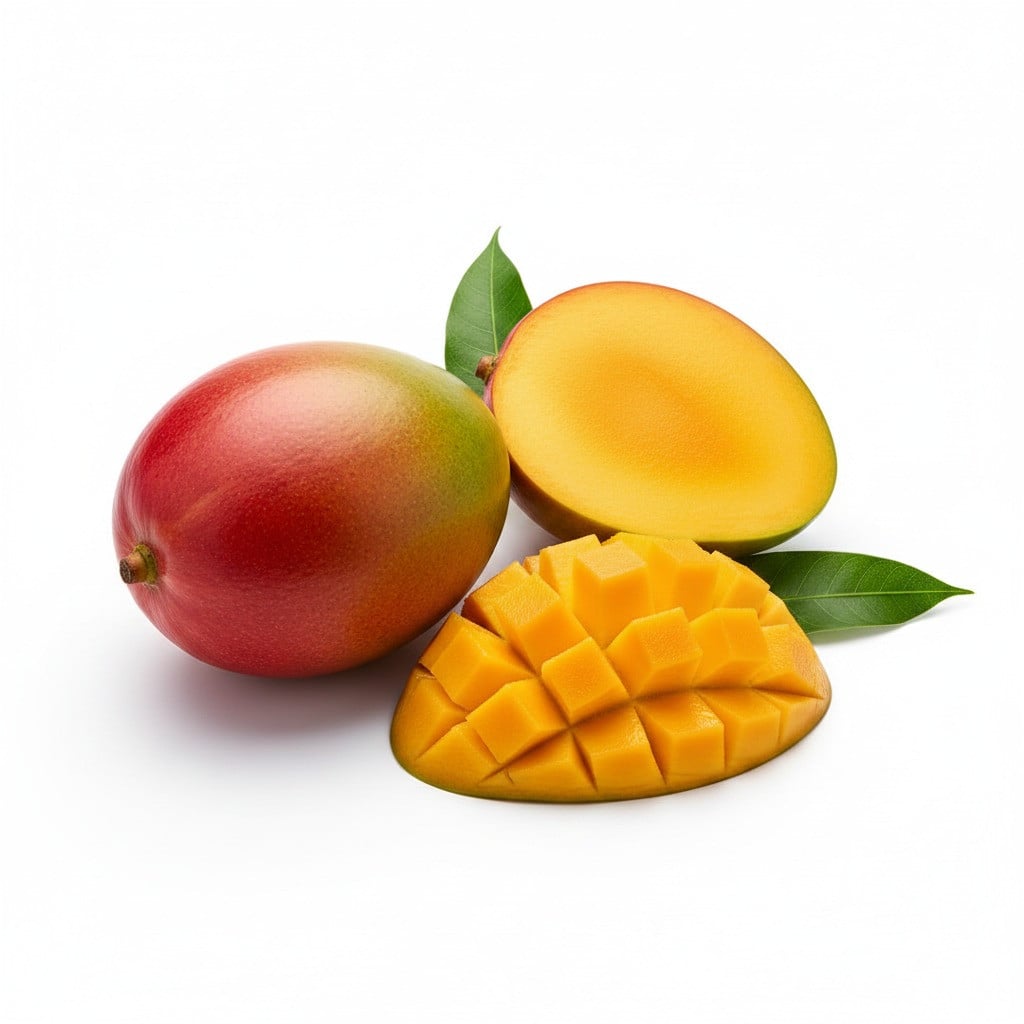
Mango, mango tree
Mangifera
Plant family
- others -
Season Overview
Propagating
Planting
Harvest
Harvest
J
F
M
A
M
J
J
A
S
O
N
D
1ST YEAR
FOLLOWING YEARS
Details


Light requirement
Sunny

Water requirement
Moist

Soil
Medium (loamy)

Nutrient requirement
High

Dark germinator

Germination temperature
24 – 30 °C (Degrees Celsius)

Plant distance
400 cm

Row spacing
400 cm

Seeding depth
1.5 cm
Instructions
Description
The botanical roots of the mango tree (Mangifera indica) lie in Southeast Asia. There, the evergreen trees with sweet fruits grew in the rainforests as far back as 4,000 years ago and were utilized by the indigenous people. The fruits arrived in Europe in the 16th century with the seafarers of that time. Even today, half of the world's mango production is harvested and consumed in India. For Indians, the mango harvest between April and July is a very special time. The mango is revered there as the queen of fruits. Nowadays, we no longer get mangoes from India, as there is an import ban on the fruits produced there. This is to prevent harmful fruit fly species from being introduced to Europe. Most of the mango fruits we eat come from South America. Not only are the fruits used, but the oil from the mango plant's seeds is also utilized. In Asia, this is used to make fatty foods like margarine or cosmetic products. There are said to be over 1,000 different mango varieties worldwide, many of which are grown very regionally. On our market, you can find around 30 different varieties of the mango tree, such as 'Kent', 'Keitt', or 'Haden'. Botanically, the genus Mangifera belongs to the cashew family (Anacardiaceae) and includes about 60 different species. Regarding the toxicity of the mango tree, the milky sap in the bark and leaves contains skin-irritating substances. Growth The mango tree is a native evergreen tree that grows to a height of 25 to 35 meters and forms a very extensive canopy. The trees can live for up to three hundred years and bear fruit for just as long. When grown in a container, the plants reach a height of up to four meters. The mango plant is a taproot plant, so its roots extend deep into the soil. The bark is green on young plants. Later, the bark turns grayish-brown and develops longitudinal cracks. The trunk can secrete a white, rubber-like sap when injured. Leaves The leaves of Mangifera indica are stalked and oblong-lanceolate. The surface of the leathery leaves is smooth. The light green midrib is noticeable. Mango leaves can grow up to 30 centimeters long and about seven centimeters wide. When they first emerge, the young leaves are reddish in color. Flowers The mango plant bears pyramidal flower clusters with numerous small individual flowers, whose delicate petals are whitish or reddish in color. The flowers are hermaphroditic or purely male and are pollinated by various insects. Wind pollination also occurs. The flowers have a faint scent of lilies. In our region, the flowering period of Mangifera indica usually falls in June. Fruits After flowering, it takes three to five months—depending on the variety—for the mango fruits to ripen. The ripe, usually oval-shaped mangoes hang from long stems on the tree. Mangoes are considered stone fruits, which means the pit is surrounded by a woody shell that is the innermost of the three fruit layers. The mango pit is relatively large, flattened, and woody-fibrous. Inside it lies the actual seed, which is somewhat smaller and brownish in color. The fruits of the container mango trees cultivated here are only about half the size of regular mangoes, but who cares about that. It is a special gift to have a flowering mango tree of your own and to be able to harvest ripe fruits in September or October. For mangoes are true superfruits with many good nutrients and an incredibly heavenly taste. Mangoes contain a lot of vitamin A and C, a great deal of minerals for a fruit, and their fiber content is also noteworthy.
Origin:
Southeast Asia, South America, Europe
Growing tips
Location As a tropical plant, the mango tree needs a very warm and bright location. However, this does not have to be a full sun location for the rainforest plant like it does for oleander or citrus. In our latitudes, you can really only put a mango tree outside in the garden for a few months in summer. A greenhouse that is heated all year round or a warm, sunny conservatory is ideal. The plant needs plenty of warmth and light, especially if you want to harvest ripe mangoes. Substrate Mango plants in tubs can thrive in any peat-free quality potting soil for tub plants. The substrate should be loose and humus-rich. Watering The mango tree needs evenly moist soil without waterlogging. If the potting soil dries out, the edges of the leaves will turn brown. Always water with lukewarm water adjusted to the ambient temperature. Fertilizing the mango tree The most important thing when caring for a mango tree is to fertilize it correctly. From April to September, Mangifera indica should be given a complete fertilizer once a week in the irrigation water at the concentration recommended by the manufacturer. The plant needs medium to high levels of nutrients to grow and bear fruit, so it should not be starved. Repotting Mango trees grow quickly in good conditions and need to be repotted regularly once a year, especially in the first few years. This is best done in early spring. The plants are transplanted into pots that are around four to six centimetres larger in diameter. The best pot for the mango tree's root system is one that is taller rather than shallower and wider. Pruning Mango plants do not need regular pruning, as the crown branches out regularly by nature. Individual shoots that are too long and grow out of the crown can be shortened during winter dormancy. Overwintering the mango tree As a tropical plant, the mango tree does not want to be kept colder than ten degrees Celsius in winter. It is best to overwinter the plants at temperatures of around 15 degrees Celsius until new shoots appear in March or April. The plants should not be exposed to temperatures below three degrees Celsius, even for short periods. In winter, the plants go dormant but need a bright location. A place in the conservatory is also ideal here. The amount of watering should be adjusted to the overwintering temperature. The warmer a mango tree is, the more water it needs in winter. Propagation In principle, you can grow a new mango tree yourself from the seed of a ripe mango. If you want to plant the mango seed, you need patience, plenty of warmth and high humidity. Commercially available mango trees are propagated by grafting so that the plant grows and bears fruit true to the variety. Grafted mango trees can bear their first mangoes in containers as early as the second or third year. Diseases and pests As with many other warm-wintered potted plants, infestation with scale insects can occur. Soft skin mites can also infest the plants. Scale insects can be controlled with biological pesticides containing oil and soft-skin mites by using predatory mites.

Companion Plants

Antagonistic Plants

Diseases
Powdery mildews

Pests
Spider mites
Schildläuse