Alpine stonecrop

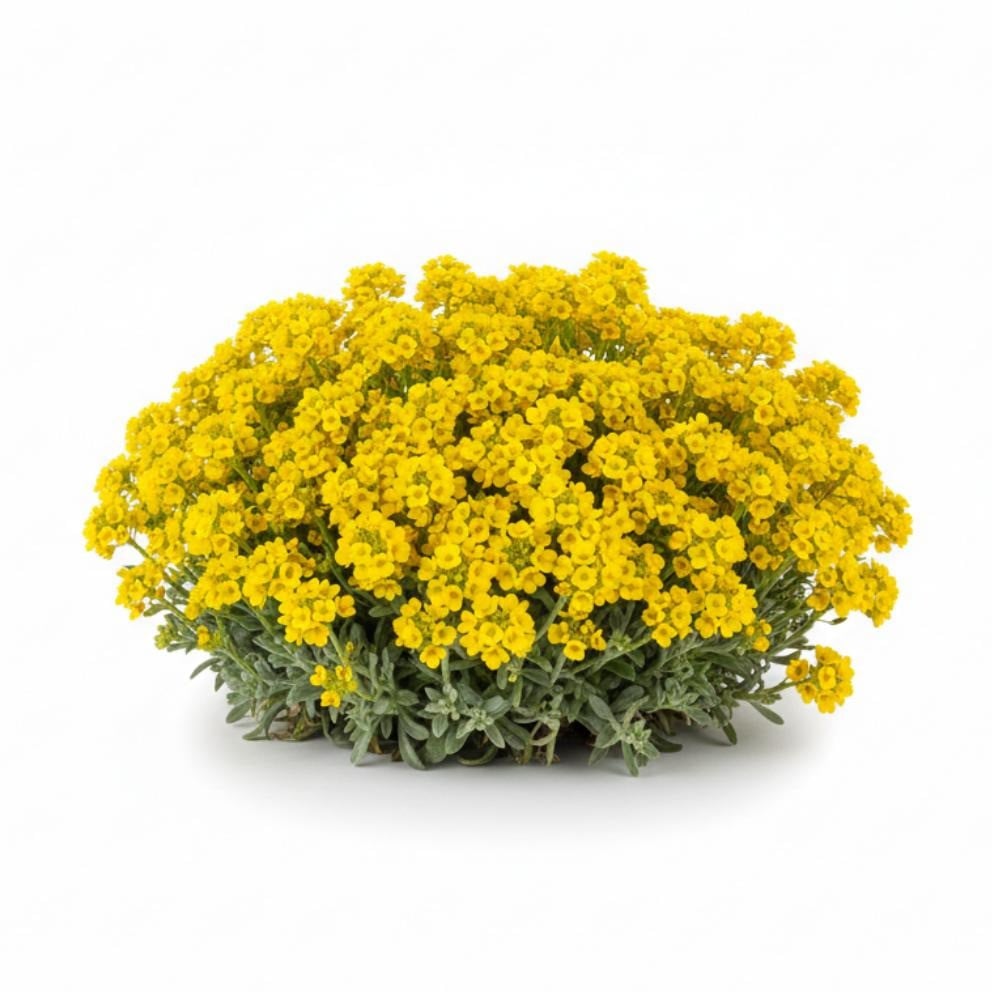
Alpine stonecrop
Alyssum
Plant family
Crucifers (Brassicaceae)
Season Overview
Propagating
Planting
Harvest
Harvest
J
F
M
A
M
J
J
A
S
O
N
D
1ST YEAR
FOLLOWING YEARS
Details


Light requirement
Sunny

Water requirement
Dry

Soil
Light (sandy)
Nutrient requirement
Low

Light germinator

Germination temperature
18 - 22 °C (Degrees Celsius)

Plant distance
20 cm

Row spacing
20 cm

Seeding depth
0.5 cm
Instructions
Description
The genus of stonecrops (bot. Alyssum) belongs to the tribe Alysseae in the cruciferous family (Brassicaceae). The genus comprises around 110 species. It owes its German name to the preference of many of its representatives for stony habitats. The lush and perennially flowering plants are partly annual, partly biennial or perennial. They grow herbaceously, more rarely as small shrubs. As extremely flowering and undemanding plants, stonecrops have won the hearts of many garden owners. These pretty sun worshippers like to adorn themselves with yellow flowers, although they are rarely found in other flowering colors such as white and pink. They are considered traditional rockery perennials. Many species form attractive cushions that bathe the garden in color and attract bees and butterflies in droves from spring to autumn. The exuberant blooms seem to spill over the beds and many varieties exude a pleasant fragrance. Stonecrops cut a fine figure with their dense growth in containers or balcony boxes. Alyssum benefits from the fact that it does not need a lot of water to bloom profusely and thrive healthily. As a cheerful splash of color on the balcony railing, window sill or in hanging baskets, species that grow lower and horizontally are particularly suitable. They look as if they have been poured over the planter, which gives them natural charm and grace. The enormous brilliance of their flowers attracts everyone's attention and invites butterflies and other nectar-gathering insects to settle on them for a while. Some stonecrops have extremely decorative leaves that make them a beautiful sight during and after the flowering period. Not all species are sufficiently hardy in our latitudes. By self-seeding, they can be admired again in the garden the following year. Leaf Alyssum species have stalked or sessile simple leaves, which are often hairy. They are arranged in basal rosettes or alternately on the stems. Flower The inflorescences are typically dense, simple or branched racemes. The flowers are hermaphrodite and have a radially symmetrical structure (with rays of symmetry running through the longitudinal axis). They are four-petaled and have a double perianth. Stonecrops have four slightly elongated sepals, four petals and six stamens. There are one to a maximum of eight ovules per ovary. The flowers are often bright yellow; white, pink or purple-flowered species are less common. Fruit The fruits of stonecrops are stalked, flat little pods. The shape of the pods varies from species to species. The seeds lie in up to two rows and are round to egg-shaped. In some cases the seeds are winged. Growth The representatives of the genus Alyssum are herbs, more rarely semi-shrubs. They grow to a height of between eight centimetres and one meter and have a spindle-shaped, thin root. The plants are hairy and have upright or lying stems. They grow prostrate to bushy upright and form cushion-shaped cushions. Use Their brightly shining flowers make stonecrops popular ornamental plants. They are ideal for enlivening sunny, dry areas. Amateur gardeners like to plant them in tufts and combine them with other dry perennials. If you don't have a garden, you can make your balcony or windowsill bloom with these pretty little perennials. In spring, Alyssum species are important food plants for bees and bumblebees.
Origin:
Southeast Europe, North Africa, southwestern part of Asia
Growing tips
Location Stonecrops like a warm and sunny location. The soil can be dry and should have a pH value between 6.5 and 8.0. The plants value good permeability of the substrate and do not tolerate waterlogging. They feel most at home in hot and dry areas of the garden, on sunny slopes and embankments and on south-facing terraces. They are suitable for roof gardens, for planting on the tops of walls, for planters and balcony boxes. Beautiful companion plants for Alyssum are Lobularia maritima, blue cushions, asters, sunflowers, ribbon flowers, carpet phlox and wild tulips. They have similar soil requirements and complement the stonecrops perfectly. Care/pruning Stonecrops save the gardener a lot of work. They only need watering in extremely dry summers. Even tap water is pleasant for these plants. The slightly increased lime content can be easily covered with tap water. The plants do not like excessive watering. Fertilizers should be used sparingly as they can inhibit flower formation. If you want to encourage your stonecrop to flower repeatedly and profusely, cut the plant back by half after the first flowering. After pruning, the herb can tolerate a small amount of fertilizer in the form of horn shavings or compost. Stonecrops require more care in planters. Regular watering is important here to prevent the substrate from drying out. In a small space, the nutrients are used up more quickly. Plants growing in containers appreciate small portions of liquid fertilizer every two months. In a trough with other plants, they get along best with those that have the same requirements. Once Alyssum has established itself in the garden, it is site-loyal. It should not be dug up or divided. The plants self-seed. Young plants are not harmed by a change of location. The gardener digs them out with sensitivity and plants them again at some distance from the mother plant. Diseases/pests Stonecrops are robust, healthy and resistant to plant diseases. In very hot weather and prolonged drought, some species are affected by powdery mildew. Waterlogging is not good for the plants. Standing water leads to rotting roots. As animal pests, snails are unwelcome visitors to Alyssum. Delicate young plants in particular taste delicious to the creepers. Snail fences help to keep the uninvited guests away.

Companion Plants

Antagonistic Plants

Diseases
Root Rot
Powdery mildews
Pests
Land snails